
Seventh Day / Part One
A scene of domestic desolation and tormenting memories reveals the protagonist’s inner battles in the 1990s.

The Saturday demons would come, irrefragably, to recall the calamity of years past, when sandstorms, dragons and beasts passed through the city leaving an unmistakable trail of disaster. Since the Great Torment, in the mid-nineties, every seventh day of the week had become a callus on the soul’s backside, so that, on Saturdays, Xavier grew eternally inward and let himself be shamed by his extreme weakness, to the delight of his adversaries: sham demons, to whom he gave respect more out of mercy on himself than out of fear.
The setting of the singular tragedy, the house, was a modest cubicle made of an accumulation of bricks and clay tiles, its walls covered in concrete, quicklime and overlapping coats of glossy paint. To the north, one of the roof’s two slopes ran down to the eaves in a design held up by three rusted iron windows with ambiguous glass, to block the wind and, with their hammered patterns, hide the little house’s entrails.
On the side that first saw the light of day, two pine doors dressed in gray opened onto the kitchen and the living room, which was more a continuation of it. The stove, the wall cabinet, a table battered by the years, the blood-red pigmented floor. Another door from the kitchen to the living room and there, of course, were the furniture pieces puttied, varnished, sanded, puttied again, varnished, sanded, paid for in installments.
The bookcase held the telephone, cheap picture frames and knickknacks given by cheerful friends. In its cabinets were boxes and inside these more boxes and inside these still more boxes and folders with papers, bills to pay, receipts, report cards, newspaper clippings, diaries, love letters and trash, and dust, and recorded memories, important only to their owners. Beside it, the six-seat table for festive meals, for reading, for the makeshift office of a house run by a systematic, detail-minded mother, accounted for in every word.
Then the hallway from which flowed what was called three bedrooms and a bathroom. The innermost room of a couple united despite controversial loves, in spite of the disenchantments of regular life; the room of Xavier and his younger brother, the parallel beds, the wardrobe, the place of the television. The television room. The family: father, mother, two sons and the television.
To the south, an asbestos-fiber lean-to created the laundry, or a covered back door, with a washing machine, and also where the third threshold into the kitchen was. So many doors making up the sumptuous path of domestic inversions.
The outbuilding sprang from the yard of overgrown grass and low weeds, because in the mid-nineties there were still many yards and one hundred and twenty-three orchards in the city. They needed that outlandish heap of rotten beams and fiber roof, battered by hailstorms, only to protect the car from the mulberries falling from the neighboring lot’s tree and also from bird shit. After a few months of training, the birds became so meticulous that they rarely missed the car, aiming their asses so that the shit passed through the holes the ice had made in the cover and hit the vehicle.
The exposed-brick wall at the last boundary of the lot was the ladder by which Xavier and his brother climbed to pick mulberries and play on top of the rot, risking their lives on the most unstable ground of that delicate dwelling.
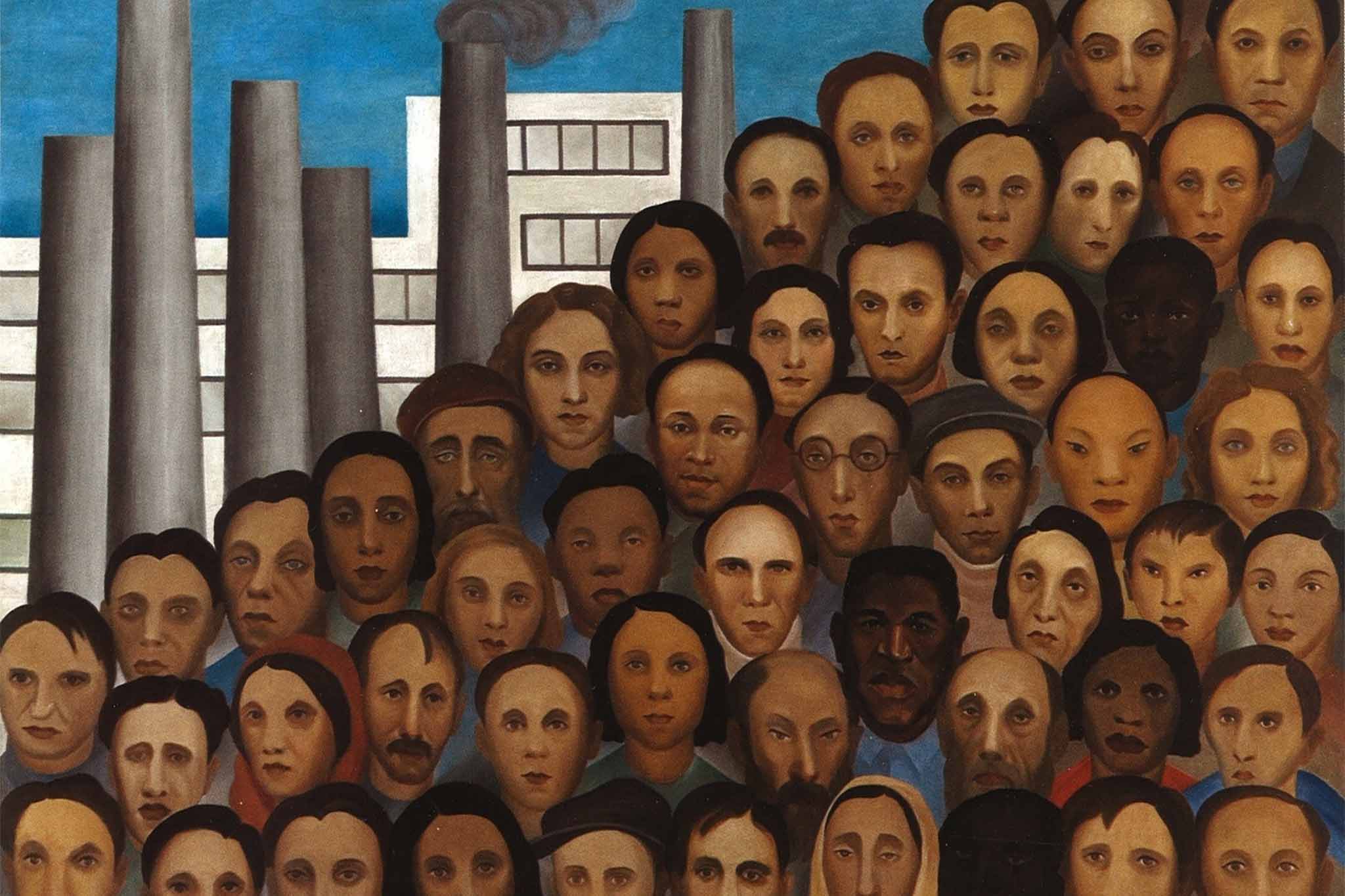
At the other end, where the façade faced the street, ran the low wall and, in a stretch of it, the little gate of old wood. Everything low, for any child to cross without adults’ help. All these elements, kitchen, television, shit, backyard, were planted behind the yellow ipê and bracatinga trees, two poor, unshakable, slender trees, lost in motionless vegetal form. Trees printed on the ground like a stamp, guaranteeing the passage of correspondence and eternally stretching with their long branches, full of tiny leaves. The rectangle in which the preceding explanations fit, together with other rectangles, formed a neighborhood of new workers potentially controlled by the appropriate signification at each stage and who in this last one had bought their own house.
When everything was like that, exactly like that in every detail expanded by the repertoire and disposition of signification of my readers, it was Saturday, the mid-nineties, and the disaster announced itself when the day had passed. Through the absurd displacement of signs and tropics, Xavier found himself alone when fissures reeking of sulfur, lit by incandescent plasma, vomited unknown insects, mutations of wild wolves and venomous reptiles. The heat melted every peace there had been, the drought dried every river, every vein of blood, until the viscera petrified.
(To be continued)


Comments
The conversation takes place on the Lab Digital 2050 forum. Read the comments below and click “Reply” to join in.