
The individual must be respected
Article analyzes the importance of mutual respect and warns of the dangers of psychological games in political discussions.

[The article opens with a passage from John Steinbeck’s East of Eden on the single story of the world: humans caught in a web of good and evil, left in the end with the hard, clear questions of whether they were good or bad. The passage is not reproduced here.]
“Why do we get into psychological games?” asks the analysis. To which it answers “to maintain frames of reference.” Let us unpack it in other words. The discontent one may feel during a discussion about politics is a sign that there was, to say the least, a triangulation in the roles to which we often resort to maintain our worldview: hero, victim (art will even tilt toward “submission to the absurd”), or the favored one, “telling the truth to their face, whoever it hurts, I speak my mind!” You played, you lost. In the game there is no winner. We bring, however, the news that it is possible to express oneself, whatever the subject, without losing peace. Especially with peace at the price it is.
Evidently, philosophy, political communication and psychology become urgently necessary to mediate the conflict that arises on digital social networks, in hallway conversations, or, gosh, how inconvenient, at family meals. When we write about such urgency, we refer to two things: reinforcing the practice of suspension, to try, at least, to understand the other according to their map (it is one of the things a therapist does during a session); and also a good dose of intellectual medicine against what cannot be overcome by reason.
It happens that, although such reason refers — what a coincidence — to an idea of rationality, that is, of reasonable sustainability, and such reasonableness tends to have science as its grammar, that is, a system that can be audited, it is not, and one might lament this, enough to cover a significant part of the electorate — which may include us.
We find it curious when we are told “the electorate thinks such a thing,” as if academic or voting-intention polls were enough to explain things that today are a great banner of the “WhatsApp Uncle” but tomorrow, for that same dear Uncle, are worth less than dishwater. What we insinuate is that there are things beyond algorithms, things older than language, older than speaking Portuguese.
Understanding others, in the sense of matching, adjusting the parts, is a key to fruitful political discussion. Given the reckless conditions of the digital platforms where the conversations take place, not radicalizing would be great progress.
When we opened this article with the theme “psychological games,” it is because the resulting discontent is what could be avoided. And it could be avoided as follows: we do not go into relationships intending to protect ourselves, and we usually employ a tremendous force for that purpose, but to move toward a state of grace, of intimacy, which is the opposite of playing psychologically, where one can be who one is without fear. It is knowing without imposing.
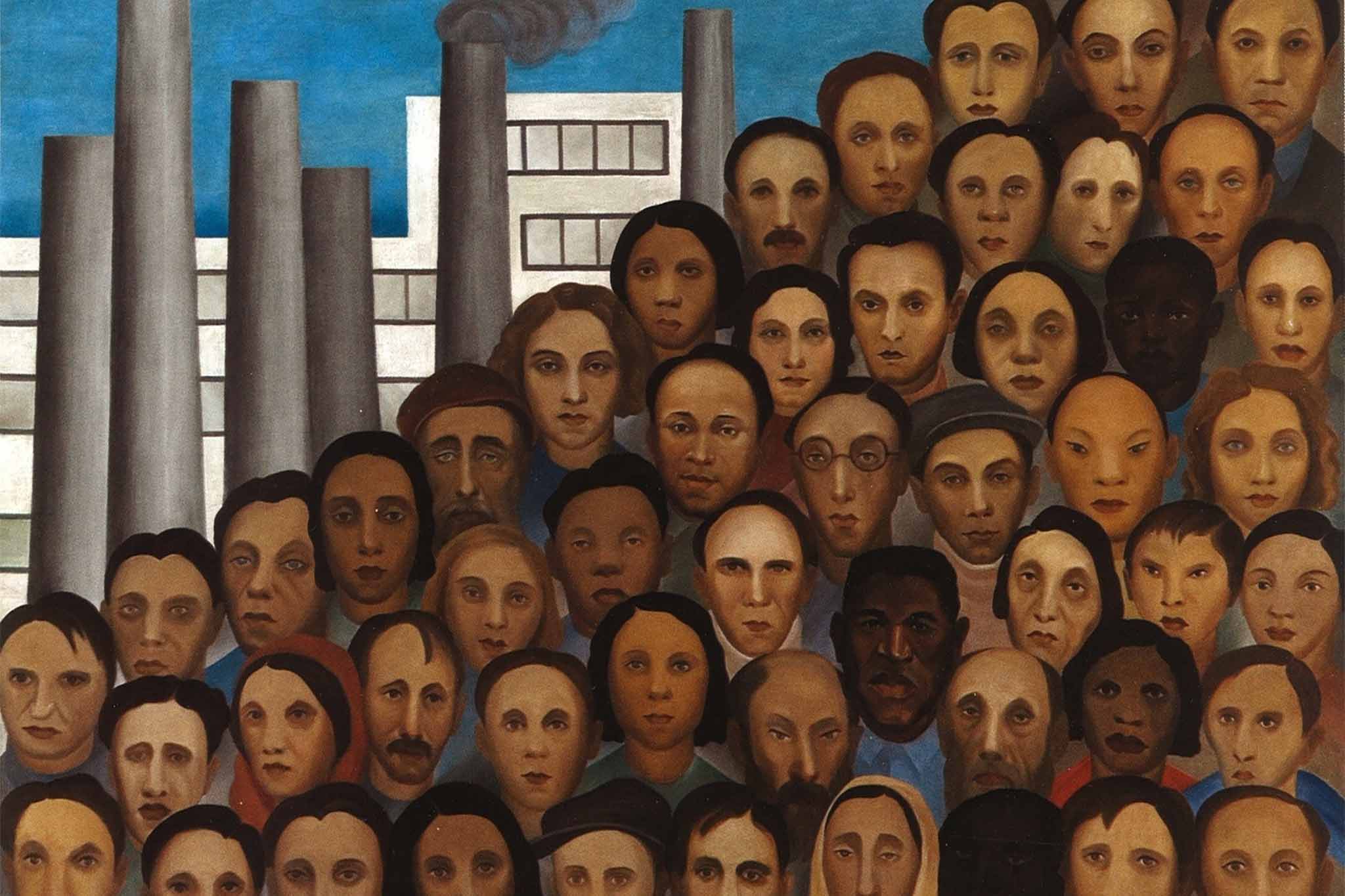
The strangeness we feel has to do with a “view from above” panting from the altitude. Like black, blue, colorful? You may express yourself, no problem. Regardless of who your or our favorite is, or which film director’s work is relevant, no matter what it is about, the dignity of the individual is a basic principle.
One should not, for very simple reasons of reciprocity, violate the space of the Brazilian taxpayer — who has for years made ill-timed jokes, who occasionally overindulges in alcohol, who has the sound of embers on the barbecue grill and the ping of the cellphone as the weekend’s great soundtrack — with accusations of lesser or greater intelligence, or even the absurdity of making our ancestors gods of extermination.
Besides, there is work. That is, there are things to be thought through, solved, implemented. There is much work to be done and, if the individual cannot be who they are, we are lost. Then it is time to close up shop.


Comments
The conversation takes place on the Lab Digital 2050 forum. Read the comments below and click “Reply” to join in.