
Analog dialogue: how eye-to-eye contact restores our essence as humans
Quieting inner noise and looking at the other is a challenge, but vital to human well-being.

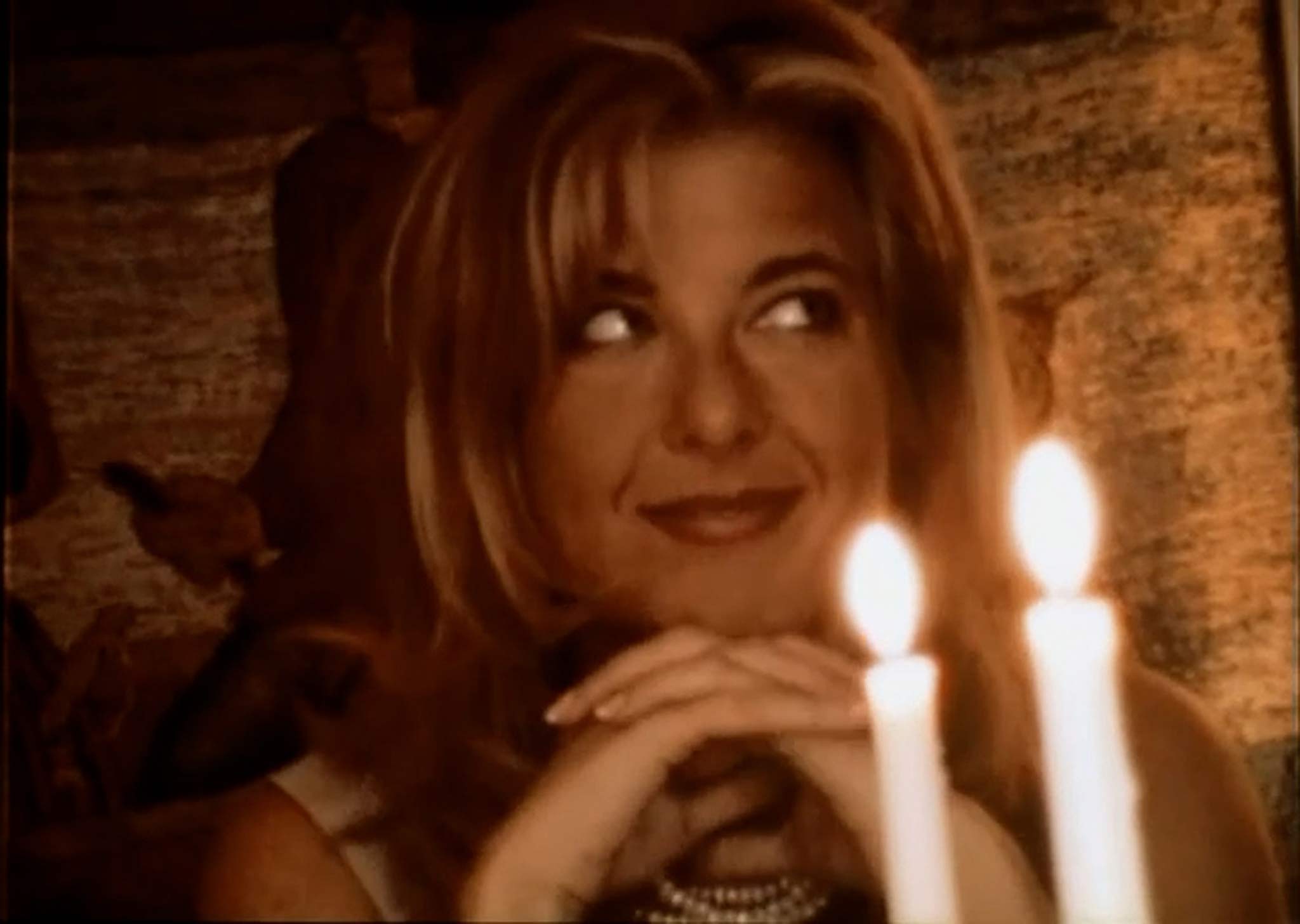
“Pela luz dos olhos teus” (“By the Light of Your Eyes”), a song by Vinicius de Moraes and Tom Jobim about the meeting of the light in two people’s eyes, illustrates in some way my most recent reflections.
The connection between two gazes is so powerful that “light” is a quite reasonable description. A human face asks for understanding of the singularity, the courage and the solitude of each of us on this planet. When we connect, we are inevitably led, by our species’ structure, to translate the expressions of the being in front of us.
Decoding this precious information depends on how much our inner dialogue allows us to direct the cone of attention to the other. Often, inner confusion completely abducts the person and puts out their light. The other will notice the absence. The other will notice the shadow. The other will feel the loneliness.
In times accelerated by technology, determining to have analog contact is a gift to everyone present in the relational field. Being connected to another person, a biophysiological phenomenon, restores us to our oldest essence. And it depends on conscious choice. Often the simultaneous movement of looking at the other while quieting the inner noise is not part of our baggage of learning. Often contacts produced pain and scars. It is possible to learn. We have a powerful potential for learning!
Renouncing internal and external stimuli and making certainties and dogmas flexible in order to attune to the other is a dangerous experiment, on the one hand, since it means lowering protection and survival strategies; on the other, the experience of multidimensional communication is intense and vivifying.
For a small fraction of time or for continued periods, the more I momentarily silence my wishes and needs, the more room I have in my perceptual set to welcome, validate, recognize and react to the other’s wishes and needs, thus opening windows of possibility for the other, in turn, to quiet themselves in order to listen.
This presupposes a step back, a preparatory step: recognizing, welcoming and validating one’s own wishes and needs so that they, thirsty, do not invade the field of coexistence.
An attuned, eye-to-eye, analog dialogue is food of exceptional quality. Chronos time makes room for Kairos to settle in, souls take part in the moment, integrate humanities and generate music through resonances.
Human attunement can minimize differences. It can broaden understanding of the reasons and motives behind words, gestures and expressions. It can help us understand abrasive exchanges, because it is interested in their origin.
Why does it happen so little?
The deafening noise of inner dialogues, the chronic scarcity of love, the demands of a time ruled by acceleration. We must also consider the old tacit or explicit prohibitions, received throughout development, that crystallize or enclose the person in their armor.
In parallel, it is important to consider the concrete obstacle of the parallel world represented by social media, suppliers of immediate pleasure without short-term emotional risk. The virtual world prevails, a kind of Narnia in reverse, in which people take refuge behind countless filters, “protecting” themselves from reality and from eye-to-eye contact.
I always reiterate to myself and to students and clients that “we cannot change the world.” I know how complex relationships on our planet are. Yet we can change the small world around us: children, grandchildren, loves, friends, team... Those who feel welcome in our relational field and experience validation, appreciation, recognition and the power of attuned dialogue will want to repeat the experience.
If from these tiny movements a child feels welcomed, loved, respected, doors and windows open!




Comments
The conversation takes place on the Lab Digital 2050 forum. Read the comments below and click “Reply” to join in.