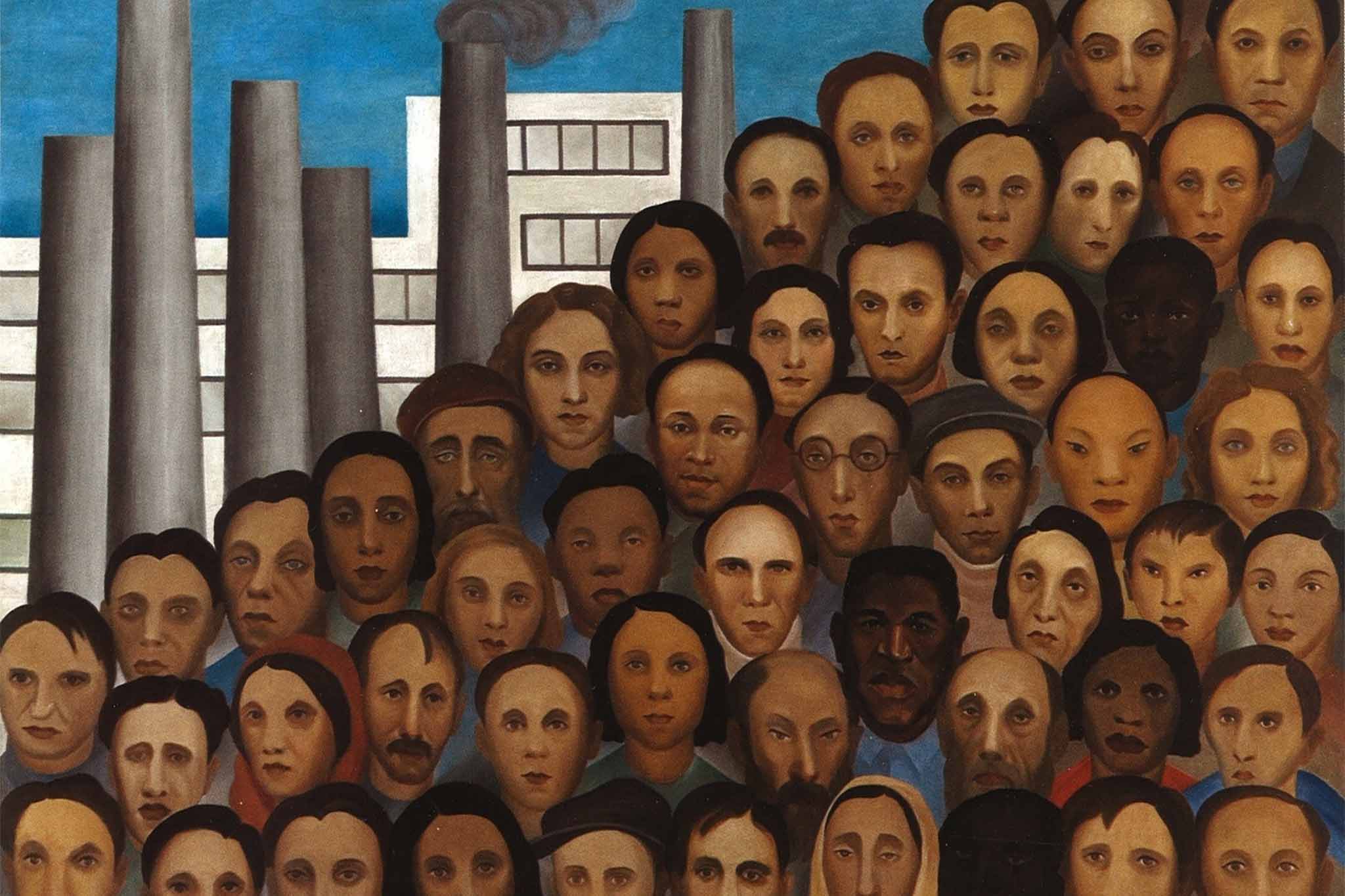
Polarization turns profitable and dismantles the common map of Brazil’s public sphere
Without effective regulation, platforms profit from radicalization and erode civic space.
Tempo previsto
25/10/2026


Without effective regulation, platforms profit from radicalization and erode civic space.
In the cutting lucidity of José Bonifácio de Oliveira Sobrinho — Boni —, we observe a dissection of the soul of mass entertainment that goes beyond mere television criticism and becomes a precise diagnosis of our contemporary public sphere. By contrasting the traditional telenovela with the new vertical narratives, Boni offers us a perfect metaphor. Classic television drama is born as a rite of communion: the family gathered in the living room, the nation debating the fate of an Odete Roitman (the villain of the telenovela Vale Tudo), the building of a collective imaginary. Yet the grammar of the vertical screen, designed for the cellphone, brutally breaks that civilizing pact.
The mobile-device experience proves, par excellence, a journey of isolation. Journalism, which in its Platonic conception should emulate the function of the traditional telenovela — by establishing a shared cartography of facts and relevance —, now finds itself fragmented. The TV newscast, once the tribal fire around which we warmed ourselves with the same factual truth, gives way to the “vertical telenovela” of the algorithmic news feed.
We thus navigate an ocean of atomized information, in which each individual draws up the menu of their own reality and erases the common maps of coexistence. The fact ceases to be an imperative of reality and becomes a psychological projection of the user. The recent pretrial detention of former President Jair Bolsonaro uncovers this abyss and reveals a moral schizophrenia that swings, dangerously, between the comic and the tragic.
We witness, stunned, those who today celebrate the imprisonment and promote the humiliating exposure of the adversary, in flagrant contradiction with their historic banners of defending human rights and penal garantism (the defense of due-process guarantees). Simultaneously, we glimpse the claim of injustice by those who, without any shame, divorce themselves from the facts.
There is even the emblematic figure of a relative of ours — once proud of “popular sovereignty” when his candidate triumphed — who now calls that same people “idiots” for not sharing his selective indignation. Such incoherence denounces the urgency of emancipating ourselves from these polarized political forces, if we still nurture the wish to preserve some vestige of civility.
However, we understand that this polarization is not an accident along the way but a highly sophisticated business model. The vacuum left by the digitization of journalism is filled by groups that monetize fury. Pedro Doria’s analysis sheds light on this perverse mechanism: most of the population is unaware of the intrinsic relationship between journalism and democracy. The most alarming fact, however, lies in the financing: no group shows more willingness to pay for news content than the most misinformed portion of society.
Doria details that the “hard-core Bolsonarista right,” although it represents only 12% of the electorate, makes up precisely the core that finances this machinery. The market, in its implacable logic, responds to the incentive: if there are people who pay to have their beliefs validated, a complete parallel reality is built. While almost half of the Brazilians who identify with the left still turn to TV as their primary source, the right scatters across the recesses of social networks and messaging apps — reaching 9% use as a main source, against an inexpressive 4% on the left. The result is a “journalism” of bias, which profits by whispering exactly what the radicalized subscriber longs to hear.
The problem has, beyond its economic root, a regulatory origin. Traditional journalism operates under the republican yoke of public concessions. The Federal Constitution, in its Article 221, and Decree No. 52,795/1963 impose clear duties: educational purposes and the obligation of a news service. There is an ex ante, a prior duty of civility. On the internet, however, we live under the law of the jungle or, more tragically, under the absence of law. The Marco Civil da Internet (Law No. 12,965/2014), by establishing the network’s non-liability in its Article 19, exempts platforms from editorial responsibility. There is no right of reply; there are only private algorithms that optimize engagement through hatred.
In this anything-goes scenario, the effort of the professional press to keep facts sane sounds like a scream in a vacuum. The latest report from Lab Journalism 20501 on coverage of Bolsonaro’s arrest shows an almost sterile neutrality among the major outlets (78% neutral bias), focused on factual narrative. Among 109 mentions, the report records 17 favorable to the arrest (15.6%), seven opposed (6.4%) and 85 neutral (78%). Yet such content proves unable to pierce the cognitive blockade of the groups that pay to inhabit the parallel reality. The assessment covers nine of the ten most-visited online outlets in the country according to the Reuters Institute Digital News Report 2025.
To regain a common map and escape this vertical telenovela in which each person stars in their own solipsistic delusion, we need new solutions. If the pursuit of happiness is already creeping in as a public policy goal, perhaps it is time to consider “love” — not as serialized romance, but as civic empathy and the Socratic search for common ground — as a pragmatic principle for rebuilding the public space. Without that, we will remain prisoners on separate screens, paying expensive subscriptions to hate the neighbor, while democracy silently crumbles in an empty living room.
1. The sample of outlets analyzed comprises: Globo News online (G1), UOL online, Globo.com, O Globo online, Record News online (R7.com), CNN Brasil online, Metrópoles.com, Band News online and Folha de S. Paulo online. The Yahoo! News portal was not included because the site was unavailable at the time of collection. The analysis was conducted on Nov. 23, 2025, using the Python programming language to process the HTML code of the home pages. The methodology consisted of scraping (web scraping) all headlines ranked in the heading tags (H1 to H6). A semantic filter was then applied to select exclusively headlines related to “Bolsonaro’s pretrial detention.”

A psychoanalytic reflection on guilt, violence and collective identity, joining Christian symbolism to the Palestinian drama of today.
When, at three o’clock on Friday afternoon, Jesus sighs and gives up his spirit to God, we begin to ask ourselves “What have we done?” To the distracted, it must be nothing more than one more guilt for the collection. We Freudians, however, understand that question as the origin of civilization.
It is a matter of geolocation, if you catch my drift.
Where are we, exactly, after having murdered the Creator? If we are among those who put that question to ourselves, as in the myth of parricide, very well. Something like that has the potential to gentle us. But if we are beyond the border of responsibility, we are lost.
It is in that latter place that the individual cheers for a Jesus who “lays the whip” on the thieves — without realizing that he himself is the thief mentioned in Scripture. He cheers for the outrage against the Pharisee leaders, without realizing that the Master outrages him at the very moment of reading.
I wrote about this phenomenon in a chapter called “the narcissism of small differences” (it is a psychoanalytic concept). In short, hatred is even more talented than love when it comes to uniting human beings, forming armies, churches and organized fan clubs.
Anyone who opens a Bible printed in the 1970s or ’80s — translated by João Ferreira de Almeida, with pink pages, cut by a tactile index — finds Palestine in the maps section.
That is to say, until “yesterday,” no one had any doubt that the Jesus we killed was Palestinian. What made us change sides, besides money?
René Girard’s philosophy coincides with Christian practice in the formation of a religion out of violence, just as that same violence generates civilized humanity for Freudians. But this author is particularly provocative when the dead man is Jesus. Ever since we killed an innocent, the wheel of violence has been spinning in a void.
If Easter renews in Christians the hope of resurrection, may it also renew in all of us some assurance that, at least once a year, we ask “What have we done?”
The photograph for this article, taken by Mohammed Salem of Reuters and released by World Press Photo, won the World Press Photo of the Year award. The image shows Inas Abu Maamar, a 36-year-old Palestinian woman, in a moment of deep pain as she embraces the body of her niece Saly, only 5 years old, who died in an Israeli bombing. The scene took place at Nasser Hospital, in Khan Younis, in the southern Gaza Strip, on Oct. 17, 2023.

Essay collection by the Peruvian writer questions the religious and political roots behind modern cultural decline.
Although I have seen the film Pantaleón y las visitadoras (fun, and recommended; the novel is known in English as Captain Pantoja and the Special Service), I know little of the novels of Mario Vargas Llosa, the Nobel laureate in literature — the Peruvian writer who took his leave this 13th.
I liked him! Someone once strongly recommended The Green House to me — curiously, an American professor. But this book in the photo, full of essays, reflections and provocations, which I was given in 2013, I read and it made quite an impression on me.
A brainy chat here: since in communication courses one usually studies the Frankfurt School, one learns that the blame, so to speak, for the poetic emptying seen in the arts throughout history, for the aesthetic decline of what is understood as beautiful, and for the end of so-called “high culture,” would be the result of mass production, of the pursuit of profit at scale, of the culture industry: in short, a consequence of capitalism.
To my surprise, this book revealed a different point of view: the issue is political, involving the legacy of a revanchism against the taste of the aristocracy (or the upper classes) since the revolutions.
It is a growing repudiation of traditional society, after the great world wars, and, in its essence, above all: religious in nature — after all, at the origin of all civilizations, in all times, artistic manifestations arose and developed precisely from religious rites.
It starts from the search for the sublime, from mystical experiences, which later formed the bases of what we understand as cultures. A link that became only an echo in contemporary Western life, when it is not totally banished, execrated, in a world that, in his view, is culturally heading toward nothing.
Or, as we have now observed, toward content generated by artificial intelligence.
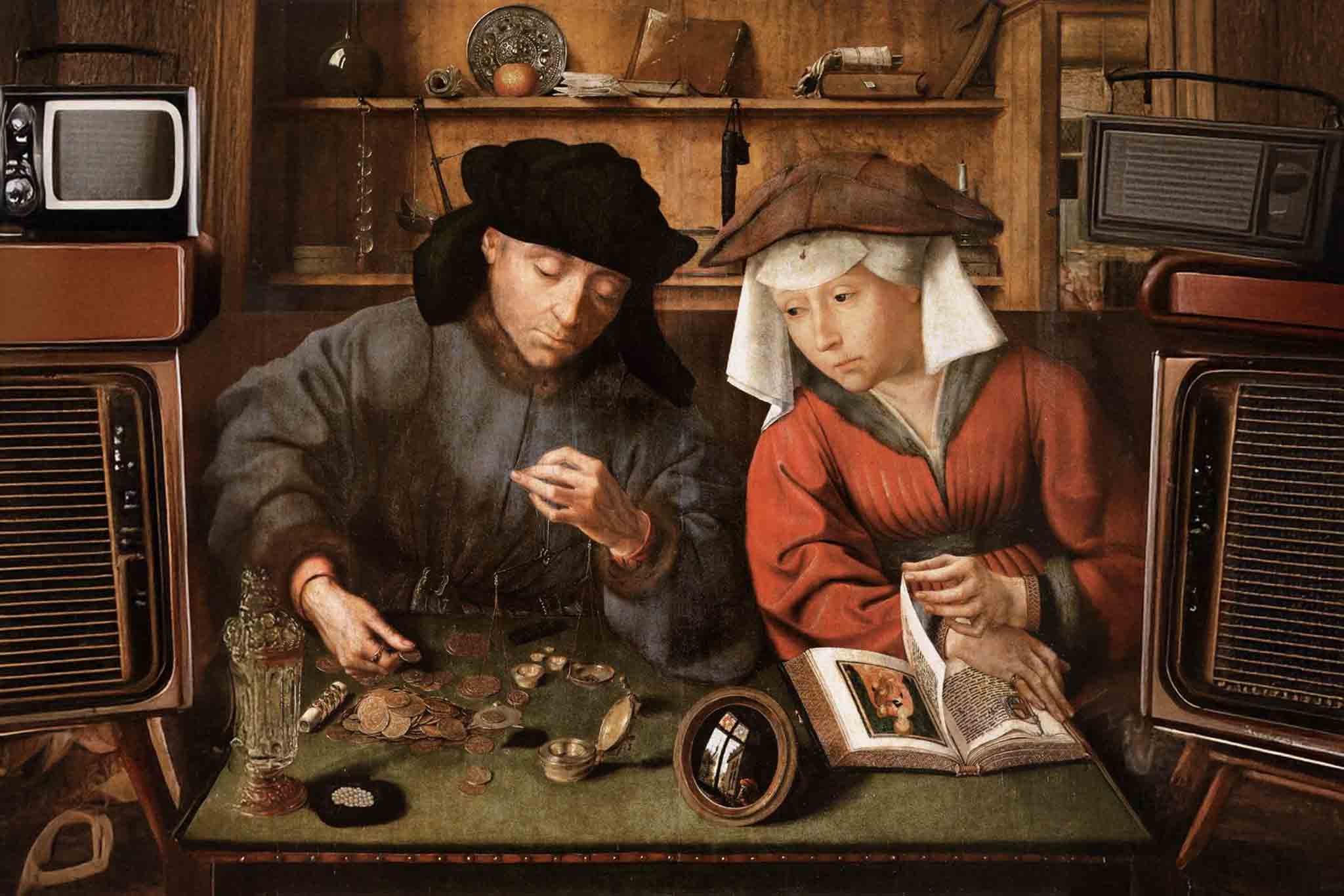
Editorial decisions give way to commercial logic and the appeal to the target audience.
The founding canon of Brazilian radio and television is a jumble of decrees and laws written over almost 70 years. Read with optimism, that body of law gives journalism a role almost as important as that of the industry’s owners. In 1941 the iconic Repórter Esso went on the air and established itself as the country’s main newscast — a kind of forerunner of Jornal Nacional.
Repórter what? Esso. The newscast was a product of Standard Oil Company of Brazil and repeated in Brazil a pattern already implemented in other countries (15 of them): the McCann-Erickson advertising agency supervised content produced by United Press Associations (today United Press International, one of the ugliest news sites in the world).
It is as if Jornal Nacional were called Nubank News and its editorial guidelines followed the orders of the sales department. That is, except for the explicit name, nothing has changed. Or, rather, it has changed a little, yes.
Back in ’64, then Justice Minister Juracy Magalhães sent O Globo’s editor-in-chief, Roberto Marinho, a list of names banned from the news. Marinho replied: “Minister, you do one thing: you take care of your communists, and I’ll take care of mine.” One of the most precious talents of competent newsrooms is their closeness to disobedience — and of course that is a callus on the soul’s backside for any authoritarian.
The tension between the commercial department and the newsroom sets the everyday tone of the reasons journalists work. Once, on radio, an advertiser suggested a lead story about the opening of an exhibit of dinosaur replicas. I went. I reported what I saw, interviewed the owner, but the agency did not like it and asked for my head before I got back to the newsroom. The agency was put on ice and stayed six months off the air, except for the paid spots in the breaks.
This way of working, however, seems more and more historical. An artifact of a glorious past in which owners of news companies defended their reporters to the last consequence. At that same station where I was defended, our director was fired at the request of Paraná state legislators who were offended at being compared to chicken thieves (they had approved, in the dead of night, a way to make more money).
The contamination of journalism by money caught every station owner and journalist by surprise. It is an old subject that internet ads drastically reduced the amount of cash that once circulated on television. But the internet brought something more: the possibility that those digital ads are seen and clicked more when inserted in stories that appeal to the public.
Unlike a journalism limited by a spatial window — the television screen — and by a temporal window — the length of the newscast —, in which news selection was supposed to prioritize the most important matters and, in its measure, inform even against the audience’s taste, today what matters is the customer’s taste.
If the commercial department imposes itself on journalism, as it in fact does, the public must be pampered as much as possible, so that it buys more, so that sales success returns to the station in new contracts. The price imposed on journalism costs journalism everything. All this hit broadcasting hard.
In Paraná, the most-watched lunchtime newscast looks like Escolinha do Professor Raimundo (a Brazilian TV comedy sketch show set in a classroom). Do not dare say, in its defense, that this is a feature of the time slot. Right next door, in Santa Catarina, nothing so ridiculous is done, let alone in São Paulo. Not to mention the morning newscast, in which, as I will repeat until it sinks in, the anchor reported that the sun rose in Cascavel.

The pope who is taking his leave faced tsunamis of hate and left loving lessons. His advice was brief and profound.
Francis was an excellent father to the Church. I call him that, by his first and only name, because he left in his will that it should be the inscription on his tomb: “Franciscus.”
Written in mid-2022, the text offers the “suffering that was present in the last part” of the pope’s life to “the Lord, for peace in the world and for fraternity among peoples.” One infers that, since then, his farewell had been on his mind.
It is coherent to feel puzzlement before a leader who phoned the parish priest of Gaza and who did not shy away from calling for disarmament and an end to war. In what he called the “globalization of indifference,” people came to consume the horrors of a violent nature without taking any action.
Certainly he was hit by the tsunamis of hate that have covered the human community in recent years. In that sense, I have never seen so much discord among Catholics. But that does not surprise me at all. After all, who is not lost?
Francis’s laughter will be greatly missed. His simple way of offering advice, and of teaching how to give advice. For him, a sermon should not run past eight minutes. What respect for others’ ears, and for their time! “A sense of humor is a certificate of sanity,” he argued.
One asks, with reasonable concern, how much the lessons of charity he taught have been learned, how much internalized. So that no frost burns the field of new Christians, the cardinals now have the job of choosing a pope who loves us.
A few days before he died, at the end of last year, my grandfather Jorge listened to Ravel with me. I dedicate this memory.

Reflection proposes a new historical and sociological awareness to break cycles of religious and nationalist violence.
We could, with plenty of justification, spend the rest of our miserable lives deeply lamenting wars. That would not even seem inappropriate. Any human being who is bothered by murder has a good chance of being a decent person, even if grumpy. I propose yet another option: leave the role of resignation to those who have retired from the work of creating the world.
It is naive to think that creation is a finished task. Almost everything remains to be done, especially with regard to consolidating peace among peoples. This text may contain more or fewer elements than needed for a clear argument. So I anticipate and assure you that I am open to discussing it. I will avoid references and share only what is alive in me.
The lynching of the innocent Jesus is, without any doubt, a proof of love. It is from this founding act of peace that the wheel of violence has been spinning in a void for two millennia. If there was in us humans a need to tear apart a body for the performance of a rite of passage, that desire was fulfilled. If Western civilization is founded on this act, and it is, then we can progress to the awareness that follows from that act: “what have we done?”
I have little or no desire — in fact, none — to submit my reason to religious interpretations of religious texts. In my conception of God, it is not even in God’s nature to promote small things or privilege small groups. With that, I hope to have made explicit my conclusion that, regardless of religious strand, if the human sacrifice of Christ is present, then we cannot — under any amendment — countenance murder. This is, here, more a sociological and historical matter than a mystical one.

The Abrahamic split between Jews and Muslims is also a sociological and historical question, though not only that. Father Abraham, what have you done? Delegating this civilizational question entirely to the domains of religion is the same as abdicating civilizational progress as a whole. One hundred percent of the views on the war grounded in the individual transcendent are invalid for a peace solution.
For us Christians, smoking the pipe left our mouths crooked (old habits leave their mark). There were so many sermons and songs with the name Israel destined to occupy a certain kind of origin of our faith that now, when a country with the same name is at the center of a geopolitical dispute, we are tempted to settle the interpretation on the basis of promises of our religion.
If the Bible has any validity for Catholics and Protestants, in particular, and it does, I recommend a careful reading of the Book of Hebrews — my favorite both for its excellent literature and for its contribution to faith. Basically, the text deals with the human system of containing violence that failed miserably and presents a perspective of spiritual elevation by which every religious system dissolves through a final sacrifice. That is when the ethnic, regional god of the Israelites of the Old Testament puts his universal plan into practice. With the ethnic god also die the ineffective methods of solving human suffering, replaced by love.
This question must be observed when it comes to constituting a Brazilian interpretation of the war in the Middle East. The influence of our religious beliefs on the political public sphere became even more notable in the last two presidential elections. If we want to advance minimally on the peace agenda, we must be skilled at redirecting our individual emotions into more appropriate compartments. In this step, what belongs to undeniable, transcendental experience must be subjected to a test of relevance: does my perspective entail murders? If so, that perspective should be welcomed, respected inwardly, but disregarded as rational, public support. One does not dialogue with murder. “Thou shalt kill?” “Thou shalt not kill.” Case closed.
The guilt arising from murder, a problem we try to solve through submission to the divine plan of grace and other civilizational resources, can be nonexistent depending on the context in which the death occurs. In wars, the killer is integrated into an artificial mass formation, that is, the army. In joining the army, the individual renounces their individual moral standard, which is replaced by the group’s morality. In that case, they may kill at will, without asking why the devil they are doing it. Masses are dangerous formations, and their advantages, such as folklore, are the same ones that count for nothing in comparison with their harms.
We have been steeped in violence for at least thirty-nine years, since I came into the world. To keep from losing sensitivity, I began to tally death in the international metric system. By my count, we have had to bury about ninety-eight tons of human flesh supplied by Hamas to the world. Competitive, Israel was even more generous in its banquet, serving us 450 tons of corpses — many still unburied. Complete solutions for the future of humanity, which were in those people, were reduced to spreading depression, when the brain turns out the light.

The stones of Curitiba’s Passeio Público know that the nationalist and religious origin of the war quickly turned into big business. Now the rules of the market apply. It was never a matter of a weakened United Nations. It is the peoples’ negotiating skill that is weakened, so that diplomacy serves us as an index. The pathetic U.S. veto of Brazil’s resolution calling for humanitarian aid, followed by the pathetic offer of a new resolution by the same United States, led to a veto by Russia and China. The Israeli ambassador called for the resignation of the organization’s secretary-general. We have the United States and Israel talking only among themselves, while the rest of the world waits, stunned.
The basic constitution of a public sphere comes from private persons who debate on the basis of reasons. Rebelliousness is not a reason. Submission is not a reason. Intuition is not a reason. Impulse is not a reason. It is early to estimate a date, but not to affirm that, in the face of such a humiliating defeat, world diplomacy will have to evolve its communicative and deliberative practices. We will have to elevate names above ourselves that translate our confidence in problem-solving — intelligent, ethical and, above all, creative leaders in their proposals.
Does Israel have the right to defend itself? No, it has the duty. Is Hamas a sweetheart? It does not seem different from a Rio militia, except for its planning, its better weapons and an ancestral grievance. Are they equivalent institutions? As to formal constitution, no. But in the decrepit character of murdering, their results are not different, except for the quantity of blood spilled.
History records that Jews have been the object of irresponsible hatred perpetrated by countless institutions. That hatred manifested in different ways. Although it reached its apex in the Holocaust, it developed in more sophisticated — why not say civilized — ways without losing its character as hatred. The creation of a state for this people, far from being a mere favor of the international community, does not hide the true purpose of countries to keep Jews away from their territories.

From the perspective of contemporary philosophy, what is understood as the struggle for recognition ends, lamentably, in the Jew. The exterminations directed at Black people, uninhibited foreigners and every sort of unsubmitted people would, symbolically, be destined for the Jew. This interpretation is shared by authors who arrived at it independently. The Jew of the Bible, of the Holocaust and of comedy, however, is not the contemporary Israeli authority. That authority is not unanimous even among Israelis themselves, much less in the international community. Moreover, the Israeli born in today’s Israel is not even necessarily Jewish.
If we have the freedom to question the historical content of the Pentateuch and other Jewish compendia, and we do, we can quickly reach the observation that their approaches disproportionately favor a messianic people that calls itself chosen by God to rule over its brothers. In general and specific terms, a fundamentalist Jew, like the Islamic fundamentalist, believes he has a license to do whatever he wants, since God not only authorizes him but commands it. The whole salvific work that is consolidated, for Christians, in the death of Christ has no validity for these fundamentalists, so, for them, the wheel of violence turns on their special navel. If we must not constrain another’s religious belief, and we must not, but that belief transgresses the civilizational code, then we could at least count on the other’s adherence to the discussion of the civilizational code.
Israel’s current government has the appearance of a state: it has a prime minister, elections, but its actions show it is not a democratic state sufficiently developed in its interactions with the world. This shows in a refusal of dialogue. It is necessary to observe the emotional aspects of the relationship between Israel and the world. Even if the motivations intrinsically tied to the ethnic god and the practice of conquering territories ordered by that god have been overcome, the emotional vestiges of those experiences remain. It is understandable, though lamentable, that today’s Israel is connected to the belligerence of its historical past.
As for Palestine, it is the new Jew — considering the philosophy of recognition mentioned earlier. Taken to its ultimate consequences, the idea that the abused has an enormous potential to become an abuser could apply to a group, or even to mass behavior. Ten years from now, when I remember this war, unless something even worse surprises me, in my mind there will be the image of a Palestinian mother who, screaming, complained that her children were hungry when they were murdered. The Palestinian people are subalternized in many ways and by many interests. The information on this people, presented in this article, is available as an appendix on the YouTube channel Outras Terras Filmes (http://outrasterras.com.br).

Former Paraná health secretary negotiates with prosecutors and could avoid a conviction that threatens his political rights.
Federal deputy for Paraná Beto Preto (PSD) has until Monday (the 17th) to accept or refuse a deal with the Public Prosecutor’s Office (MP). The summons was ordered by the 1st Public Treasury Court of Apucarana (PR) in a case of administrative improbity (misconduct in public office).
As a condition for ending the case, the MP proposes that Preto make restitution for damages and pay a fine of R$ 25,000. In the case, prosecutors point to losses to public coffers caused by a rigged bidding in 2013, in the amount of R$ 127,194.43.
Beto Preto ran the Health portfolio in Paraná during the pandemic. That was when he made his name for the election that took him to Brasília. He is currently on Governor Ratinho Júnior’s list of favorites to succeed him in the Iguaçu Palace. If convicted of an act of improbity, he may have his political rights suspended.
According to the Public Prosecutor’s Office, Beto Preto, then president of the Vale do Ivaí Intermunicipal Consortium (Cisvir), contributed to a bid-rigging scheme by assisting a criminal organization led by the late businessman Marcelo Cernescu.
The then-president approved a bidding procedure without considering several irregularities. The scheme involved, as the MP maintains, shell companies and the contracting of services considered unnecessary, because they should have been provided directly by the public administration.
In the initial petition, prosecutors describe illegalities in the bidding for contracting an object described as “needless [unnecessary], costly and flagrantly illegal.”
Moreover, the elements gathered in the investigation indicate that, to achieve the shady objectives, regardless of the contracting municipality, a similar modus operandi was employed, consisting of a joint effort between public officials and businesspeople of the group to “assemble” bidding processes for contracting an unnecessary, costly and flagrantly illegal object, whose acts bear clear signs of dissimulation.
—Public Prosecutor’s Office initial petition
For the MP, the items in the bidding do not justify hiring a private company, and it is a mere artifice “unequivocally created for the diversion of money from public coffers.”
Deputy Beto Preto even had assets frozen, along with the other defendants. Because of a change in the Administrative Improbity Law approved in 2021, the judge in the case ordered the freeze lifted.

A method developed by Eric Berne helps people and companies in the challenge of reinventing themselves by facing their inner truths.
When Eric Berne made Transactional Analysis popular, he presented, among a host of theoretical and practical novelties, the possibility of accelerating voluntary processes of change. That is, given a position of OK for the client and OK for the analyst, making real the intentions of improvement. A few days ago, I heard from a mentor: “you will never regret being kind.” Or, from a supervisor: “in the end, what remains is the relationship between two people, between two human beings.”
Despite that, Transactional Analysis sessions can, and probably will, mess things up a bit before helping to solve them. My perspective on this subject is that the simple action of ordering thought and action; the very simple movement of repositioning what is more or less important; looking at the division of a day as a portrait of how one is dividing life; these elements already take a lot of work. Moving the order of things is like bombing clouds and causing rain. The truth, the one that drives us to be the best version of people, is a force of nature, just like rain.
One cannot dialogue with floods and landslides, ask the volcano to wait a little longer because we have not finished building the barrier. One cannot arrange with the gale to take a bit longer so that we can take the clothes off the line. One cannot hold back tears before the Yanomami child with hungry ribs showing. Truth has the character of natural tragedies. It does not ask permission to be truth. It shows us life as it is, the world as it is, shows you and me as we are when we are alone on our paths. All that darkness that is the fears of abandonment, of aggression, of vile words, all that darkness that makes us less divine in our relationship with our neighbor, all that darkness is dispelled by truth.
Over my life, I have known a few criminals (from the legal point of view). Once, I asked one of them: “why did you decide to go to jail?” He grew attentive, answered that he needed to find that answer. Our friendship began at that moment. They do not lie to me, and I do not lie to them either. That way, we are protected from one another. The truth, a force of nature, changes the landscape, cleans up the “slimy, dirty trail left by the impure sowers of hatred” (Escrivá de Balaguer, 2019, p. 25; our translation).
When truth manifests, one can expect from it an impressive amount of acid rain and thunder, like a violent eruption, or a most serene breeze alongside the flight of a dandelion seed. But, whichever it is, it will occupy the appropriate space and change the landscape definitively. Improving is facing that force, loving it, saying a novena asking it to come soon.
Want to know more about how Transactional Analysis sessions can help you, your family and your business finally find what they are looking for? If this is truly your moment of courage, book a time for us to talk about it.

Provocative reflection links communication, spirituality and noise as a path to clarity and understanding.
I fail repeatedly. Just now, I failed in my purpose of going to bed at 9:30 p.m. For some reason along the lines of “holy shit! I never sleep more than four hours anyway,” I surrendered myself to the drift of the dark.
I fear that some stern authority will bark to discipline me: “it is not time to go to the bathroom.” Activities in general. The small-hours chats have come to an end, covered in sand, disintegrated by a shock, incinerated. It stirs a little pity. All that chaotic literature that brought me so many friends has gone mad and talks to itself in Mark’s posts.
The book Maku sent me is well written, of course, but is read in super slow motion. The character begins to reveal herself from the wish to die. One does not find honest people like that easily. Like toast with cream cheese and red-berry jam. It was the carton, the tub. I swapped it for cream. Cream never fails.
This fractal, then: death and life explaining themselves little, speaking fast and loud, like Brazilian women tourists in red lipstick and crossbody bags enchanting the world with a smiling rudeness. My analysis, below, is sophisticated.
There are mistunings of life that are, it bears repeating, forces of nature. Mistunings, in this text, are metaphorically Meryl Streep playing Florence Foster Jenkins in the movies, or any instrument that should vibrate a sublime “ooowooowooow” but ends up materializing Grandma Jephinha venturing off key, without melody.
I like water because it does not waste time on stone or wall; it detours, accepts a good tunnel, but, if need be, smashes everything. Water claims for itself land that had no vocation for a swimming pool, resting there as a calamitous flood.
The regions of the world that are about to disappear need intellectual support to settle questions of property, repatriation and the return of predictable bureaucracies. One cannot raise an island on the top floor of a house; not even Japanese cathedrals of drainage make a difference in the ocean. Dangers like these equate our intelligence to nothing. Nature is one of the three notable sources of displeasure in Freudian psychoanalysis.
There is a line in a lyric by Gabrielle Seraine in which she says she was never an apprentice of this whole out-of-tune instrument. And in her music too, when she sings “out of tune” — when she sings, precisely, the “deceased” hidden inside it (in Portuguese, desafinado, “out of tune,” contains finado, “deceased”) —, the harmony shatters for an instant, like a damn kid blowing a plastic flute. It is the valley before the peak, the “dark before the dawn.”
When the out-of-tune individual — the “medium” (as in media, not talking to the dead) — emits noises, communication becomes clearer. Let us use the word “communication” as a future synonym for “spirit,” a beautiful conception of Flusser’s.
In religions that deal with “spirits,” note the similarity in how intentions are conducted: doors are opened and closed, people are encouraged to move the psyche, and even trivial requests that are nothing but predictable bureaucracies. One asks, promises, thanks, expels, infuses — all through the conjuring of human, intelligible words.
Accepting Jesus, renouncing Freemasonry, declaring victory, taking possession of the blessing, doing macumba (a hex) so that Dona Ida would die (children are very inventive) — all of this requires speaking. From the spell of Pai Grego to the prayer chain Seven Knocks at the Door of Grace of Janine’s people. Communication. Speech. Listening.
In some evangelical worship services, faced with unsatisfactory communication, someone is likely to start playing the role of the demon-possessed on behalf of the group. The Catholic Mass has so many communication resources that part of the sermon ends up set aside.
“Spirits” are an old, primitive subject. It was the way of keeping the dead close. Later, those dead became demons. History records it in anthropological terms; I have here an original Frazer that I got from Luca. My point is: if spirits are “born” of domestic dead, it is natural that, before committing to events outside the home — speaking at séances, making wind — they are available in the family inventory.
There is power in psychoanalysis, in transactional analysis, in Narcotics Anonymous. But these undertakings need far more time, specialization and opportunities for mistakes than can be achieved in a family, when a family is available. Family, of course, understood broadly.
A family that has understood the perennial nature of love, that has left struggles for recognition for community practices, has a better chance of success in invoking powerful spirits.
The powerful spirit of the creator, for those who believe so, has to make some difference. Is God dead? Do not be fooled. I am writing about communication. About conjuring, invoking, good communication. In the last line of the noise, “taking possession of the blessing,” as Nina well observed.
In Portuguese, “spirits” have meant communication at least since 1976, when Cartola composed a line about how from each dead person we inherit only cynicism. From my tensioning, Flusser offers us a simplification: it is a lot of “spiritual battle” for very little “talking like normal people.”
Let us go back. The relationship of the out-of-tune, the deceased — properly the word in question, noise, this thing that disturbs sleep — with sharpness is not only poetry. The physics and computer engineering that underpin image generation proceed from two very basic steps that do not harm each other.
To improve someone’s skin in a photograph, you first need the caress of blurring, like a farsighted person without glasses. Then you have to add noise, something like old TV with no signal. And then one can see better.
So my suggestion to the group — laughter — is an appreciation of noise, along with careful observation of the contents of the disturbances. When this battery runs out, with more clarity, let us be arrogant in our claims to dignity,
Only I was going to write about something completely different. I will do another post.

The genuine pursuit of coherence and personal transformation contrasts with the market’s empty and illusory promises.
The invitation to a transformation can have countless motivations. In business terms, for example, it can stem from the need of founders or managers to increase productivity and, consequently, profits by creating an environment conducive to happiness. In government initiatives, boosting civil servants and partners, through their perception of safety and recognition, is a way to expand creativity and make projects move even faster. These are legitimate motivations. But such plans tend to fail miserably, despite excellent intentions, if the sender of the invitation does not give proof that they themselves underwent the same transformations they propose, and that those brought them closer to a good life.
The term “good life” can be viewed from many points of view, from the wise to the theoretical. It can be explored from the perspectives of philosophy, democracy, critical theory (Habermas is often associated with such research), but what matters to us is its accessible version, laden with humanity: a life that has found a path good enough to reduce suffering. A life that suffers less is a good life.
Maturity, which evidently has little to do with age, always asks for more coherence. Coherence saves energy, saves time. The universe, coherent, uses its power to create lights, small, distant stars. Nature, coherent, does not think twice before pouring the sea over the continent, when it must. One does not dialogue with the cyclone, with the eruption. Who has ever managed to schedule a meeting with the depths of the subsoil and cancel an earthquake? The apparent chaos of the environment is, in truth, the coherence of life.
We, a humanity fragile before nature and the sufferings caused by others, learn, then, that coherence is an ally of life. It is coherent, for an individual who believes about themself that they are smaller than others, to emit signals that organize the consummation of their perceptions. It is coherent for someone who believes, mistakenly, of course, that they are greater or better than others to build scenarios that prove to them they are right. The moral of the story is: every human life, wise to the last consequences, organizes the world in order to stay alive. If the only way of living one learned was submissive, humiliated, a beggar for affection, it is coherent to keep it that way, precisely in order to stay alive.
Civil defense, however, sends text messages when the risks of storms are dangerous. Receiving an invitation to transformation is like a civil defense alert. It is a warning that beliefs and behaviors are about to cause one more damage. Can it be prevented? By coherence: most likely not. But it is possible to create emergency plans, plans for the future. It is possible to vacate dangerous areas of the soul, move to higher, sober, refreshing landscapes.
As for me (in the following paragraphs, I decide not to use the traditional Freudian first-person plural), I no longer dare to invite any brother (as I call other humans) to something that could delay or interrupt his path.
Long before believing in improvements in the quality of analysis, research or technique, I have devotion to human freedom. It can go wherever it wants, and will have, whenever I am able and it is appropriate, my company.
If I had a universal truth, I would present it and, with no need for persuasion, it would be widely accepted. That is never the case, because what I understand by truth may make no sense at all to my brother. But I do have a truth or two, not universal, that is sometimes nice.
What is certain is that I usually confess to my intellectual and political critics that I am in search of a map of coherence. And I can’t wait to change my mind where one can change one’s mind! At any rate, I have accomplished the feat of being relevant to myself, which is a lot. That spares me from falling for impostors’ patter.
With that, I hope to have made clear that I cannot, today or in the future, promise that I have the revelation of a secret, an infallible way, a miracle that can yield laughter and money. I leave these promises to those with experience in them: those who deceive and those who are deceived (they almost always pay, in money, for it). That does not disqualify me as a salesman, however. Under ethical conditions, as a telemarketer, I was the best at selling automatic debit at Tim Sul S/A, in some month of 2004, a year before beginning my professional life in journalism.
When you hire me, you will pay me for what I can do for the transformation you seek for yourself and your business. And it will always be much more expensive than those who deceive. If coherence is a differentiator in life, imagine in the market.
I am a little freer, and a little happier, today than I was yesterday. My realistic observation (although I am a serene pessimist) of life is a disillusioned sigh. When, at 15, I suffered bitterly the end of a relationship that had been the best thing of my whole life, and that would never be repeated, because that was my only opportunity for happiness, and at that moment all I had left was to live in mourning until my lonely death, a friend who could have been my great-grandfather told me: “Vine, do you know what the advantage of being disillusioned is? It is not being deluded.”
At first, giving up believing in promises leaves one uncomfortable. Then it becomes a lifestyle so sincere, so honest, so coherent. I stopped demanding of others that they be what I expect of them. And I do not care when they demand that I be what I am not. In one ear and out the other. I still suffer, but in a good life, one that suffers less. In the end, who would have thought, I am a happy man, as far as possible.

A warm, humorous memory of life among neighbors reveals joys, conflicts and ironies of other Christmases.
Compadre Pedro (in Brazil, compadre is the bond between a child’s parents and godparents, and a term of close friendship) is the compound name of the late neighbor Pedro Zotto. He and my grandfather Jorge Camargo, in turn Compadre Jorge, built their houses in an undeveloped area of São José dos Pinhais from the 1950s on. They were such friends that, besides houses on corners of the same intersection of Avenida das Torres, they bought mausoleums side by side for retirement. Compadre Pedro moved to his final address a few years ago.
While the husbands got along very well, the wives waged permanent war. Though comadres, they never missed a single opportunity to cause the funniest messes. “Very Crazy Neighbors,” on your afternoon matinée (Sessão da Tarde, a Brazilian TV movie slot). The fights were so trivial that we always had the impression that the comic stood above all. Comadre Ida also moved to her final address.
Both families went through the hardships typical of those who are poor and have any dignity. They were plundered, mainly, by religious ideas, by terrible illusions. They tried, for a lifetime, to solve things with spells. Candles, prayer chains, along with plenty of religious intolerance. The ones who never let themselves be affected by such nonsense were the compadres. And the then-children.
One of the games of those children that I would love to have filmed was the wedding. There were bride and groom, the couple’s mother and father, godparents and, of course, the priest. Juarez would sneak Comadre Ida’s black dress to use as a cassock. They also held exorcism services. One time, the father of a neighborhood child saw his son playing a possessed person and took off his belt on the boy. Not to mention the “macumba to die” (a hex to kill), which gathered stones and a little grass. Childhood freedom very quickly converted into cultural imposition, and the games ended.
The dead count, and not a few, leaving in me both longing and anger. One of my neuroses is to blame the dead for their deaths; I do not forgive them for leaving me without them.
Last Christmas, Compadre Pedro’s great-granddaughter sat in Compadre Jorge’s lap. Upright as a thick-trunked oak, Jorge cried twice on seeing the old Zotto house demolished. And he cried once more when he held the great-granddaughter who is also his.
About thirty years ago, when the Christmas party was the same for those families of the heart, and life’s degeneration was in full swing, a relative of Compadre Pedro said to him the line that is repeated several times a year to this day:
—What a lousy Christmas, Pedro!

New government proposal calls for strict penalties on companies for pay inequality between men and women.
A bill signed this Wednesday (the 8th) by Brazil’s president, Luiz Inácio Lula da Silva, provides a fine of ten times the company’s highest salary if women do not receive the same pay as men at the same career level. The criteria are length of service, role and education. The text, on pay equality, went to the National Congress for review.
The bill also proposes that companies with more than 20 employees be required to publish their salary ranges, so that inspection by the Ministry of Labor becomes possible. Currently, there is no Ministry protocol for such inspection.

Understand how the political game turns ordinary people into hostages of disinformation and manipulative leaders.
The face of the power play is ugly, made of grimaces and shouts wet with spit. The grammar of communication of the power play is lies, imposition, shouting, insanity. The vision of the power play is opaque, focused on its own navel-gazing objectives.
The beings who seek the power of control, who frenetically seek to lead the non-thinking, raise their tone of voice and distort their gestures and expressions – to frighten their passive followers, bringing to words and gestures the horror of the power they covet. They mimic monsters on the outside to match what inhabits the underground of their non-souls.
The deliberate action of manipulation leads multitudes to delirium, to paranoia, prompting them to trigger the mutation of ordinary men and women into deaf, blind followers – cannon fodder. Ventriloquist’s dummies, animated from a distance, who replicate (under the illusion that they are their own) the controller’s opinions and judgments.
As an immediate consequence, individual cognitive dissonance: the unjustifiable is justified. A predictable subsequent impact is collective cognitive dissonance – in a short time, millions of people are hostages of an organized ecosystem of disinformation.
A reality check can mitigate, neutralize or cancel it. Who knows, a sequence of unveilings of reality might bring about disengagement from the madness.
The true leader gives of themself for the cause. The manipulator sacrifices the cause for their narcissistic goals. The leader guides and empowers people toward autonomy. The manipulator sacrifices anyone to save themself.
Generating constant, consistent waves of information and awareness may be possible. Yet with slow effects in the face of the speed of the greed of the power players.
Meanwhile, all that is left is to bless the fleeting luck represented by the erratic thoughts and actions of some of the players of the Power Play.

Being authentic requires overcoming fears and being willing to face outside judgment with courage and truth.
The air of novelty that a turn of the year brings resembles the effects of a renewal of vows. It is, let us say, an opportunity. By way of analogy, a wedding ceremony by itself is powerless to bring about change in the couple, in the sense of expanded trust and reciprocity, and the resulting happiness of that expansion. A ceremony in itself is nothing, but the pair’s concentration on acquiring better awareness is. With the new year it is very similar.
It is entirely understandable to disdain counting time by the commercial calendar when what one intends is a free and fruitful life. A personal story could not be (but often is) subject to the mechanics of exhausting work: vacations, breaks and holidays. Things of this kind are very welcome, of course, but they almost always correspond to the logic of industry and consumption. Hence the proverb: “the more you have, the less you are.”
In these contexts, buying a new outfit for réveillon (New Year’s Eve) can be an ambivalent act. On one hand is the obligation to buy, the competition with the other party guests. On the other is a legitimate willingness for self-care, and for the outside to match the novelty of the innermost self.
To change years inside oneself requires a certain ridiculousness. That is, crossing the line of the ridiculous. Instead of a costume, dressing in what truly corresponds to who one is. It is not dressing up as being; it is being in essence. Something interesting is that what one wishes to be in the future can only be true if it is true right now. That is a very basic idea in philosophy. It is also true that if something ceased to be, it is because it never was.
What I called the ridiculous earlier could also be called courage. Putting on one’s own shoes, opening one’s chest: thinking, speaking, acting and celebrating from what one truly is, which always was and will be forever. But courage lies less in the behavioral aspect, which even a ham actor could play with complete cowardice, and much more in a permission for the individual spirit to communicate to the world what it came to do.

Nominations to the Supreme Court reignite public debate and call for reflection on religion and politics in Brazilian democracy.
When I heard, under the government of the evangelical couple Bolsonaro and Michelle, about a Supreme Federal Court justice who would be “terribly evangelical,” I felt shame and fear. The shame referred to the utilitarian religious practice by which great and small important theologies are converted into the opening of yet another sole branch of the neighborhood’s latest world church, or into a political party.
One of the preliminary results of my latest research in philosophy is that Brazilian Pentecostals obtained “authorization” to take part in the public stage, in their “Bible caucus” form, on the condition that they not actually integrate into political culture except in the role of an electoral base.
That result is based on the fact that since the Constituent Assembly the speeches and texts sponsored with Brazilian taxpayers’ money have been used to promote agendas of little or no significance, such as the obstinacy over sexual freedom and the pungent question of the end of the world.
The deal with the ruling political power is that one may preach anything from the pulpit, at any price (true or false, objective reality or childish fantasy, no matter), as long as that preaching helps win votes.
In 2023, very sadly, Pentecostals with a mandate or employed in offices of this stripe are not expected to contribute — broadly speaking — to promoting public policy and maintaining dialogue. Even less to surprise us with any examination of conscience that makes them reflect on what they do with the dear role we attribute to them. It is striking that we have so much affection for Pentecostals while they disdain us.
The fear I felt, meanwhile, was that the “terribly evangelical,” a phrase that made explicit an arrogant, provocative posture, would worsen the quality of dialogue among Brazilians, which at that point was at very low levels. While the shame had to do with my intellectual and pacifist posture (something more individual), the fear was projected onto what is lived in terms of the country. As the worst fear is expected to befall us, the communicational bridges between those who still believe in community life and Pentecostals are in shambles.
Pentecostals, marked by being subjected to cultural imprisonment, to the slavery of ignorance and, for these and other reasons, also subjected to an impressive portion of violence of many kinds, will need to give a sign that they are willing to collaborate on a balanced future. On our (my) side, patience has run out. Indeed, evangelicals’ patience with their leaders has run out.
Meanwhile, in terms of nominations, it is important to remember the consequences of that “terribly evangelical.” Yet another Supreme Court justice was appointed by a president “satanized” by fundamentalists. It is Lula’s ninth nomination. With the nominations of Dilma and Temer, there are five more. That is, there is a terribly Brazilian bench. Not counting the justice who is about to arrive.

Productive dialogue between communication and philosophy enriches scientific research and improves social understanding.
I present some considerations for the discussion on transdisciplinarity. They are based on the development of two scientific studies carried out in different fields, namely philosophy and communication. The subject may get interesting.
In a simple way, transdisciplinarity is when distinct fields of science collaborate with each other. But they do not merely influence one another or get mentioned; they work together and change. Example: the case of the artist Ana Bellenzier having researched art (one field) within geography (another field). Let me return to my impressions.
My first study deals with the reception of political communication in the philosophy of psychoanalysis. This accumulation of words may make it sound less simple than it is: I am doing a psychoanalysis of Brazil’s digital democracy (the conclusions are worrying).
Contemporary philosophy has allowed itself to pay attention to political life, and I would note that it does so from notably pragmatic approaches. The electoral use of religion in Brazil and the Covid-19 pandemic are thematic examples. It is an opportunity to analyze the present time.
In this context, psychoanalyzing the Brazilian voter’s relationship with politics is welcome to philosophy. Not least because there are authors common to philosophy, politics and communication, as is the case of Flusser and Habermas. This fluidity constitutes a bridge to communication.
The conversation between the scientific fields of philosophy and communication has proven rich and promising. They are connected fields, although their historical constitutions are about two thousand years apart.
My second study is about the communication of voters critical of the Supreme Federal Court and of the Court’s justices. Although communication research is a consequence of philosophy, political science, etc., it is now established as a field of its own.
That is when we ask ourselves: what is there of communication in this communication research? How does it differ from research in sociology or psychology? The answers to those questions can make communication and philosophy look quite similar. Why?
The most striking feature of the field of communication is that it is a kind of intermediate space, a free span, in which all contributions on communication are welcome (except the opinion of influencers — laughs). And philosophy feels very much at home in spaces like that.

5G rollout threatens free-to-air TV signal in hundreds of municipalities; Paraná is among the most affected.
Poor families in 439 Brazilian municipalities may be left without a television signal once 5G is rolled out. 5G is a data transmission technology that promises to travel at very high speed. Not all cellphones are equipped to use this technology. Even expensive, not-so-new models are obsolete. The frequency used for 5G is the same one on which these families can watch television.
The state with the largest number of municipalities at risk is São Paulo (163), followed by Santa Catarina (36) and Paraná (33).
For families enrolled in the Federal Government’s Unified Registry for Social Programs (CadÚnico) that currently have a working antenna, the federal government delivers digital satellite dishes free of charge. According to the Ministry of Communications, about 1.5 million Brazilians meet these requirements.

Confessional letter by Sgarbe reveals deep sadness, with personal reflections on happiness and self-destruction.
Dear friend Ety, I write with a broken heart. A few hours ago, I took care to shut the mouth of impulse when you asked me: “What is happiness?” Any answer seems to be, by sheer necessity of language, of the word, a sadness in itself and, therefore, a kind of contradiction to the question. I like the idea that materialized princes become less able to govern us — an idea stolen from French literature when it dared to classify the Persians. We are, these days, with heat outside the body.
The glass is a problem for some close friends. Endless drinking sprees end almost invariably in rudeness sown at random, and work for those around — gathering disaffections, shards and half-empty bottles. This is consuming me — because I would not like to see people who could be saved destroying their own bodies and, along with it, all the relationships directly or indirectly tied to that body. I thought, about their self-destruction, of the word “perfidious,” because they prefer to bring themselves down rather than simply let themselves stand.
Goodbye.

Tragedy at a Paraná school exposes the everyday terror of armed violence and its echoes in school settings.
Epigraph: the three-line poem “Areia” (“Sand”), by Helena Kolody, on a sand statue of which nothing remains after the high tide.
Last week, I made a small painting of Our Lady using watercolor pencils. I used three colors that went together, sky blue, water green, and a skin tone like mine, a caboclo (a Brazilian of mixed Indigenous and European descent). Looking closely, I think she is pregnant, and that surprised us both. I used that same canvas, the same stiff paper of excellent quality, to write the instructions for the course I gave on internet reputation. That painting and those class notes were my greatest contributions to communication in recent years. That is, we are dealing with a plastic surprise, the pregnancy of a virgin lady, and with a surprise of wisdom, that the worst among colleagues should speak of reputation.
We are all tired of the news, ladies and ladies. The numbers are there for anyone who wants to see. Personally, I have joined those who avoid knowing what someone somewhere wants us to know. All of us of great editorial and artistic talent now prefer that petty thefts and the cruelest abandonments be handled within each one’s family, because we have nothing to do with it. We were, in good times, deluded before a seductive literature of intelligence and future. But our proverbs very quickly turned into chasing after the wind. We had no time to savor the harem of our hotties, or to eat and drink from our labor. We set off violently to chase after the wind.
We failed gradually and miserably. We were not avenged on our perpetrators, we honored people who wish to kill us, we were victims of sighed-for negotiations. They shove our kindnesses and mercies up their asses. To our enemies we are nothing but those who screw them, Olavão guarantees.
We are not interested in the number of dead on the highway, not anymore. They were never interested in our truths about traffic violence. We want fiscal matters and lawmakers’ thefts to stay as they are, putrid wounds for those who operate them. Power and money melted such lovely people, people we would invite to baptize our children. We could have forgiven everything, we could have overcome this difficult moment together, but now they have killed Helena Kolody.
Writer Cassiana Pizaia wrote on the subject in the following terms:
“The Helena Kolody school, in Cambé, is two blocks from the house where I grew up and lived until I finished college. Seeing students and teachers walking up and down the street was part of the everyday life of a peaceful neighborhood.
For someone to enter the school armed, kill a 16-year-old girl, wound and threaten students is the inconceivable and unacceptable rupture of decades of normality, of everything one believes a school space to be.
It is not an isolated case, the consequence of just one sick mind. It is barbarism replicated, encouraged by violent practices and discourses, which must be understood and fought at the source and in the condescending digital structures that feed and reward it.
My solidarity with the families of the victims and with the community of the Helena Kolody school and of Cambé, forced to live through such horror.”

A philosopher explains differences and similarities between ethics and morality, clarifying traditional and popular concepts.
A “moralist” can send a chill down the spine. The term is discredited for some of us. However, one who is a moralist by trade, a moral philosopher, is not necessarily a fanatical hypocrite. Look: for one line of research, “moral” and “ethical” are synonyms. That is something.
In his second book, Dr. Gustavo França deals with the constitution of morality, debating how much of that constitution is the result of ruptures or continuities. In this episode of Sgarbe Notícias do Dia (Sgarbe Daily News), the conversation is good.
For França, “all societies have had morality. Indeed, one thing people never needed was philosophers to teach them morality. Even I never needed that. My morality does not come from Aristotle, nor from Kant, it comes from my mother, my grandmother.”

Debate over a prejudiced act at UEPG reveals administrative difficulties and social tensions in Ponta Grossa.
The ten “racists” of the State University of Ponta Grossa (UEPG, PR) inaugurate a kind of news story for which I must give up my reservations about the use of quotation marks, so I can comment in peace. That is, the “allegedly” festival kicked off in full force in the week’s journalism.
I recorded a video about two major discomforts regarding the news of the subject (in Portuguese), not exactly about the subject itself. The journalism undergraduates were basically watching a lecture that was unpleasant to them, and abused the group’s trust by posting terrible stickers.
Whether they were under the city’s conservative banner, we do not know. In 2017, a city councilman threatened to arrest a drag queen with a show scheduled there. It may be that the city’s water is contaminated with ignorance, and a tiny bit of what I call “wounded agro pride.”
I find it possible and probable, however, that it is a case of immature sarcasm, since, in choosing to study journalism, they may have some appreciation for letters. I can argue, on personal and psychoanalytic levels (from Wilfred Bion), that humor corrodes prejudice, perhaps later.
The state’s main TV network reported the subject, and was moved by its own act of having signed a joint note with the journalists’ union against the students. In the role of viewer, I am grateful but I did not ask for anything. I prefer an analytical anchor, feet on the ground.
As for the “complaint” of racism at UEPG, I am obliged to ask: was it the Ombudsman’s Office that received the screenshots? If the proceeding against the students is administrative, what was the administrative path of the complaint? Or are we dealing with a complaint seated in a morality superior to regulations?
Another aspect is the legal one. And the situation gets a bit worse. Sarney, Cardoso and Lula signed laws on the subject. In general terms, the ten “racists” of Ponta Grossa must (i) have offended an ethnic group, a race, color or religion; and (ii) have intended to offend. What was the aim of the conduct? What was the intent (dolo)?
Added to seven other agronomy students from the same university, that makes 17 people from Ponta Grossa featured in the paper for being the mouth, the arm, the leg of Paraná’s hickishness (caipirismo). I reiterate my argument that the Paraná native of this stripe is not a fascist; he is worse, he is a hick.
The hick who should be offended in these terms is not the one of “Tristeza do Jeca” (a Mazzaropi film released in 1961). Those 17 are not worthy of carrying the bags of a man of the countryside. The hick I refer to needs Bia de Luna: “The most beautiful stupidity, and ignorance by choice.”
In a social psychoanalysis, an organizational transactional analysis, in religious terms of the Christian faith, from these roles that I can occupy and do occupy, I understand that Ponta Grossa is sick.

Critical reflection on how the left gave up moral causes and created a vacuum filled by its digital opponents.
Why does the “far right,” as part of the press has agreed to call practically any unpleasant agenda, have so much more success on the internet than the left? How much have we, leftists, already become the insufferable people we once wanted to convert?

Psychoanalysis explains that electoral involvement depends on individuals’ capacity to cope with collective suffering.
The word democracy appears every other day in the news, and often comes with the reality check that it is something problematic. We agree with the visibility of the subject, as well as with the reinforcement that “it is the best model among all political models, which, including democracy, are bad.”
When we research political communication in Brazil, we are attentive to the need to create opportunities for voters to join public debate, with the apex of that integration being the vote cast in the ballot box. For that to be possible, the Legislature must first guarantee a minimum degree of trust in the democratic process.
But investment in money is also necessary. That is, the airing of state campaigns — from party broadcasts to electoral court ads — requires cutting-edge research, media production capable of moving Brazilians, and all this costs a good deal of money. But the results show. The abstention rate in the second round of the 2022 presidential election was 20.95%, the lowest in 16 years.
In Sigmund Freud’s psychoanalysis, we can find a deeper reason for disinterest in politics. In Civilization and Its Discontents (1930), the Viennese psychoanalyst writes about the methods by which human beings try to avoid suffering. One of them is precisely to give up social relations. That decision, however, drastically reduces the amount of satisfaction possible to the individual.
In other words, denying that the other exists does offer some degree of security against pain, while the pleasures brought by the other, accessible only when we recognize that the other is important, are limited.
Nature is a risk to human life — the warming of the planet and the imminent disappearance of some islands in Tonga bear this out. Science can help in that sense. Our bodies, destined for degeneration, are also a cause of difficulties. Science can help in that sense. But none of these sufferings, according to Freud, is greater than that caused by our contact with other people.
The practice of democracy, however, requires the other, requires deliberation. Science can help in that sense.

Understand why Freud’s uncomfortable view of narcissism still provokes us and stirs our unconscious.
Narcissism is, for a simplified definition, the stripping of clothes (tira-roupa), dependence on the object’s provision. Also for psychoanalysis, the narcissist makes himself his own object. When this is taken to its ultimate consequences, the individual may even fall ill (him, and the system).
In a post-truth world, a postmodern world, there is a certain social appreciation for those who are able to love themselves. Hollywood and Instagram are preachers of “never give up on your dreams” (honestly, sometimes, give up). But that is fine.
There in Vienna, a century ago, Freud left us the mischief of relating narcissism and homosexuality. Yuck. From there one scores “right in the ring” (na rosca, Brazilian slang for the anus), as the writer Luca Rischbieter warns whenever he can.
You may counter-argue that “for the Viennese society of the early 20th century, homosexuality was regarded as an illness, so Freud cannot be judged by today’s standards.” Well. That is exactly what I am trying to say.
If the reading of Freud is taken “by fire and sword,” the reader runs the risk of losing the best of the theory. But how so? Hypothetically, let us put it this way so as not to scare anyone, the individual has a submerged world of themself that not even they can access, the unconscious.
It happens, however, that a significant part, if not all, of the individual’s decisions are made in the unconscious. Eventually, but not rarely, one who has established for themself an object that is themself may have difficulty contributing to the community.
Not to mention that, clear as crystal, a life that maintains the infatuation, let us call it that, infatuation with oneself to the point of being unable to recognize the other ends also in divorces, misery, suicides.
The unconscious, the Id (Isto), those visceral experiences, everything formed over the years and very well hidden, requires some effort to be known. One of the techniques of psychoanalysis is cursing at your mother (laughs).
Could the narcissus of the myth, the one who admires himself, then be “provoked” by the relation made in Freud between the “I deserve everything, and I am above everything” crowd and “go find a dick”?

International seminar debates the religious impact on Brazilian elections and the relationship between political power and faith.
Public theology is the theme of an international seminar at the University of Edinburgh. It is led by Dr. Ulrich Schmiedel. The Brazilian case of the use of religion for political ends is addressed by researchers Dr. Magali Cunha and Dr. Rudolf von Sinner. I highlight a remark of hers that combats prejudice against Protestants. Seen by some segments as the main operators of the contamination between state and religion in Brazil, there are historical records that such contamination existed before evangelical churches.
Assistant professor of religious studies at the University of Religions in Qom, Iran, researcher Dr. Fatima Tofigui addresses the difference between “prophetic influence” and the caliphate. For the former, the relationship with the invisible world is primary, while for the latter, although seated in prophetic words, the result of the experience is material power.
The central debate in Dr. Fatima’s presentation is the legitimation of political authority based on prophetic words. One of the authors she brings, Muhammad Iqbal, defends Islam as a “religious experience” similar to others outside Islam. Its meaning, therefore, would be restricted to an individual experience. That point would make the maintenance of a democracy inspired by the divine more difficult.
In the 1960s, authors even wrote about theology and the Palestinian cause, which has ceased since then.
My contribution to the seminar is the following. Provoked by Dr. Schmiedel, I tried out a definition of what “public theology” could be. Below is the text as presented, in English.
Public theology can be described as the amalgamation of the concepts of State, democracy, and spirituality. Nevertheless, it is crucial to inquire about the aspects that differentiate public theology from a theocratic state. In countries where religion holds a dominant position in the government, the term "public theology" may not be applicable as the prevailing theology is intrinsically associated with a specific religion. Hence, such theology cannot be categorized as public. Consequently, public theology belongs simultaneously to the State and the various spiritual experiences. Moreover, public theology is intimately connected to collective sentiment, which concerns the establishment of communities and the regulations that govern these communities (reviewed by Karine Porto Lopes Ono).
Professors Dr. Kelly Prudencio and Dr. Carla Rizzotto, in 2017, held the seminar “Mobilization of public opinion” at the Federal University of Paraná (UFPR). In it, the Theory of Recognition and its derivations led to discussions essential to the communication research that preceded the political phenomena of 2018. It was a kind of last rational gasp before the breakdown in which religion was central countless times.
What is Jair Bolsonaro’s religion, for example? It is known that the former president took a side for himself, and emphasized it through the performance of former first lady Michelle.
Whose responsibility is it to contain violence against women if not men’s? Whose responsibility is it to stand against racism if not white people’s? Whose responsibility is it to stand against fascism if not fanatics’? And how do you persuade men, white people and fanatics if not by talking to them? That is, to me, the dilemma of my century.
I consider a passage from Vinicius de Moraes’s poem “Mensagem à poesia” (1954) appropriate for this article1. [The ten lines quoted in the Portuguese version are not reproduced here: they say the speaker cannot meet someone tonight because there are millions of bodies to bury, cities to rebuild and a world full of poverty and grief, and that he must stay alert, ready to help, to love and, if need be, to die.]
A few days ago, I heard from a Bolsonarista: “I am about to believe that a Bolsonarista is worse than a Petista” (a supporter of the Workers’ Party). To which I replied, “the Petista is certainly worse.”

The race for artificial general intelligence raises the risk of military escalation and global cyberattacks.
A former White House adviser warned of the potential dangers of developing artificial general intelligence (AGI) and the risk of an arms race with China. According to him, the pursuit of control of AGI may lead to international conflicts. Experts fear that China could react aggressively to a U.S. attempt to monopolize the technology.
The information was published by UOL on March 9, 2025, in the article A Inteligência Artificial Geral está chegando? É difícil ter certeza (Is artificial general intelligence coming? It is hard to be sure; in Portuguese). The article cites a document published by experts, including the former adviser, detailing concerns about the AI arms race.
Artificial general intelligence differs from today’s AIs in its ability to perform any human intellectual task. This technological advance represents a potential leap in the development of many areas, but also raises concerns about its misuse, especially in conflict scenarios.
The document suggests that a U.S. attempt to exclusively control AGI could provoke an aggressive Chinese response, such as a large-scale cyberattack. The experts argue that competition over AGI could destabilize international relations and increase the likelihood of conflict.
The concern lies in the possibility that AGI could be used to develop autonomous weapons and sophisticated cyberattacks, which could quickly escalate into direct confrontation. The experts advocate international cooperation to ensure the safe and ethical development of AGI.

A disturbing reflection on the Palestinian tragedy, the role of the international community and the moral limits of humanity.
Some time ago, I searched for Palestine on Google Maps, and found it in the middle of the ocean. At the time, I concluded that the world had ended, at least one project of a world, on finding a people who love me so much and are loved by me drowned in the hatred in which someone, somewhere, drowned them.
Today, after the murder of hundreds (the number is imprecise, but staggering) of Palestinians who were in a hospital, I realized that the world has ended for them, that the apocalypse, the end of times, has come for those humans. They saw the shame, the hunger, and died.
Imagine with me. Suddenly, a foreign authority orders you to leave your home. As you flee carrying nothing, your journey is one of thirst and hunger. Then you see rubble, dust, friends and family stretched on the ground, some dismembered, others without burial. Then you die too.
If this, which is true, does not make it also true that we have reached the end of the world, then what would the end of the world be? Natural disasters, however bad, are at least honorable. No one can blame the volcano. Genocide with the support of religious groups is the end of the world.
The posture of the international community is insufficient. Humanity is far too paralyzed in reacting to wars; the powerful are not truly powerful. They are nothing but men of the market! And of a market of souls, described there in the Revelation of John.

In a narcissistic speech after being stripped of office, Dallagnol exposes fragility and seeks to make the country responsible for his setback.
The news is right to broadcast live the statement of former prosecutor and former federal deputy for Paraná, Deltan Dallagnol, this Wednesday (the 17th), but right with the caveat that there may be something sadistic on national networks. The decision to remove him from office came yesterday, and he defended himself today. As is generally known, he was removed by the Superior Electoral Court (TSE), which divides the opinions of serious people. Some consider it a legal error, and others defend the interpretation and the vote of Justice Benedito Gonçalves. In this text, that discussion is set aside.
I had just arrived from an appointment at the university when I turned on the television and came face to face with Dallagnol alongside an intriguing group, to say the least, explaining to Brazilians that evil had won in Brazil because he lost in court. Flagrant narcissism, megalomania, Protestant fundamentalism, a bit of each? Or, on the contrary, the absence of anything?
Quite frankly, I was waiting for a striking speech, but I did not imagine how striking it would really be. It is a historic embarrassment to use in classes on psychoanalysis and political communication. Can it work to the point of restoring to him a ridiculously overpriced prestige? It can. Especially from the people of my state I can expect them to make him mayor of the capital (even without any experience governing, but sufficiently white and rancorous).
I am not in the habit of celebrating blunders of public life. I feel ashamed when our authorities are investigated or arrested, or anything of that category. So there is nothing to celebrate in this gentleman’s removal, just as there is, at least on my part, no lament. Perhaps they forgot to tell him how things work in politics. Or have all politicians suddenly forgotten the way Dallagnol labeled and despised them? What was this guy expecting? Was it with this naïveté that he headed Operation Car Wash?
From the point of view of some friends who not only support Dallagnol but also have little or no regard for the Workers’ Party or Lula, whom they partly fight vehemently, moral practice also happens when it is necessary to incarcerate (or kill) a dangerous individual. Judging by the hero’s speech today, it is absolutely moral to remove him from public life as long as he is incapable of understanding that politics is a communal experience, and that what matters is what the other thinks. That this is how it is built.
This man’s speech does not offend me, but it worries me in civilizational terms. Once again a “brother,” an equal, a “little shit like us,” rants: “I will save you.” Sir, I and the people I know have not asked you for anything. You compared yourself to Joseph of Egypt (a round of applause for the Record soap opera!), to Jesus. Do you know what you lack? Reading the Gospels a bit more. There is something you interpreted into Operation Car Wash in the biblical text, if you catch my drift.
In recent weeks, I have been leaning toward psychological perspectives on the choice of leaders. In general terms, those elected to govern run enormous risks — that of being assassinated, even (consider the stabbing of Bolsonaro). Becoming a passion of the masses requires offering the masses protection and assistance. When those elements become scarce or cease, and that leadership is no longer useful (after gathering more than 300 thousand votes for a party, for example), then it is lynched by those who crowned it. At that point, there is a connection with Jesus himself, because he was crucified by those who received him with palm branches.
The same press that reported Dallagnol as the country’s salvation exposes him in a humiliating role of a crying child. “But this only happens to me,” “why don’t they do this to Gilmar?”, “even Beto Richa has a mandate.” Then he crosses over to an angry criticality through which he will be able to free all of Brazil from an evil he fears.
If we take it as true that individuals are responsible for their paths, we can then ask ourselves the child’s question: “why does Beto Richa have a mandate and Dallagnol is removed?”

Opposing views of life and death set fundamentalist Protestantism and psychoanalytic theory apart in Brazil.
Psychoanalysis does not claim a chair at the university. That does not mean it is not a subject of research. Not by chance, Brazilian philosophy of psychoanalysis is heard in many parts of the world. Right now, at a seminar on public theology at the University of Edinburgh.
But what does public theology have to do with psychoanalysis? Well, that is a story that can be told in many ways. First, one would need to define what public theology is, or even a democratic theology. Basically, we have to look at the political use of religion.
Without unnecessary scruples, let us be direct right away. The Brazilian case that is highlighted in Scotland concerns the evangelical uprising in defense of Bolsonaro. We understand that religion, far from having been replaced by a primacy of reason, as Freud wanted, is an inextinguishable part.
It happens that two things, let us say, conflicting, originate more or less in the same period after the First World War. One is the psychedelic version of Protestant Christianity, whose followers believe the world will end after a “rapture.” And the other is psychoanalysis.
These two worldviews are proposed solutions to the problem of death. Both are motivated by the same thing, the fear of death, although they arrive at totally different, and, let us repeat, conflicting, conclusions.
For an evangelical of that stripe, it is reasonable to tell a child that masturbation is a sin, while Freud and psychoanalysis are damned. And, let us confess our sins, brothers and sisters, a psychoanalyst will have trouble taking an evangelical seriously. Reciprocal prejudice.
But despite that, in 2023, it is easy to give a vote of confidence to the group that is less wrong.

The Portuguese author’s classic poem now gets an audio setting, exploring intimate feelings and sensations.
The day turned out rainy.
The morning, though, was quite blue.
The day turned out rainy.
Since morning I had been a little sad.
Anticipation? Sadness? Nothing at all?
I don’t know: I was sad already on waking.
The day turned out rainy.
I know well: the penumbra of rain is elegant.
I know well: the sun oppresses an elegant person, being so ordinary.
I know well: being susceptible to changes of light is not elegant.
But who told the sun or the others that I want to be elegant?
Give me the blue sky and the visible sun.
Mist, rains, darkness — those I have in myself.
Today I want only peace.
I would even love home, provided I did not have one.
I get sleepy from wanting peace.
Let’s not exaggerate!
I am in fact sleepy, with no explanation.
The day turned out rainy.
Tenderness? Affections? They are memories...
You have to be a child to have them...
My lost dawn, my true blue sky!
The day turned out rainy.
Pretty mouth of the caretaker’s daughter,
Fruit pulp of a heart yet to be eaten...
When was that? I don’t know...
In the blue of the morning...
The day turned out rainy.
(Pessoa, 2016, p. 269; our translation)

Micro-documentary reveals the reality of the Jenin refugee camp, a symbol of Palestinian resistance in the West Bank.
Ten Palestinians were killed and one hundred wounded by Israeli military forces in one of the largest operations in years against Palestinians in the Jenin refugee camp.
Israel has illegally occupied the West Bank, where Jenin is located, since 1967. That is 56 years of illegal occupation, in violation of international law.
Palestinians are the largest refugee group in the world. They have been in refugee status for 75 years, abroad and inside Palestine itself, without the right to return to their regions of origin or even to move around their own country.
Palestinians have the right to resist the illegal occupation, the expulsion from their homes and the chronic violence to which they are subjected.
We, writer and journalist Cassiana Pizaia and analyst and journalist Vinícius Sgarbe, produced a micro-documentary about Jenin more than a year ago, after two trips to the Middle East.

Information overload and digital impulses worsen psychic suffering and harm real human relationships.
Amid the discussion about “freedom of speech,” and in the presence of relatives who believe that regulating the internet in Brazil will make the country communist (whatever that means to them, at this point), I think that, with or without legislation, “silence is golden.” Basic wisdom.
My idea is original, because I wrote about it in November 2021, without the current influence of Byung-Chul Han on me. The fact, therefore, undisputed, is that we are subjected to an informational outrage. Han advances on Foucault, arguing that we have moved from biopolitics to psychopolitics.
In the era of production lines, the individual was subjected to a social organization that drove them, through biopolitical “orthopedics,” to wake and sleep, eat and enjoy, do everything necessary for the body to complete its shift. Now, production is immaterial.
We are used to, “naturalize,” the role of entrepreneurs of ourselves. Have you updated LinkedIn yet? And the Lattes (Brazil’s academic CV platform)? We lack the “peace to read a book” — a famous statement by an artist about the quantum of anguish. Who knows how to really rest in 2023?
If culture brought us the benefit of the instantaneous, video calls, for example, we also ask ourselves whether video calls would be necessary if the people we love were nearby, whether there was truly any benefit; surely there was and is a discontent.
Will we be minimally civilized enough to acknowledge that the internet causes us feelings diametrically opposed to happiness? If we lose the ability to find common reasons among people and groups, we fail infamously. The networks, by our greatest fault, are sinister places.
What do platforms have to do with it? How do we hold accountable the producers who discovered themselves talented at winning audiences, and at making income from content? It is admirable and humiliating that influencers have gone around journalism. But that imprudence is costing dearly.
I do not think it necessary to insist that the subject is extremely serious, urgent and relevant, because I am persuaded that we are in the same boat. What can set us apart is the reaction to the hole in the hull: some build lifeboats (I am of that lineage), others wait for a miracle.
The Bill mentioned in the first paragraph can be read in full (in Portuguese).
Watch the Fantástico report “Perverse challenges: how the Discord app became a tool to draw teenagers into an underworld of extreme violence” (in Portuguese).

Knowing your own team deeply enables effective communication and drives real business results.
Hosts Kael Moro, partner attorney at Vanzin & Penteado, and Bruno Nassar, CEO of Lexnautas, interviewed analyst and researcher Vinícius Sgarbe for the videocast Conexão Empreendedorismo (Entrepreneurship Connection). Below are excerpts of the conversation converted into an article.
Communication is a relatively new science (in terms of the constitution of an academic research field), but it is present in all areas of life. We believe its definition can vary depending on the role the definer occupies. For medicine, there will be one bias; for law, another; and so on.
However, we agree that communication takes place in the present moment, between human beings. It happens through words, gestures and elements of a very broad set of expressions. From our point of view, communication is not the property of communication scholars but of all of us.
Furthermore, we stress that communication, although a recently created science (we wrote about journalism in the 17th century and about public opinion in the 20th), is the fruit of other fields refined over centuries, such as philosophy and political science. In any case, we consider that more important than an epistemology of communication is listening to the experiences of communication’s users. From the book, cinema, television and radio, all of the mass-distribution conception, to the interlocutor of artificial intelligence, users are the “owners” of communication.
We believe it is a fundamental science for understanding social interactions, which includes the limitations of those interactions. Knowledge and improvement of this science are essential for improving the results of human relationships that become a “good life.”
We understand that a significant part of business activity is susceptible to automated behaviors. In other words, what is communicated in that condition escapes the individual’s rational and emotional intelligences.
However much we insist — and sometimes with convincing arguments, brilliant in rhetoric — that we are acting freely, very often it is nothing more than a loop of unassimilated experiences. That is the case of the entrepreneur who, at the end of the day, concludes: “exactly what I did not want to happen happened again.”
It is in this context that self-knowledge comes onstage: by knowing ourselves, we shed light on the dark areas of our lives. That is invariably leaving autopilot and, with a little more work, taking the reins of the business and of success.
Autonomous entrepreneurs (from the standpoint of freedom of life) are recognized by peers and able to manage teams. When we worry about things that cannot be solved (because they are fantasy or irrelevant problems, for example), we reduce teams’ happiness and performance. When we have an analytical eye, rather than an embellished leadership performance, we become able to say: “all my plans become successes.”

A sharp rise in medical prescriptions of cannabis shows strong expansion in the Brazilian market in just one year.
Since 2018, sales of cannabis-based products have risen 342.3%. Between 2021 and 2022, more than R$ 77 billion moved through the market. The figures come from a survey by the Portal Cannabis & Saúde, released by Agência Brasil.
Last year, prescriptions rose 487.8%. The number of doctors who recommended buying at pharmacies also rose, from 6,300 (2021) to 15,500 (2022).
The medical specialty that prescribed the most was neurology (33%), followed by psychiatry (26%), geriatrics (8%), general practice (5%) and orthopedics (3%).
Read the full story on the Agência Brasil site (in Portuguese).

Indifference to human suffering stems from historical lies and illusions about the reach of our empathy.
This article is not exactly hopeful, if read in haste. It tends to make more sense when, through difficult conversation, we gain some freedom to think and act about wars without the interference of armies. After all, there is nothing that those who promote war can do for peace.
I remember my first classes on the Second World War. Well, how could I forget them. At the time, I found it not at all appealing to know in what years it had begun and ended. I believe the dates made little sense to me because of my inexperience in relating events. Besides, my young age did not distinguish what fits into one, ten or a hundred years.
In general terms, and for exam purposes, the Second had come after the First. And it was called a world war because those who called it that considered that the whole world boiled down to them. Elementary-school knowledge that holds true today.
Open parenthesis. Anyone who lived through the 1990s knows that, in terms of morgues, run-over people, stabbed people, putrefying corpses, television supplied us abundantly with violent images. In the city where I grew up, a woman drowned her two children in a well and then threw herself in too. On the lunchtime show, I watched the little bodies floating. Another case was the daughter who, with her girlfriend’s help, killed her mother and her grandmother. Not to mention the rape, murder and robbery carried out against an elderly woman who lived alone on Rua XV.
In the end, those who died and those who killed were related to someone close. They were, in any case, degenerates; they did not exactly count as people. Not to mention the national cases: the Candelária massacre, Daniella Perez, Índio Galdino. Close parenthesis. This is my argument: it is hard to impress a Brazilian child.
Those ordinary murderers, although extremely dangerous, had committed their crimes furtively. They were discovered and then televised, jailed, lynched or killed by police. But what we were told about the extermination camps was totally different, and often more frightening. There was something wrong with multitudes murdered in broad daylight.
What we know about the genocide of Jews is marked in black and white in our memories, both by the photos and by the brilliant film Schindler’s List (1993), directed by Steven Spielberg. Thanks to new technologies, part of those memories can touch us even more deeply. Using a combination of digital resources, I myself colorized a photo of child survivors of Auschwitz taken by Alexander Vorontsov.

It is hard to look at them and say: “we despised your families to the utmost, we chose who would be enslaved and who would be killed and incinerated in our four gas chambers with crematoria.” Because that is exactly what we did, in the role of humans. Taking responsibility for that disgrace is a pain for a lifetime, and I do not think there is any way to deal with it other than carrying it, with shame and remorse, until the last day.
Facing inhumanity is not, however, the same as stagnating in lament. It is exactly the opposite. And, to walk the minimum necessary, we must rid ourselves of two convenient illusions. The first is that all responsibility can be attributed to the Führer. Let us be consistent, even though it bothers us at nearly unbearable levels. No man would have been able to undertake the Third Reich without help. In 1935, the Nazi Party enacted the racial discrimination laws, and Mr. Mustache was not alone — as the official footage proves.

The other classic illusion is that the “world” of the Second World War did not prevent the genocide simply because it knew nothing. Come now. On second thought, I no longer even think it is an illusion — since not every illusion is necessarily a mistake —, but a barefaced lie. With the illusion, we gain a certain psychic relief, which often turns into proud pleasure: “I would never have done something like that.” With the lie, we kept the idea that we have a power that, in truth, we do not have.
Since the Gulf War, one more absurdity of the 1990s, international military conflicts also became television programs. This is not a figure of speech. Literally, wars are simultaneously television programs. It takes little intelligence — sometimes I do not even reach that — to understand that the images we consume are the work of a person. Someone holds the camera, chooses when to press REC, when to stop, from what position what they see will be seen, what enters or does not enter the frame. In the case of artificial intelligence generation, someone will have to write the prompt.
In this way, the media product of war is part of war’s general arsenal. Whoever has more or fewer resources to create and spread stories has, consequently, more or less military power. It is fair to ask what the destructive range of a weapon of this kind is. Since the spontaneous constitution of a public sphere, and its progressive and irreversible decline, public opinion has been used to legitimize or not the actions of the state. If I convince Brazil that I am “good” and that the other is “evil,” then Brazilians tend to pressure their rulers in a specific direction, whose product ranges from support on digital social networks to proposals at the United Nations Security Council.
Telling the best story, however, has nothing to do with telling the most accurate history. That quality criterion is restricted to citizens who are not easily moved by the appeals of the masses — people who, in each social circle, can be counted on the fingers of one hand.
On the way to the endgame. So, if the world had known of the annihilation of humans in the Second World War, it would have acted to protect the Jews. I guarantee that, with a clear mind and three or four videos of the apocalypse in Palestine, one can say with one hundred percent accuracy that this is a lie.
Not even the appropriate terms for dealing with war crimes in Palestine have been used properly in different parliaments around the world. Washington Post columnist Jennifer Rubin wrote that “the closer you look, the more Netanyahu looks like Trump,” in the worst sense. The article states that “about eighty percent of Israelis blame Prime Minister Benjamin Netanyahu and his coalition government for the catastrophe of Hamas, according to a poll by the Hebrew newspaper Maariv.”

In Brazil, the congresswoman who was born to be a she-donkey and will never rise to mare, Carla Zambelli, posted an image of an American and Israeli eagle over a Palestinian rat. I am persuaded by myself not to expect this project of a person to be able to grasp the size of her own bestiality.
Faced with name lists of thousands of civilians killed by Israel, the response of the “world” is so weak, languid, limp. Perhaps this is the moment for this awareness: we are incapable of preventing violence by the mere knowledge that violence exists. I am warning you now: in the next few hours, Palestinian children will be brutally murdered or maimed, and those who survive will have seen their families and friends explode. Knowing this changes absolutely nothing.
A few hours ago, a Palestinian boy went to fetch a ball when a bombing took place right behind him. His nephew’s back was wounded. But the nephew is better off than Saleh al Qaraan, whose head was blown apart in the explosion.
Used to finding posts with animals on Instagram every day, I saw a tabby kitten jump into the lap of a Palestinian man on which rested the pale body of a dead child. The kitten curled up and closed its eyes. Not to mention the mother who, with her dead baby wrapped in white cloth, refused to stop kissing him. Or the countless videos of children in panic attacks inside hospitals.
On the individual level, my work or yours against war and nothing seem about equal. We cannot count on it, at least not now, that the prudence of the wise will find a slot on the world leaders’ agendas. But whether or not we defend Palestinian civilians, now, at every single opportunity, says something about what we have learned about our own wickedness.

A controversial pandemic-era author takes on a media role by questioning psychoanalysis’s scientific status.
Natalia Pasternak was a redheaded woman who talked about the coronavirus, as I remember from the pandemic. In the years she was on the air, she lacked the care to acquire an adequate camera and microphone. She was a journalistic source molded into a television character, which is the general rule of extended relationships with TV (Drauzio Varella, the benevolent doctor; Caco Barcellos, the infallible journalist; Gil do Vigor, the eccentric ex–Big Brother Brasil economist).
I do not think that lady realized she was being used in the role of shrewish teacher (which she seems to play very well). She was useful as long as she granted immaculate seals of “science” to anything opposed to Bolsonaro (although all help against that president’s ignorance was very welcome, in any case).
One need not be a genius of infectious disease to say that a dewormer is not very good against viruses. Besides, it was not an intellectual or technical discussion but the confrontation of a health crisis that was simultaneously biological and psychic. The journalistic framings, understandably, because we were all caught by surprise, were almost the whole time an illness of their own.
At any rate, I challenge anyone to present me a convert to Natalia’s ideas (it is a figure of speech, do not waste time on it). Is there anyone who, through the oracle (hm) of science (hm, 2) that spoke on Jornal Nacional, stopped taking chloroquine, or had the dignity to stop defecating early treatment out of their mouth?
When science is cast in the role of god, whose perfection is an inseparable attribute, it merely changes the language of a religious experience, and, fatally, becomes a religion and denies itself. Science is expected to be able to improve Newton’s Laws into the Theory of Relativity (in that physics case, a substantial change).
Faced with the impossibility of criticizing the “science” that forced masks and social distancing on us (I do not dare to claim it was right or wrong), without doubting it, liberation through rationality is reduced to one more sect.
I carry the pride of having been publicly humiliated when I contested the shrewish pandemic “science.” I suffered, you may laugh with me, an involuntary transfiguration. I appeared before my listeners with a square mustache and a Hugo Boss uniform. But that never happened, not in the pandemic, not before, and never will, in the company of true people of reason. In the company of those people I am encouraged to doubt my own shadow (which has been a little strange these last few days, by the way).
Natalia overreached when she preached from her pulpit (her latest book) that psychoanalysis is not science. Not that it is, in any case. And even less that psychoanalysis cares about it. Except in very specific programs like those found at the University of São Paulo (USP), the State University of Campinas (Unicamp) and the Pontifical Catholic University of Paraná (PUCPR), it is hard to imagine the “scientific” community, a Natalia of the world, going to the trouble of reviewing its own existence while applying psychoanalysis to an object of research (because that is an individual cost in research in the philosophy of psychoanalysis).
Brazil has psychoanalytic research observed internationally. The country shares some foundations with the French. For a hundred years, the English tradition has denied psychoanalysis the status of science. That tradition is so unreconciled that there seems to be no intention of ceasing to research — what irony — scientifically what is scientific in psychoanalysis. Meanwhile, the German tradition is to correct what it considers insufficiencies of psychoanalysis. But so. Either shrewish behavior did not happen or it is not on record.
What can be written against Natalia’s ravenous prejudice is in the latest publication (in Portuguese) of USP full professor of Psychoanalysis and Psychopathology, Christian Dunker. It is the latest gossip of the scientific-coronavirus world. That group is to science what the coverage of Operation Car Wash was to journalism.
Natalia Pasternak is the Mara Maravilha (a Brazilian singer and TV personality) of psychoanalysis.

UFPR academic event addresses Bolsonaro, Operation Car Wash and digital media with in-depth, current research.
The relationship between former president Jair Messias Bolsonaro and distrust of electronic voting machines is the first work presented at the 2023 Dissertation Seminar of the Federal University of Paraná (UFPR). It is carried out by researcher Isadora Raquel Rupp, under the supervision of Prof. Dr. Luciana Panke. The Seminar is an annual public presentation that begins this Monday (26th), in person, at the Communication headquarters of UFPR in Curitiba (Rua Bom Jesus, 650), and runs through Wednesday (28th). On Tuesday and Wednesday, it takes place online, on the channel of the Graduate Program in Communication (PPGCOM). Prof. Dr. Rodrigo Eduardo Botelho-Francisco is in charge, together with Dr. Carlos Marciano.

There are 14 works in all, from the Culture and Politics lines. That means considerable variety of premises, research objects and methods.
Download the Program Booklet (PDF, in Portuguese)
The investigations “Is culture politics? Is politics culture? Analysis of the news framing of topics in the period before and after the 2022 elections,” by researcher Sharon Jeanine Abdalla; “Facade journalism: rhetorical strategies about health in the program ‘Os pingos nos is’,” by researcher Karina Pierin Ernsen Alves; and “Operation Car Wash in political conversation: analysis of comments on the Gazeta do Povo channel on YouTube,” by this reporter, are, along with the opening presentation, from the Political Communication line. The supervisors are Prof. Dr. Carla Candida Rizzotto, Prof. Dr. Kelly Cristina de Souza Prudencio and Prof. Dr. Rafael Cardoso Sampaio, respectively.
Download the photos, to print, for social networks and for websites

Pioneering app eases complex adoptions and renews hope for children without family prospects.
Brazil’s first app for the adoption of children and adolescents turns five. The anniversary is celebrated at a ceremony in the plenary of the Paraná State Court of Justice (TJPR), bringing together founders, professionals, volunteers and judicial authorities. The A.dot launch date, May 25, is also National Adoption Day. There is an internet broadcast so that the A.dot network, today in nine states, can take part. Watch in full (in Portuguese).
President of the Paraná State Judicial Adoption Commission (Ceja) and founder of A.dot, substitute appellate judge Sérgio Kreuz is the first to speak. He says that “A.dot is a project that involves not only the public authorities, as is the case of the Court of Justice, but also civil society. Indeed, as Article 227 prescribes, it is the duty of the family, of society and of the State to ensure the child’s right to have, to live, to grow up in a family environment.”
He explains that “only those children, those adolescents who would no longer have any chance of adoption through traditional channels go to the app. That is, they are already there because in the national, state, local registry they found no prospective parents. So these are extremely difficult adoptions, which would normally not happen.”
And he celebrates that “845 children and adolescents have gone through the app in this period [of five years], many of them, in particular, with disabilities. We have a figure for confirmed adoptions: 133 made through this app.”
Kreuz moves the listeners by stating that Paraná has more than four thousand children waiting for adoption, “who anxiously seek a family.” He adds: “I always say that the child in the shelter is the poor among the poor. Because this child has lost. She has lost friends, lost relatives, even lost father and mother. So it is up to us, as a society, as a State, to make every effort.”
The presentation by journalist and A.dot creator Adriana Milczevsky begins with: “I want to tell you that if you hear any noise during my speech, it is my heart.” She comments on the relationship between professional editorial production and A.dot. “We are many communicators within the group, and Dr. Sérgio believed, as we do, that communication is a tool for transformation. Through the app, more than one hundred lives have become sons and daughters.”
TJPR vice president, appellate judge Joeci Machado Camargo, proposes this reflection: “we all believe we can bring a little happiness, that we can bring a little of our work. But not our bureaucratic work [...], but of our heart. We see children here who, one way or another, are sheltered. And when we leave here and look at the street? We will find homeless children.”


Official data show a detailed picture of the Federal District’s prison population, collected between Jan. 8 and 11, 2023.
The prisoners in Brasília listed by the Federal District Penitentiary Administration Secretariat are separated, in the chart below, by sex and age. In the chart’s first row, you can select which data you prefer to view. Three male prisoners were removed from the sample, due to imprecision in the Secretariat’s report. The data refer to the period between Jan. 8 and 11, 2023.
Source: Federal District Penitentiary Administration Secretariat.

The absence of updates and context in continuing news hurts credibility and readers’ trust.
A follow-up story (called a suíte in Brazilian newsrooms) is the continuation of a news item in new stories that update the earlier ones. Something like “Two people injured in accident”; then, “Men injured in accident undergo surgery”; then, “Men injured in accident are discharged”; and then, “Company responsible for accident with injuries is fined.” All these made-up headlines relate to one and the same originating fact.
Not every kind of news deserves a continuation. Some events and achievements have breath for a single appearance. Either way, to be in the paper once or several times, the “thing” has to truly be news, which basically means it is not advertising or propaganda – but that is a subject for another occasion.
In terms of format, a follow-up is nothing different from a new news story. After all, there is only a continuation when a new fact is revealed. But it is in style, as I have noticed, that the lunchbox of follow-ups went sour – in the sense of why they have lost steam in recent years.
Take a police investigation as an example. Good and bad journalism alike are interested in crime stories. In both, however, a taste of vice lingers, perhaps from the pleasure of a “scoop” (when a journalist is the first to report something). It is a hurry that hinders more than it helps: not infrequently, versions are presented that serve a story one wants to tell, which may have nothing to do with what really happened.
Take the case of Homem armado ameaça jovem negro em SP, e policial se recusa a agir por estar ‘de folga’; veja vídeo (Armed man threatens young Black man in São Paulo, and police officer refuses to act because she is “off duty”; watch video; in Portuguese), for example. It is a story that quickly won the attention of journalists and the public, because a video proves not only a police officer’s omission but also her aggression against a young man. Here, whether the officer was right or wrong is not under discussion. At the same time, for lack of follow-ups, the context of the three-minute video was never widened.
A story told for its intriguing feature can yield minutes of audience and a rise in site visitors. Without continuity, however, it is a shot in the foot. In 2023, the Reuters Institute’s Digital News Report found that Brazilians’ trust in journalism stands at 43%, a drop of 19 percentage points since 2015. Statistically, the downward trend could reach 41% in 2024. In that scenario, every resource of intelligence and integrity is welcome to improve those numbers.
Follow-ups are an opportunity to assure the public that story choices represent, even if against the majority, the outlet’s commitment to a story told from beginning to end, with all its nuances. For that, the editorial line as a whole, and even more so reporters and editors, must approach investigative work with the detachment to tell things as they are, not as they should be.

Discover how the Little Professor ego state of transactional analysis shapes our intuition and interpersonal relationships.
In transactional analysis (TA), the nagging suspicion (in Portuguese, a “flea behind the ear”) is called the Little Professor ego state. In Brazil, a more contemporary rendering is Professorzinho, a diminutive that sounds consistent with Eric Berne’s purpose of making TA understandable to children.
When the Little Professor is full of cathexis, of psychic energy, we come to know something that is not explicit. Faced with the psychic fact, we can say: “I think you need a hug.” And the other replies: “Wow, I’d been waiting for this for days.”
Since this concerns the human mind, countless elements compete in an analysis. I want to make clear that the mere existence of a device for subjective reading, this ego state, is no guarantee that the assessment of the circumstance is the right one, or even real.
I have been repeating an arrogant line from a political journalist: “It is very good to give an opinion, but being right is even better.” When the minimal scruple of the human condition exists and is heard at least sometimes, the capacity, let us say, the prophetic capacity, is enriched. It has a price.
“Discomfort is a regular visitor,” explains my TA supervisor, Maku de Almeida. As the quality of observations grows and one discovers that the Little Professor was right from the start, it is painful to admit that people so loved still live miserably.

Amid admiration and resistance, Freud’s legacy remains current and inspires free psychoanalytic training.
Does Freud explain? Not even Freud explains? The fact is that the Viennese psychoanalyst is no longer alive to give himself the explanations we would like. These days, reading one of his books, I found a witty footnote, more or less like this: “couples can bond through love and through violence. We must be prepared for that, because not all of us will be like that peasant woman who complains that her husband no longer loves her because he has not beaten her for two weeks.” Freudian literature is far from tedious.
The author is widely famous, from psychoanalytic communities, through the scientific academy, to individual reading projects. For some, a sincere and generous genius; for others, a “nutcase.” Anyone who has had any decent contact with psychoanalysis knows, on the preceding matter, that it makes no difference. For every great light there is its equally great corresponding darkness. And, let us agree, one should not throw the baby out with the bathwater. “And it’s all right,” psychoanalyst Áurea Moneo (in the following image) would say, smiling. She is a teacher of psychoanalysts in training, and supervisor of those who work as analysts.

Vinícius Sgarbe: Dear Áurea, I think there is a tremendous power in psychoanalysis, as in anything else that one believes in firmly. Sometimes I find on the internet phrases attributed to Freud that he certainly never said or wrote. But it affects me little or not at all, because I am not seized by jealousy. I think that at this point in the game all help is welcome. Besides, Freud does not pay me to be his brand’s inspector — laughs. Tell me, my friend, how is your psychoanalysis doing?
Áurea Moneo: Dear Vinícius, I believe that so long afterward to still be so remembered, with various sayings attributed to him, most of them typical of our contemporary times, is a clear sign of his brilliance. Perhaps one of the few icons who deserve such reverence, both from those who hate him, because they do not allow themselves to admire, and from those who truly admire him. He remains, more alive than ever, in our memory. And, in times of narrative-building, he continues to feed the desires of the unconscious, validating the words of anonymous authors.
To become a psychoanalyst one needs little more than an incurable curiosity about people. That is, what drives training is the investigation of one’s own life, where everything begins, and then of the scenarios around us, which are often, if not always, full of “others.”
In general terms, Freud is a starting point, a cartography for exploring wisdom and science. Is Freud the last word? Obviously not. Are other authors welcome? Depends on the author — laughs — but they are appreciated, of course.
This Thursday (the 11th), and next Thursday (the 18th), at 7:30 p.m., Illumen, a center for training in clinical psychoanalysis, holds master classes of its psychoanalytic training. The first is titled “Self-knowledge: views from psychoanalysis,” presented by Professor Anamaria Racy. On the 18th, Áurea Moneo speaks about “Emotions and falling ill.” Participants must register at the link below. It will be online and free. To learn more about Illumen, visit the site.

Memoir text reflects on teenage rejection as a powerful invitation to build an authentic identity.
How much of a whole man can you bear to be? How far will you go, if you grow anguished when rejected by your eighth-grade schoolmates? When you take them into account, you repeat to yourself tiny and limp. You feel like half of a rotten orange. More specifically: part Fábio Jr.’s orange (a reference to the Brazilian expression “half orange” for a soulmate), part rotten fruit. So much so that few at the Ideal (the school) are smart enough to decipher it.
As for the boys, Paulo would give you a free slap in the recess hallway. Years later, he would record a video of gratitude, never suspecting he had pierced both your kidneys with the same arrow; the physical education teachers — two cretins — would take offense at your disrespect for the perfection of their diabetes; the weak one, the ugly one, faggot! And you, having to share your world with those shitty types.
You sent messages to the one you considered your friend, to tell him of your conversion to his religion, and you were led into the role of the irrelevant. He did not even wish you would go to hell, to keep him company.
You remember perfectly the day Fernando told you: “I invite you to my party, but against the will of the majority, who want to forget you.” That night, you were the embodiment of the ridiculous. Not only did you get dressed up to go to a place where you were not welcome, you also wasted a Sprite, two books, on terrible company.
Do not be the Ideal. And be thankful.

An icon of Brazilian journalism talks about the profession’s challenges and prospects in a project that debates the future of media.
In an interview for the Lab Journalism 2050® project, journalist Heródoto Barbeiro answers the question: “what is journalism?” The live broadcast (in Portuguese) aired on the channel of the production company Outras Terras Filmes last Friday (the 3rd). He was interviewed by me, Sgarbe. The ten questions and answers are also cut in this playlist.
Heródoto was a professor of Brazilian history for more than two decades before becoming a brilliant mind of journalism. He was one of the founders of Brazil’s first all-news radio station, CBN. He also hosted, among other programs, the interview show Roda Viva, on TV Cultura.
Heródoto’s voice sounds familiar to me, and probably to most readers of this story. The lasting, serene admiration I have for him comes of age this year. In 2005, I listened to him daily on the national newscast while we prepared CBN’s state newscast. Even today, he says he does ten interviews a day. That is to say. Interviewing him is like celebrating Mass for the pope.
Heródoto’s spirit reminds me of Luiz Geraldo Mazza, longtime political commentator at local CBN. Mazza said, about technology, that he had little, that more people ought to be doing lives of events. Both seem, in a Victorian and heroic way, undisturbed by the progress of the platforms.

A scene of domestic desolation and tormenting memories reveals the protagonist’s inner battles in the 1990s.
The Saturday demons would come, irrefragably, to recall the calamity of years past, when sandstorms, dragons and beasts passed through the city leaving an unmistakable trail of disaster. Since the Great Torment, in the mid-nineties, every seventh day of the week had become a callus on the soul’s backside, so that, on Saturdays, Xavier grew eternally inward and let himself be shamed by his extreme weakness, to the delight of his adversaries: sham demons, to whom he gave respect more out of mercy on himself than out of fear.
The setting of the singular tragedy, the house, was a modest cubicle made of an accumulation of bricks and clay tiles, its walls covered in concrete, quicklime and overlapping coats of glossy paint. To the north, one of the roof’s two slopes ran down to the eaves in a design held up by three rusted iron windows with ambiguous glass, to block the wind and, with their hammered patterns, hide the little house’s entrails.
On the side that first saw the light of day, two pine doors dressed in gray opened onto the kitchen and the living room, which was more a continuation of it. The stove, the wall cabinet, a table battered by the years, the blood-red pigmented floor. Another door from the kitchen to the living room and there, of course, were the furniture pieces puttied, varnished, sanded, puttied again, varnished, sanded, paid for in installments.
The bookcase held the telephone, cheap picture frames and knickknacks given by cheerful friends. In its cabinets were boxes and inside these more boxes and inside these still more boxes and folders with papers, bills to pay, receipts, report cards, newspaper clippings, diaries, love letters and trash, and dust, and recorded memories, important only to their owners. Beside it, the six-seat table for festive meals, for reading, for the makeshift office of a house run by a systematic, detail-minded mother, accounted for in every word.
Then the hallway from which flowed what was called three bedrooms and a bathroom. The innermost room of a couple united despite controversial loves, in spite of the disenchantments of regular life; the room of Xavier and his younger brother, the parallel beds, the wardrobe, the place of the television. The television room. The family: father, mother, two sons and the television.
To the south, an asbestos-fiber lean-to created the laundry, or a covered back door, with a washing machine, and also where the third threshold into the kitchen was. So many doors making up the sumptuous path of domestic inversions.
The outbuilding sprang from the yard of overgrown grass and low weeds, because in the mid-nineties there were still many yards and one hundred and twenty-three orchards in the city. They needed that outlandish heap of rotten beams and fiber roof, battered by hailstorms, only to protect the car from the mulberries falling from the neighboring lot’s tree and also from bird shit. After a few months of training, the birds became so meticulous that they rarely missed the car, aiming their asses so that the shit passed through the holes the ice had made in the cover and hit the vehicle.
The exposed-brick wall at the last boundary of the lot was the ladder by which Xavier and his brother climbed to pick mulberries and play on top of the rot, risking their lives on the most unstable ground of that delicate dwelling.
At the other end, where the façade faced the street, ran the low wall and, in a stretch of it, the little gate of old wood. Everything low, for any child to cross without adults’ help. All these elements, kitchen, television, shit, backyard, were planted behind the yellow ipê and bracatinga trees, two poor, unshakable, slender trees, lost in motionless vegetal form. Trees printed on the ground like a stamp, guaranteeing the passage of correspondence and eternally stretching with their long branches, full of tiny leaves. The rectangle in which the preceding explanations fit, together with other rectangles, formed a neighborhood of new workers potentially controlled by the appropriate signification at each stage and who in this last one had bought their own house.
When everything was like that, exactly like that in every detail expanded by the repertoire and disposition of signification of my readers, it was Saturday, the mid-nineties, and the disaster announced itself when the day had passed. Through the absurd displacement of signs and tropics, Xavier found himself alone when fissures reeking of sulfur, lit by incandescent plasma, vomited unknown insects, mutations of wild wolves and venomous reptiles. The heat melted every peace there had been, the drought dried every river, every vein of blood, until the viscera petrified.
(To be continued)

Reflections on election backstage raise questions about political purpose, friendship and digital future.
What campaign did we run, what did we “fight” for, what did we learn? My serene pessimism leads me to ask these and many other questions that lead to the book of Ecclesiastes. When Solomon, hypothetically speaking, concluded that there was nothing new under the sun, he had grown weary of the glory of wisdom. So, we did more of the same, fought for nothing, learned more ways of keeping our point of view. But, one minute, ladies and gentlemen. That is not how I see it today, despite the evidence.
This Friday, we end the stretches of party advertising, party alliances, the formation of political groups, the distribution of funds, electoral advertising, the printing of papers. We depart, until Sunday, for the moment one is in the air after an Olympic leap. What was given in impetus, what was given in bodily movements, what was given in preparation, was given. Now there is the wind of the news, the gravity of the churches, one or another synapse devoted to protecting the vital organs.
In the 2022 electoral set, more specifically among candidates and related figures, I found a whole man, a whole woman, perhaps a few more, but many living dead. That is, people who need a friend. Some years ago, almost twenty, at a formal meeting with the city’s artists, I laughed so hard at a joke that I spat red wine on well-dressed people, furniture, and even the dog. That was when Dudson said “you need a friend” while helping me clean up the mess, quickly taking me out of circulation for a moment.
I do not judge that I have stopped needing a friend. Not only do I need one, I have enough to be that friend to others. You may ask me “what did they spit on you, Sgarbe?” And it was nothing acid or deadly, but an old woman’s talcum breath. Personally, I love the smell of well-kept old ladies, my God, how an elegant older woman inspires me! But I refer to a certain smell of the stored away, of thick mold, of a colony of bacteria that can follow an old piece of beet, of every idea from the time of “hey there.” That was the bad stretch of running. But then I looked up.
A few hours after Webb sent us images of stars, I was passing through the pitch dark of Fabio’s farm toward the bank of the Ivaí River. At my friend’s urging, I looked up. And I felt totally alone before the Universe, except for the deep consciousness of God. The bright, multicolored points of the telescope were reproduced right there, before a flabby neck stretching toward the sky, with the naked eye. That was when I understood what my role in this year’s electoral communication would be. Fabio proposes, among other things, that Paraná encourage and sponsor the opening of regional-product stores in the metaverse. From stinking old politics to the digital future, on an unpretentious trip to the North.

At 93, Habermas analyzes the role of digital platforms and reflects on challenges for traditional media.
In a recent article, Jürgen Habermas writes “Reflections and Hypotheses on a Further Structural Transformation of the Political Public Sphere.” He is the author of a philosophy that serves different fields of research. At 93, he adds platformization to his earlier considerations.
A research-group companion, Dr. Nilton Kleina, jokes that, given his advanced age and still writing articles, “this is precarization” — laughs. Be that as it may, the text clearly, categorically argues that platforms must take responsibility for the content published on them. The discussion has plenty to chew on, and we are rehearsing the first stitches of the seam.
Habermas (2022) defines a “traditional media” and a “new media,” basically, the first being responsible for content and having a certain commitment to cognition and aesthetics, and the second marked by the internet, fragmentation of the public stage and platformization.
In the scenario he analyzes, traditional media await ever fewer readers of newspapers and magazines, since the appearance of television. That is, it is not exactly news that print has been shrinking every year. Even so, television is traditional media.
The internet and platforms give users possibilities to publish their own content — ideally without prior censorship, and with equal access. That announcement already runs into practical adversities — for widely known facts. Now, something may bother us more.
Under philosophical observation since at least 1962 (the year The Structural Transformation of the Public Sphere was launched), Habermas now turns to the storming of the Capitol. He argues that, although the apparent motives are unbearable, the episode is the product of decades of dissatisfaction among the people of the United States with politics. Distrust of politicians and the press also occurs in Germany, and there are similar effects across Europe.
By analogy, the crisis in journalism (avoiders, less advertising, bad reputation) may be a revolt, in response to the words we exaggerated, the acts we did not denounce and the cruel omissions we committed in the name of good.
Public and advertisers stayed far from our editorial meetings, but you know that too. Far enough to understand that they do not need us, or that they want revenge on us, like an immaterial sovereign who stopped serving them. They may, however, want us without needing us. In any case, for the broadcast audience, journalists and journalism are not blameless.
It is urgent for us to make explicit that politicians and journalism may share voters’ disgust, but the State funds politics, while journalism is crossed by market needs that are, at the least, unfair.
We argue that journalism has been and is ready for editorial productions (news, investigations, debates, opinion, documentaries, etc.) with basic values of technique and human formation. It is necessary to differentiate: journalism is journalism, a political party is a political party.
The behavior of traditional media companies in the face of the scenario lacks mediation. They could opt for a crusade against the platforms, which would bring temporary results, or find, together with the platforms, a way to untie the knot. And to employ journalists.

Brazil’s first adoption app reaches a historic milestone, facilitating encounters and forming families.
A.dot reaches the mark of 120 completed adoptions. The number comes from the Paraná State Court of Justice (TJPR), in the latest edition of the official report. A.dot is the first app for the adoption of children and adolescents in Brazil, launched in May 2018. Because of bureaucratic issues, such as the notification model issued by the judicial districts, the number is estimated to be higher.
Available for iOS and Android, access is restricted to those authorized in the National Adoption and Foster Care System (SNA) of the National Council of Justice (CNJ). In this latest version of the app, verification is automated, which cost practically all of the project’s financial resources. Today, more than 12,000 users are authorized to enter.
In the first years of operation, the TJPR assigned teams so that authorization to access the profiles had manual verification. Sending individual codes was a big headache at the time, because, among other reasons, communication was done by email.
Between 2021 and 2022, the number of approach requests, when a prospective parent wants to meet the child in person, rose 68%, from 138 to 232. So far in 2023, 46 bonding stages (supervised cohabitation periods) have been carried out.
A.dot became nationally known in an edition of Globo Repórter (in Portuguese).
Created as “the last chance” for profiles that depart from the usual in adoption requests (people with disabilities and sibling groups, in particular), the project faced setbacks. Even internally, there was concern that the app might expose children unnecessarily. That issue was entirely overcome, and A.dot won the attention of the Paraná State Council on the Rights of Children and Adolescents.
Two main challenges were in mind, namely loyalty to the Statute of Children and Adolescents (ECA) and to the General Data Protection Law (LGPD). In these and other cases, A.dot proved adequate not only to the requirements but also responded successfully in terms of completing adoptions.
The app was created in a partnership between the Conscious Adoption Support Group (Grupo de Apoio Adoção Consciente) and the TJPR. The Group also promotes training for prospective adoptive parents, which is mandatory for adopters. Currently, that training is also going through digitization, using the Microsoft 365 platform.

On Reporter’s Day, a critical reflection warns of the impoverishment of language and the profession’s future challenges.
Journalist Fernando Rodrigues’s post is quite a heartburn on Reporter’s Day. From now on, it joins my sacred canon of the profession, like a Pauline letter that has its dissonances.
Journalism, even if it does not draw on Critical Theory, from which countless phenomena and behaviors can be named, or on any other theory, has in it a look at the world that asks objective questions, among them “why do we exist?”.
The reporter of the future, unlike the pornographic one (Han, 2017), will have to, before very elaborate discussions, turn to vocabulary. It is as if the iconic “summer-vacationer” or “reveler” habits had gotten out of control.
Access to modest cultural products, such as those offered by digital influencers, or even well-produced television programs with hyperbole that never ends, or the very poor sertanejo rhymes about an obstinate love when not a violent one, must be part of the repertoire. But when those elements are the only glasses through which to see the world, there is no good communication, let alone journalism.
When U2 released the album “No Line on the Horizon,” I remarked to a songwriter friend that I had found it sad, sadder than the previous one, back in 2008. Her answer stuck with me: “we are not getting better.” [Three lines from Vinicius de Moraes’s “O dia da criação” follow in the Portuguese version and are not reproduced here. They say that, on the contrary, we must be logical, often dogmatic, face the problem of moral and aesthetic positions, be social, cultivate habits, laugh without wanting to and even make love without wanting to.]
Our craft requires more depth from us, not less. It requires more real empathy, not a superficial remark about a subject I do not even agree with that much but I understand you (actually you understand nothing).
Suicide among the elderly, overcoming grief, childhood depression, pornography as illness, bank violence are some of the topics that will be on the agenda-setting tomorrow. And they must not be treated with silly puns.
More like this: “Now that I am a complete man, I am full of voids.”
Courage, reporters. Out here it is all still a jungle.

Hosted by Ogier Buchi and Vinícius Sgarbe, the program promotes transparent conversations and encourages political reflection.
Today, the program Direto ao Ponto (Straight to the Point) turns one month old. Monday to Friday, from 6 to 7 p.m., Ogier Buchi and I talk politics “on the airwaves” (Curitiba FM 92.9; Londrina FM 95.7). The program is simple and honest. We have been creating an environment that is pleasant to listen to.
Ogier and I have many more points of convergence than divergence: we consider that, above all, those who follow the program deserve our utmost attention with information and opinions. We rarely arrive at a “final word” on a subject, which we leave to the listener.
There is little or no use in turning off the lights on public figures. The more light the better. Of course, occasionally *that* question may be forgotten, but our exercise, today, is to pay attention to longer remarks, to give attention to subtleties.
At the end of the day, what we have is a program that seems to have returned to the gym after a stretch of vacations and desserts. We are getting used to the machines, and we still lift less weight than we will manage in a month.
Our audience, predominantly conservative (that is how we understand it so far), reacts well to contrary stimuli, with one or two exceptions. Perhaps it is our way of including the other (to be Habermasian). Fighting, no. If you want to see a brawl, there are good sites for that content.
In the last edition, we interviewed Curitiba city councilman Pastor Marciano Alves. He is famous on the Council’s website for projects that are provocative, to say the least: a ban on neutral gender, a law against Christophobia, etc. The guest said he was afraid of the press. What have we come to!
First, Pastor Marciano brought chimarrão (the traditional southern Brazilian mate; and a very good one), and then the live conversation revealed that this man can think in his own way, that he even won a mandate by thinking exactly as he does, without persecuting anyone, from the communicational point of view.
I consider this result the fruit of an obstinacy of Ogier’s and mine, namely that it is necessary to open the microphone again, undo fantasies and imaginings, to return to dealing with what is effectively public. From there to the “common good” is a long way.

Author condemns the invasion of a Mass in Curitiba and criticizes speeches that stimulate even more violence and intolerance.
No. We must not normalize the attacks we suffered with the interruption of the Holy Mass in Curitiba last Saturday (the 5th). I even wonder. Does someone who is not Catholic have any idea what a Mass is? It is God himself being killed again, it is communion with the sacrifice and with brothers in the faith. It is a master reset of civilization’s founding act. I am not okay with interrupting the Mass. No.
I am not okay with the feedback loop of violence against the individual, let alone against the individual’s sacred.
My parents wrote a book of blessings for me. Many pages with passages from Scripture, icons related to talents, love letters. When I showed it, some years ago, to analyst Michelle Thomé, she did not touch that collage without first washing her hands. She leafed through it so carefully that it made me think: “this is how it is done.” I imitate Michelle in that too. Yesterday, my sacred was vilified.
First, I know a powerful God who — for believers — was lynched while declaring himself innocent. From Jesus Christ until now, the wheel of violence has been spinning in a void. Or would the protesters (of very low category? Of course, but protesters still) have achieved the feat of disturbing an undisturbable God? If they have, I hand over my Christian credentials here.
No. No way. Not at all! My answer is no. I am not okay with the reaction of those who use the mark of Christ to murder. In my modest interpretation of the Mosaic Law, “you shall not kill.”
Yesterday, they stole my money, kicked my saint, burned my yard (terreiro), but it was not because they interrupted the Mass. It was because I read — with these beautiful bright brown eyes I have — that “if someone had been armed at the Mass, this would not have happened.” “This” what, murderer?
No. I am not okay knowing that in the world there is someone who is okay with emptying the cylinder at a Mass. Imagine the lovely update to the Book of Acts. “When persecution came, the Christians opened fire.”
No. Not that. Not at all.

Chronicle uses good humor to illustrate how mistaken perceptions distort the view of others’ actions.
In the morning, as soon as he gets to the kitchen for coffee, the husband finds his wife astonished before the window.
—What a filthy neighbor! How can she be so slovenly? Look at the sheets on her clothesline, they are so dirty! — she says.
And it happens again, the next day. And the next.
—My love, have you seen how filthy the neighbor is? The sheets are all stained, what dirt! — she insists, disapprovingly.
And the band plays this way time after time.
Until the husband one day takes a cloth and cleans their own house’s windows. And those sheets come clean at once.

Understand how simple agendas prevent delays and forgetfulness, improve productivity and convey trust at work.
You may have heard someone say they wished the day had 48 hours. Whoever talks like that is usually rushing to be late for the next appointment. That person may even live to apologize.
That is because they entered a meeting last, because they could not arrive at the start of an important class, because they need a longer deadline to deliver a job agreed upon many days ago.
Being punctual may seem a talent given to some and lacking in others. But punctuality does not depend on talent alone. On the contrary, what makes punctuality is the order given to the day’s things. And it is something that can be learned and taught.
How would you feel about arriving at an appointment set for 9 a.m. and being received an hour later? It will be hard to find someone who likes having their time abused by another person. And when we leave someone waiting? However much our guest says “it’s fine, no problem. No problem at all that you were late, I understand,” they must have wondered whether our time is really more important than theirs. Disregarding your own time is already a pretty bad thing. Let alone the time of others, especially those who help us in our projects.
Having a planner is important for keeping track of appointments, tasks and deadlines.
A well-kept planner helps prioritize activities, avoid forgetting things and increase productivity. It also helps organize a daily routine that converts into long-term goals. A planner can also be used to record ideas and jot down important insights during meetings and conversations. In short, having a planner at work is essential to earning others’ trust.
From paper planners to electronic calendars or online group calendars, planners are ever easier to use and integrate with cellphones and services such as Amazon’s Alexa. That way, since reminders are always at hand, it becomes hard, almost impossible, to miss an appointment. A simple planner can rewrite a professional life.
In the next column, we will talk about an elegant, assertive way to interrupt an appointment that has run past its scheduled time.

Text criticizes superficiality and clichés in current TV news, questioning loss of relevance and credibility.
There are many data points of reality to support my hypothesis that the world is getting more cretinous. A reporter said, this week, that “the sun shines in Cascavel” (it has been doing so for more than 4 billion years). But you are here too. Perhaps you have already noticed.
We have no more steps left to descend.
Let us settle this subject once and for all, then. That same reporter said that “the city hall needs a more latent action” in cleaning the square. I start my good morning with great joy! 😂

What we have “achieved” is the perception that television journalism is retrograde, when not ridiculous. Dressed as Instagram, it manages to be even more ridiculous — to paraphrase Fernando Pessoa. Architect Fernando Camargo has just left university. We have zero degree of influence over him, as far as news is concerned. His text, in the screenshot, is bone-chilling.

A British comedy hit, Philomena Cunk ironically exposes the intellectual fragility present even in serious journalism.
Some years ago, Dr. Cida Stier took me with her to a communication training for federal highway police officers. At the end of one of the theoretical phases, she proposed a roleplay (a kind of “theater” that simulates situations). The “cast” was a police officer and a reporter, I being the reporter. And the case was: “a truck driver died in a rollover, traffic is interrupted.” In front of a large class, we went like this:
—Good morning, how are you, sir? My name is Vinícius, I’m a reporter. What’s your name?
Back and forth, he gets to the point of telling me:
—A semitrailer overturned. But we have little information, because we are on our way. — I ask: —Is the driver okay? — To which he answers: —Isn’t he dead? — Not even the officer could finish the sentence without an honest burst of laughter. From then on, we all laughed, because, let us say, the actors bumped into the script a little.
I remember that episode when I watch the English character Philomena Cunk (Diane Morgan), produced by the BBC. Philomena is an ignorant but well-equipped documentarian. As a television presenter, she has her dialogues with interviewees recorded on video. Her posture is absolutely exemplary: voice, clothes, gestures. Yet despite that, she is dumb as a post. The episodes are memorable.
In one, she confuses King Arthur’s “Camelot” with “cum a lot.” In another, she films around Michelangelo’s David and wonders whether, given their absence in the sculpture, people of that time had anuses. In the following one, she talks about George Orwell’s predictions in the book “1984.” She stresses that such predictions were made in the book using “nothing but words” — laughs.
Although the BBC is one of the most prominent brands of journalism in the world, alongside ABC in the United States, TV Globo in Brazil, Deutsche Welle in Germany and Franceinfo in France, Philomena’s existence does not seem to me a mere comic format. It is, above all, an invitation to learn to laugh at ourselves.
Some years ago, visiting an agency in Goiânia, advertising man Renato Monteiro told me that the first thing they did upon the arrival of a new ad project was to spend days creating the most obvious interventions. For a funeral-insurance campaign, “prices are to die for,” “buy before it’s too late,” “who is going to worry about the studs on their cleats” (a pun on the idiom for dying, “hanging up one’s boots”). On that occasion, the job that was to go on TV was the sale of a health plan for small companies, with at least seven employees. After the creative process, they had Snow White sign up for the plan (the seven employees being the seven dwarfs). A brilliant piece!
In television journalism there are many variables, as is common in all jobs subject to enormous pressures and instabilities. I consider that one of the great challenges in attracting and retaining talent is reporters’ organizational ability. One who manages to wake daily at 4 a.m., to begin an hour later preparing a newscast that airs at 6 a.m., and repeats that activity daily for months or years, has a great chance of landing the anchor post. For that reason alone one would have found an exemplary employee. On the other hand, when the variable of order is too rigid, creative work can sometimes dwindle. “Journalism is half business, half show,” argued journalist Gladimir Nascimento.
Without penury, without excessive narcissism, without power plays or psychological games out of control, with humor to laugh at oneself, television journalism may have an intellectual afterlife.
You can watch Philomena on the BBC site and in a series that has just premiered on Netflix. The #philomenacunk hashtag on Instagram has good clips.

Sgarbe reflects on Freud, suggesting that discontent precedes theories and that not everything needs to become content.
In the first therapy I attended in my life, with psychologist and logotherapy professor Guilherme Falcão, I came to believe that “an approach to science can be very dangerous, while a deep dive into it is not.” I took that advice as truth.
I make this “opening” to argue that Freud and his unilateral, Viennese, Eurocentric, century-old view may sound strange when seen from afar. Deep down, I think psychoanalysis serves certain kinds of women and men as pornography and conspiracy serve others.
In Freudian literature I find an outline in words for things I had already discovered through my own experience. There is nothing new, “it does not surprise us at all,” as he likes to write. But it is, yes, a relief in a world that insists on simplification.
Speaking languages, clarity of speech, the journalistic lead, even startup pitches, all of this serves social communication, but not necessarily communication. I argue that for certain aspects of life, especially what is not published, a fair amount of repertoire is welcome.
Could Freud’s sourness in “Civilization and Its Discontents,” for example, generate discontent in the reader? Of course not. Believing that this kind of reading “gives bad ideas” is a bad idea. The fact is that it is a plural, rich library, able to undo any excesses.
Last week, a close friend told me not to give so much importance to what is defended not only by science but by rationalization as a whole. And that makes sense, because life can be a little more gelatinous, in the excellent sense of soft, sweet, colorful.

A critical reflection on politicians and the state of public health: it highlights candidates’ neglect of the reality of overcrowded hospitals and the need to focus on the needs of the most vulnerable, such as elderly Black patients in an emergency room in Paraná.
To the facts, hard and non-negotiable like a force of nature. The image is of an emergency room in the interior of Paraná, taken last Friday (the 2nd). There are 19 beds — equipment and professionals for 19 beds —, yet more than 70 patients share the space, occupied predominantly by elderly Black people. One of the managers: “in these conditions, they live less.”
That is when I feel like, hearing candidates “for health,” throwing a very rotten tomato and a very rotten egg at them. Hard, to hurt, right in the brazen faces of these superficial and irresponsible people. They know little or nothing about the objective reality of a public health system.
For most of the federal legislative candidates I know of, especially, the poor are nothing but a nuisance. Another hospital manager: “patients with private health plans complained when passing through the SUS wards” (SUS is Brazil’s public health system). Poor sick and injured people do not go with the nouveau riche.
That “crowd” of candidates thinks they have reached the world’s elite by buying a house with arches, a tacky car, a cellphone that masks the terrible quality of their skin. Let us vote well, my friends, for those who heed what Saint Peter asked of Saint Paul, described in Galatians: “remember the poor.”

Bem Paraná’s editor-in-chief reports the team’s effectiveness in remote work and the growth in demand for health stories.
In teaching that “a reporter’s place is in the street,” social communication professor Nadia Fontana opened the first class of PUCPR’s journalism course in the second semester of 2005. The students who went to work in newsrooms, especially radio ones, soon realized she was right. Not infrequently, the stories were on the way, not noted beforehand.
One of the pleasures of journalistic practice is, however, the return to the station. That is when one can tell, in the simplest and most genuine way, the field experience. Colleagues’ perceptions contribute to choosing what is main.
The Covid-19 pandemic changed things a little for journalists too, since some work from home.
The editor-in-chief of the newspaper Bem Paraná for the print and digital versions, Josianne Ritz, gave an interview to Lab Journalism 2030.
Vinícius Sgarbe: I want to interview a journalist working from home who is not depressed. Do you know any (laughs)?
Josianne Ritz: Look, I miss the hubbub. But I am well adapted. What was bad at the beginning is not anymore. I feel safe. And so I did not set up a special space, to keep the hubbub atmosphere. I stay in the living room, with everyone.
Vinícius: Besides pandemic subjects, is there some kind of story you notice coming in now that did not before?
Josianne: I think that, in general, the demand for health stories has grown. But everything kind of ends up as pandemic, like home office tips, return to school.
Vinícius: Has anything changed in your relationship with the reporters?
Josianne: We moved contact online. I would say engagement and output increased in home office. I do not know exactly why. We usually arrange everything online. Only in some more complicated cases do I call. I feared that the print closing, because of layout, could get complicated. But we are closing even earlier. The rapport is a bit atypical, because we have worked together for a long time. Most for more than 20 years. Rodolfo Kowalski, younger, has been here eight years, between internship and reporting. That makes it much easier. We have objectivity, total rapport.

Philosophical reflection criticizes excessive exposure and defends a return of the sublime in the face of vulgarity on the internet.
Infodemic is a disgrace attached to Covid-19. For the World Health Organization (WHO), ignorance about the use of vaccines can mean life or death.
But one can stretch the matter a little, because browsing the internet is like licking the floor of a purulent ICU.
Our rotten souls become a concern of social psychology, by which part of us can be classified as deceased. And who is vulnerable?
Next to Instagram, Xvideos is naive. I am in the middle of an embarrassing reading of the book “The Transparency Society” by philosopher Byung-Chul Han. At first, I thought that, from the title, it would lead me to back the banners of organized civil society regarding the publicity of public spending, or something along those lines. But no.
The author stays far from discussing politics directly, and makes me reflect on how shallow the images I access on digital networks are.
Let us remember it is a philosophical discussion. If everyone is transparent, then everyone is equal in being transparent. Exhibition is productification, the commodity is a human being.
When I was recommended to watch the documentary “The Social Dilemma,” I felt terribly lazy. Everything I “have” to watch, that I “cannot miss,” is often a millennial-generation hyperbole for some random thing. Spud.
I wonder about the candor of those who did not see Google begin to draw the social bubbles when it started presenting different results for the same search terms. A less clumsy form of what would become Facebook’s algorithm — a kind of special American sauce whose recipe no one knows.
Without the insolence of a moral recommendation, but in a movement for the return of the sublime, I think we would be happier in 2021 without finding women on the internet trying cookie tea.

Lab Digital 2050 debuts in São Paulo with media labs, data analysis and a focus on human communication.
The company Lab Digital 2050 is launched at the headquarters of ISE Business School in São Paulo. At a discreet gathering, after a breakfast with red-berry donuts, eight media labs are presented to São Paulo’s intellectual community.
ISE Board chair, professor Dr. Carlos Alberto Di Franco, stopped by to greet us out of friendship and for the occasion. As a launch demonstration, the data analysis lab uses a corpus of the comments left on the professor’s YouTube channel over the last six months. Sentiment analysis is performed using Microsoft artificial intelligence.
In the featured photo, Ágata Soares, Professor Dr. Carlos Alberto Di Franco, and me.

Dr. Ana Brambilla and Raphael Müller. Photo: Vinícius Sgarbe.
ISE professors and Lab mentors Dr. Ana Brambilla and Raphael Müller give presentations, filling the roles of organizational sponsors. Müller has just returned from Barcelona, from an activity of the IESE Business School of the University of Navarra. He argues that a victory in life comes when the individual’s own resources are used. “David, when he fought Goliath, for example, did not use others’ weapons. He would not even know what to do with them,” he argues.
Dr. Ana dives into the deep meaning that is the genesis and development of a business, from the standpoint of philosophy. “The realization of an entrepreneur’s potential is becoming a businessperson,” she instructs. For her, “it is a pride to see a project gestated at our school coming to life and reaching the market with such solidity. The enthusiasm of the managers, Vinícius and Ágata, is clearly the greatest fuel of a proposal that emerges with the noble and rare goal of improving human communication in its many perspectives.”
The Lab’s founding partner, linguist Ágata Soares, explains: “we are launching the 2023 product line. The presentation officially marks the start of the company. We invited people who are part of our development, many of them spokespeople for brands we like working with, as well as representatives of international delegations, and Sgarbe’s mother.”

Curitiba entrepreneur Oberdan Pallu, psychologist Janine Sgarbe, and the director of institutional relations of the Master: Media Business, Dr. Glaucia Noguera. Photo: Vinícius Sgarbe.
The director of institutional relations of the Master: Media Business, Dr. Glaucia Noguera, writes: “the Entrepreneurship in Journalism [course] was created in 2020, to improve the knowledge of media professionals who already ran businesses or wished to start their own. Sgarbe fit both categories: for some years, he had been running his own projects, but he enthusiastically cultivated many other good ideas that remained on paper. Lab Digital 2050 was one of them, and it was shaped over the classes and mentoring sessions. Hosting the official launch in São Paulo is, for Master: Media Business, a reason for great joy and satisfaction. Entrepreneurship involves great risks and, on this festive morning, Sgarbe and Ágata proved that, with strategy and passion, dreams become reality.”
For me, Sgarbe, the company is born of a deep awareness that work must have a broad usefulness, and that the “true values of life” that ceased to be appreciated, as Freud invites us to observe, tend to be recovered through simplicity.
I am a veteran of the first class of ISE’s Entrepreneurship in Journalism course. A kind of “Sunday school” compared with the highly prestigious media Master. Let it be public and well known: rarely is professional work as well cared for as it is at ISE. Something similar I lived when I became a partner of journalist Cassiana Pizaia in our production company Outras Terras Filmes.

Author criticizes loss of journalistic rigor, pointing to technical and linguistic fragility influenced by the internet.
I give up on the internet’s “style manual,” by which the robot, dumb as it is, does not understand Portuguese with the passive voice. “A truckload of marijuana was seized” became “The police seized a truckload of marijuana.” 5 centuries of research
But not only that, unfortunately. I stopped nitpicking at the “details” offered in newscasts. Anchors say “now all the details.” And I used to think “but aren’t they ‘information’?” Now, I watch the “details” and let it slide.
Not to mention the terrible conjugation of the imperative. It is “acesse” the site (the correct imperative), not “acessa” (the colloquial indicative). Unless there is a change of verb tense. “You access the site to find out when the world will finally end,” for example. But want to speak wrong? Fine. Speak “mascar chicrete” too (a mock mangling of “chew gum”).

Brief, peculiar letter by Sgarbe reflects on guilt, happiness and an unusual encounter with a “Curitiba cannibal.”
My most recent fear is being sentenced to a happiness greater than that of my siblings. Ironically, I feel guilt. And Catholic guilt does not dissipate in a hundred years. Besides, I think I no longer have a hundred years, because I abused medication in adolescence, and my liver health, ah, what a joke.
In the same hours that I receive your news arriving from Paris, in Curitiba I meet a man who wants to eat human flesh. I have been, my friend, all these years, prepared to read such an anthropophagic thing in sixteenth-century literature. But now, like this, a cannibal from Portão (a Curitiba neighborhood), I don’t know.
Whenever I remember you and Cassiana I feel religious — In a good way.
See you later.

Article demands firm stance from Bolsonaro in the face of violence in the Amazon after the deaths of Bruno Pereira and Dom Phillips.
Can the murders of Bruno and Dom be circumstantial? They can. Can the arrests be a farce of organized crime? They can. Everything “can,” has the potential to be. Even what we would not like. But, President Bolsonaro, we cannot instill cowardice in Brazilians.
I was appalled — and note that it takes a large dose of barbarity for me to be astonished, I am a “serene pessimist” — on hearing a little old lady who is all love and service ask herself: “but what did [the dead] have to do in the Amazon?” Which first, the egg or the hen?
I understand, from Bolsonarista friends (who are many and real friends), that the “average Brazilian,” in their interpretation, is the one who asks such things. But, Mr. President, you are not an average Brazilian. You are the President of the Republic. For four more years?
I am often skeptical of the common grudges against you — that is a fact. I do not hate you, I do not even have a reason to (I am an analyzed journalist), but I oppose any presidential action that is not in the direction of undoing closures with bloodshed.
Researchers cannot be blamed for researching. Indeed, it is “fair and necessary” that they do. I still do not understand why journalism (even if corroded by basic flaws, of lexical order, of syntactic order) cannot serve a government (even so).
The deaths of these men lead me to a scenario in which the lights go out, silence sets in, and a band of amputees comes to hold us by the shin to decide whether we will be devoured by their diseases. The wicked plant horrible warts on our faces.
Who will oppose a brilliant investigation? Who will oppose a rigorous penalty for the murderers or those who ordered it? Who will oppose a government that dismantles the incivility of human exploitation? Who will take offense at a “no!” to the market of souls?
President Bolsonaro, we have our differences, because I am much worse than you in practically any subject, but I invite you to give me governmental and social proof of what a “nation” is, after all. Make me itch with the wish to be a nationalist.

WandaVision surprises with a deep narrative exploring grief, personal fantasy and universal emotional conflicts.
The series WandaVision took me by pleasant surprise. And this despite what I have against superhero films (a conservative thing), because they require knowledge of the characters that I do not have and because they often adhere to the epilepsy lobby, with luminous flashes and thunderous sound effects.
I liked the weekly release, which makes me wait for the next episode, against the trend of indefinite binge-watching. Every Friday a new one comes out on Disney+. That break in pattern makes me pay more attention to the plot.
In short, a world is created by Wanda, based on her childhood experiences. Everything is in function of its creator, she lives in the fantasy of her own experiences and beliefs. Now, the provocation is that the non-hero individual does the same thing, or not?
Or more. She is urged to undo the fiction she lives in because it affects not only her own life but those of the people close to her. It is painful even to think about it, or not?
One of the emotions television can provoke is crying. I cried abundantly, wetly, silently, watching Monica Rambeau (Teyonah Parris) cross a magnetic bowl and break up into countless versions of herself, a visual metaphor that brings me closer to the reality of ego states, among other perceptions of the number of times within a single person.
WandaVision brings me a look at the Marvel Universe that no other work had succeeded in bringing. Art as it is, it walks through the dark, through grief, through farewell.

Chronicle reveals the bureaucracy and high cost behind the anonymous death of an ordinary citizen in Curitiba.
Death stirs people’s imagination. Perhaps for that reason there are so many avid readers of obituaries in newspapers. Through carelessness or malice, in today’s edition a near-namesake of the tragic master Nelson Rodrigues died. “Nelson Rodrigues Chaves, at 72, married to Teresa da Silva Rodrigues. Leaves children.” (Folha de S.Paulo, June 17, 2007, p. C6)
Was he Brazilian? What was his profession? Was he a doctor, an engineer, a popcorn vendor? Perhaps he did not even work and spent all his afternoons at the window, next to a typewriter, reporting others’ misfortune and keeping the papers in a cardboard box on top of the wardrobe. Or he had been convalescing for several months, after intestinal surgery, when he discovered he had a degenerative disease that led to his death three months later.
Did he betray his wife? And if he did, did he enjoy it and repeat it, or regret it and confess? Did he steal something, shoot someone, fly to Europe, like candy apples, buy cotton candy for the children, have a mutt named Bob? Did he collect stamps, fix everything with epoxy putty, hand-paint a collection of miniature pirate ships?
But the news is that dear Nelson’s body rests in the Vila Nova Esperança cemetery, in São Paulo, and here, in the land of the Araucarias, people die too.
Thirty-eight were bagged on Sunday while Curitiba slept on the sofa after lunch. Housewives, epileptics, drowning victims and the indigent, all “from this world to a better one,” as the condolence primer goes. The figure is from the City Hall’s Municipal Funeral Service (SFM).
Dying is laborious and expensive. It is better to keep living. The Comunicare reporting team set out to bury John Nobody. John Nobody, 23, drugged and prostituted.
The first toil is getting the death certificate. Dying with medical assistance is one way, dying alone is another, and it is different if it is violent death. We repeat, it is better to keep living. As John died run over, his body was taken to the Medical Examiner’s Institute (IML). After that, with the certificate in hand, it is time to go to the Funeral Service. From there comes the burial release form, a mandatory document for interment in any cemetery in the capital. Subtotal: the first headache.
John Nobody now needs a funeral urn — well, the family needs it. And when the family does not exist or does not care, the State needs it. The price of this morbid product is set by the Funeral Service. There are 13 models and prices range from R$ 171 to R$ 3,840. Outside the table, there are coffins up to R$ 12 thousand, in solid imbuia wood, satin, lace and gilded handles. It depends on the client’s taste, or the client’s former taste. There are some for children, for the too fat, the too tall.
It is worth advising that one die without exceeding 80 kilos, otherwise a special urn must be bought and that makes everything more expensive. Let us be very economical. The purchase of the cheapest coffin includes transporting the body to the funeral home, the plugging — what filling the fellow with cotton is called —, the trip to the wake and finally to the burial. But John’s body needs thanatopraxy — a kind of embalming — which costs R$ 470. Subtotal: R$ 641 and some crying.
But John Nobody was a very good man and deserves to be adorned to receive the last tributes from relatives and friends. Chrysanthemums of unpleasant odor at R$ 144, wilted wreath at R$ 120, and a little tulle veil at R$ 15. Subtotal: R$ 279 and a badly slept night on top of the deceased.
In 1790, the creation of public cemeteries in Curitiba was first heard of. Before that, clergy were buried in their chapels, the rich together with the clergy and the poor (including those who built the chapels) lay seven spans below ground wherever the body bothered least. Suburban burial — far from the village and in a shallow grave — required authorization in which the family committed to moving the bones of its own to a holy field later.
And where will our dear one be buried? If our friend were indigent, the State gives a place in the Santa Cândida Cemetery and three years later what is left of him goes to the ossuary. If he could not pay, also. As that is not the case, for R$ 850 he has a drawer in parish cemeteries. But there are vaults of up to R$ 14 thousand to bury up to three people at once. As John Nobody will have a modest farewell from the world of the living, we will put him in some cemetery called Saint or Holy Something. Subtotal: R$ 850 plus bureaucratic fees.
Goodbye, John Nobody. Longing for the money spent on your departure. Total: R$ 1,770, with no luxury.

International company Amco brings to Brazil an innovative bilingual method that sees happiness as the basis of learning.
“The purpose of education is happiness. Every path is taken so that one arrives at happiness. We understand it is possible to shorten the way,” says Amco CEO Guillermo De León to Lab Journalism 2030. The company’s main product is a bilingual educational system present in 14 countries, which arrived in Brazil shortly before the pandemic.
With a sumptuous white booth at the Bett Brasil fair in São Paulo, Amco welcomes visitors with virtual-reality glasses. The experiences presenting the pedagogical program are autonomous and individual. Even so, teachers, managers and technicians are available and attentive.
“One of the most striking characteristics of the Brazilian market, compared with the other countries where Amco operates, is curiosity about pedagogy. In any case, we are ready for those discussions,” notes the country manager for Brazil, Mekler Nunes. “What Amco does by presenting at this fair is to anticipate possibilities of bilingual learning for the Brazilian reality.”
Nunes considers that whoever reaches the booth “discovers that Amco has the maturity, the experience and, more than that, a highly inspiring educating culture.”
With the slogan “Happy to learn,” Amco arouses curiosity about how to translate it into Portuguese. This reporter sees more than one possible version, such as “feliz para aprender” or “feliz em aprender.” Either way, happiness is a central word, part of the organizational canon.
“Scientifically and academically, there are tools that measure and indicate intrapersonal and interpersonal socio-emotional trends in a quite concrete way. This is complex, sophisticated, yet these studies have pointed to directions for competencies. We have 45 minutes [of class time] to land, to take things from the plane of ideas and bring them into practice. And our practice offers possibilities in that sense,” Nunes concludes.
Implementation manager in Brazil Ágata Soares says that Amco’s participation in the fair (held May 10–13 at the Transamerica Expo Center) is for “us to introduce ourselves. The company arrived in Brazil shortly before the pandemic, which postponed our participation in a public event.”
“Amco has a structure that makes everything possible, from the product presentation to delivery of the classroom in record time. After all, it is a model refined over the last 25 years.”
In general terms, Amco does a full makeover of schools, taking them to bilingual teaching (with English) from elementary through high school. More information is at this address: falecomigo@agatasoares.com.br.
Photo: Amco’s global commercial director, Daniel Kahan, implementation manager in Brazil Ágata Soares, and CEO Guillermo De León.

Despite technological change, journalism’s future depends on the public and ethical role of media concessions.
I do not take the internet seriously, now. Before, public communication space was mediated by ethics or the lack of it. It was the “beam” model of broadcasters. Whatever the case, there was an experienced journalist who calculated the impact of the news on the company and on the reporter.
Two perspectives occur to me. In the first, artificial intelligence can do data collection, processing and presentation. The weather presenter’s figure can be superseded by apps, as can the writing of short items. A well-taught robot writes well from press releases.
Then, that journalism’s funeral will have to wait for a change in legislation. According to IBGE, 87.9% of Brazilian households have radio and 93% have television (in Portuguese). Although advertising revenue has decreased significantly, a Brazilian TV network leads the market, ahead of Facebook and Google.
It is common for the media-company boss to proclaim how terrible the present times are, since day one of the business. Now, if professional news production in 2021 is contemptible, let us reorganize the concessions. What is good for the goose is good for the gander.
In the 1983 decree, from the last president of the dictatorship, João Figueiredo (the one who preferred the smell of horses to the smell of the people): “do not broadcast programs that offend public sentiment, exposing people to situations that, in some way, result in embarrassment.” (Our translation.)
As the line goes, no one in the world, not even the pope, can answer without blinking: are journalists more capable than advertisers and data analysts of cleaning up the dirt of the bubbles?

Moonshot event in Curitiba challenges educators to rethink traditional practices with innovative active methodologies.
The Moonshot Education Teachers’ Lounge Journey (Jornada Moonshot Educação Sala Dos Professores), held this Saturday (the 21st) in Curitiba, is aptly named. It is a journey, a “notable event or circumstance,” as the dictionary would have it. About 30 people, of different backgrounds and from different cities in Brazil, attend professors Marlon Brunetta, Paulo Tomazinho and José Motta. The three, Moonshot partners, have been together since the mid-2010s, when they understood that “education sometimes smells of mothballs.” The provocative line is Motta’s. He was the last to speak.
Objectively, they deliver these contents: Jigsaw Classroom, Team Based Learning and Design Thinking. And there is much talk of “active methodologies.” What draws attention is that these technologies in education do not necessarily depend on software or hardware other than an available mind and, perhaps, a piece of paper that can be written on. It has long been said that “a classroom full of computers can be very old,” as pedagogue and writer Luca Rischbieter keeps telling us.
There are real problems to be solved in the classroom. There would even be enough problems to occupy education’s intelligences for a lifetime. One is segregation. Although we are used to reading in the news about the consequences of children’s cruelty in bullying, the subject becomes more dramatic in this scenario: the inclusion of Black children in schools with a racist history. The “Moonshot boys,” as I affectionately call them, look at this.
And in this, education and political communication meet: in the challenge of engagement. “The child may be at school, she leaves home, gets on the bus and arrives at school, but her attention may not be with her,” explains Tomazinho. Getting students to “think, pair, share” (think, check with classmates and share) is a method for them to take part in building knowledge. By feeling part of that construction, the chances of retaining knowledge and creating solutions for the world of life would increase.
Physicist and Harvard professor Eric Mazur, according to the story told at the Journey, began listening to what students said about his content. And he realized it was not what he had written in the lesson plan, which led him to change the way he works. That professor is one of the “boys’” theoretical and practical references.
As for me, I experienced a role of which I seek awareness. After pleasant, intelligent hours, we participants were challenged to carry out an activity x. At the end, I realized how arrogant I can be in my presumptions of “who needs this content.” Something very similar happened to me while reading the Gospels. Before, I thought: “That’s right, Jesus, give those Pharisees a talking-to!”, until I understood that I am the Pharisee.
The beauty lies in the light way the Journey brings awareness.

At a workshop, Dr. Célia Souza explores how welcoming and understanding the inner child can overcome blocks in adult life.
In celebration of Women’s Month, doctor of education Célia Souza is holding the workshop “The inner child & the feminine.” In an interview with Lab Journalism 2030, Célia explains the choice of theme.
Sgarbe — What is your workshop about?
Dr. Célia — It is about the inner child and the feminine. It is about something I discovered after adulthood. The inner child is a theory of analytical psychology. The child is an archetype, and its ideas are transposed to the collective. There are many facets, but we will deal with the wounded child, which is a personal experience. My wounded child blocked me in many actions.
S. — What does that have to do with Black women entrepreneurs?
C. — I am a parenting educator, and there is a huge discussion about children’s lives. Many of us lived experiences in which the child was not right, had creativity curtailed, and so on. There are paradigms that neuroscience, child psychology, philosophy, sociology — which even has an exclusive area, child sociology — have been confronting. There are traumas that can be softened. You were a child and your child stays with you for life. We hear things like:
—Shut up!
—You can’t speak!
—Children just have to obey!
—Children have to eat everything!
—Children don’t do science!
And then the adult lives with childhood problems.
There is also the adult who has not grown up, and there is a boom of this issue. Many people are over 30 and cannot leave their parents’ home, cannot work.
This inner child needs to be welcomed, needs to be told that the journey does not have to be marked by traumas.
The workshop is a partnership with the mobilization Afroempreender & Crescer. It is this Friday (the 11th), at 6:30 p.m., at Rua Marechal Deodoro, 450, room 808. Admission is R$ 30. For information, the WhatsApp number is +55 96 98135-3284.

Text reflects on overcoming pandemic traumas, suggesting art and reconciliation as paths.
Among the things I read this year, one claimed that we are a generation that got badly screwed. You know how selfish a thing is, it stuck with me so I think it is true. It had to do with successive economic and viral plagues. I do not think I was the only one to see a motorcade of official vehicles with sirens on and a message on repeat: “do not leave home.” “Social isolation” instead of “physical distancing” is a nagging doubt. That the world did not end was a close call.
Just yesterday, I mean, in the broad span of history, sports gyms had turned into morgues, they even said that in Manaus people had died without air. From high school I keep a dear friend, Stella, cursed to work in health care, from whom I read “you can even believe in God without reservations until you see someone die suffocated.” To those who have faith, let us have faith despite the text of the prophet Jeremiah.
“If they are doomed to die, go and die; if they are destined for war, go and be killed; if they are destined to die of hunger, go and die of hunger; if they are destined for exile, go into exile!” (Our translation.)
I have the impression that from time to time God hands us over to the worst in us, because, somehow, all this came out of his head and you know how selfish a thing is. But it is a relief that the great art movements, the avant-gardes, are the result of what we overcame in the role of humans. In the history of art, incredible beauties served us as relief from the pains of mass death.
In 2021, I cursed in a violently violent way a numerous number of people who made me feel bad. I think it was an important step in my way of seeing things. “What does not become words becomes a symptom.” Since the chili had to burn in some backside other than mine. But this paragraph is a sin and not an infamy. And that is how I feel like a real person: “forgive me, because I am learning.” Perhaps you and I can make books and films from this idea of reconnection. A broken self-love is better than jumping out of the window.
At the end of the day, in the end of times, what counts is the way we treat people. And, thank God and the work of real friends I could list forever, I understand it is not about being the court jester, although for the Japanese the clown is the most intelligent there is, because he is able to involve everyone.
Communication is what you have in the already, in the now. I will not be anything else now that I have not already been since always and forever. I come to the conclusion that I am a terrible theologian and an even worse philosopher. But I assure you, my brothers, that asking forgiveness is what puts my river back on course when I am lost. “But they are killing us!” Then go to them and ask forgiveness. Go to them with the exhibition invitation.

Author warns about trivialization and excessive emotionalism in daily journalism, a risk that can weaken the profession.
When I was young, I heard of managers who kicked doors, yelled at subordinates, brought too much emotion and personality to work. I was not managed by anyone like that. And I hope (and prepare) not to be that awful guy, although sometimes it happens in the form of sarcasm, of ridicule.
Believe me, though, when I am being ridiculous I leave no doubt, I outline the ridiculous very neatly, with little or no chance of noise. That is the case in this post. I confirm the idea of psychoanalyst Wilfred Bion: laughter has a corrosive power (in the excellent sense of weakening the rust of prejudice and hatred, for example).
In the role of journalist, I face countless moral and ethical dilemmas, which does not shake me. I trained for it at university, at work, in a professional development that never stopped. A piece of news has to be truly very bad to throw me off balance. When that is the case, I tend to resolve it in individual therapy. I ask myself questions such as “how is this important to me?” (and avoid “why is it important to me,” in the idea of improving the quality of the inquiry). Those are my credentials as a reporter and documentary maker.
Now, back to the ridiculous. A few years ago, I remember a TV reporter breathlessly doing a “live cut-in” to tell of the horror she had experienced on the street. She had seen a man get out of a car to threaten another with an iron bar. I do not know what world the reporter lived in to be stunned by “just another day at work.”
On this morning’s newscast — and note that I am now doing an exercise not to be snobbish, not to persecute, not to, I don’t know, kick a dead dog? — on a newscast this morning the anchor stopped the news to say that the news was very bad, that it was very hard to live in so cruel a world, and that they (the worst part is this: he was speaking on behalf of the brand, of an entire team that gets up before dawn) were doing the incredible job of easing the weight of those terrible stories. They were reports about car accidents.
I take this opportunity of text to ask: what defines a “serious” accident? Is it an accident with a death? An accident with more than one injured? An accident that jams traffic for x time, for y distance? If every accident is “serious,” none is serious.
Just kidding!

Lessons from radio show that periodicity, repetition and aesthetic quality are essential to winning an audience.
Communication projects are born of the need to tell something to someone, which is why one looks for “how to win an audience.” So, the types of publication are several. In that sense, they can be for a restricted audience, in the case of a house organ, which is a “company newspaper,” for a niche of subscribers, or broadcast, when one goes to networks, radio and television.
Joke tellers are invariably good communicators. That is why I like to stay around them at family gatherings. When they embroider the simple, they capture my attention. The best ones I have heard are improbable. “A nun was on the road holding a basket of chicks…”
On the other hand, being good at anecdotes does not mean lasting success in personal or business communication projects. Famous YouTube and Instagram profiles tend to have an expiry date when they do not professionalize.
First, projects of brands, platforms, or politicians are communication projects.
In addition, journalism school radio classes present three fundamental aspects for building an audience. Let us borrow the idea from radio, because it serves broadly.
In other words, a communication project needs an opportunity to appear.
I often see stillborns. They are of the type “from today on I will post environmental law tips,” and the next post does not exist. A striking project has to show its face repeatedly.
And not only show its face repeatedly, there has to be a reasonable interval between publications. In other words, a newsletter sent every two weeks has a better chance of success than one sent solely at the sender’s whim.
Each time the publication is kept alive, with sacred periodicity, a little trust from the audience is deposited in that project. How to gain an audience? Grain by grain…
Photojournalism professor André Zielonka jokes that “mastering depth of field is what separates photographers from mortals.” I agree with him that mastering the look makes a marked difference between little projects and projects. A lyric by Herbert Vianna admits to resorting to a pamphleteering speech while his stupidity has a birthday (paraphrased).
Finally, the clothing, the speech, the quality of the camera, the microphone, the set. These variables have to be controlled for a satisfactory result.

While governor condemns violent acts in Brasília, deputy defends protesters’ motivations; see details.
At 6:44 p.m. this Sunday (the 8th), it is cause for celebration that the headlines carry no death toll from the acts in Brasília. The seats of the Three Branches were occupied and damaged by people for whom the adjectives are numerous and imprecise. From the standpoint of basic politics, anarchists. From the standpoint of psychoanalysis, primitives, or ignorant masses. Be that as it may, no condition grants those people the noble titles of patriots or nationalists.
These ignorant masses are particularly hurt by the defeat they suffered at the polls, in a clear display of weakness. That is, the cognitive restriction operated by forces such as Protestant religious fundamentalism and the misery of political representation culminate in this sadness: “in the past, I was not heard, I had a president I loved, but he lost the election despite my unconditional support, that support cost me friendships and family relationships, I no longer have the energy to justify Bolsonaro’s flight to the United States, and I do not know what to do with my time.”
Given the facts about the omissions of the Federal District’s Security authorities, the attacks on police officers and journalists at work — with video records —, the calculated toll from damage to public property is something minimal to deal with. I argue that breaking glass is a lesser loss than people dead.
Above all, however, the damage is moral, and prior to the concept in legislation. It is damage to the core of what identifies us as rational beings, an attack on the primacy of reason. It is serious, and capillarized beyond Brazilian borders.
Paraná State Secretary of Industry, Commerce and Services Ricardo Barros defended the acts. In a live interview on CNN, he argued as follows.
“The Superior Electoral Court, Justice Alexandre de Moraes, tried to impose credibility on the electronic voting machine. He made a TSE resolution forbidding criticism of the voting machine. He silenced lawmakers. He silenced several journalists who wanted to criticize. He did not convince society that the machine was reliable. If he had convinced society that the machine was reliable, and not imposed trust in the machines on society, we would not have these people, who are Brazilians, who are out there with their faces uncovered.”
Questioned by the journalist interviewing him, he was embarrassed on air. I consider her attitude professionally immature, since she should have had the perspective of one who interviews a career deputy who was Bolsonaro’s government leader.
Paraná Governor Ratinho Junior posted on Twitter that he condemns the acts.
Repudio profundamente os atos de violência e os distúrbios acontecidos hoje, no planalto e no STF, na capital do país. Acredito na democracia, em um Brasil unido, livre e em paz.
— @ratinho_jr (@ratinho_jr) January 8, 2023
Translation of the post: “I deeply condemn the acts of violence and the disturbances that took place today, in the Planalto and the Supreme Court, in the nation’s capital. I believe in democracy, in a united, free and peaceful Brazil.”
As for Paraná, it is not known whether the posture of apparent neutrality of Governor Ratinho Junior, recently praised by Archbishop Dom José Antonio Peruzzo in a video, will continue to be neutral or whether he will authorize Barros’s discourse.

Reflection on the German experience suggests combating intolerance and extremism to ensure a peaceful future.
We have the subject of abuses to talk about — the abuses against our communities, which cannot and will not go unnoticed. I invite the reader to set reservations aside, because we are bigger than the PT or the PSL. Last Sunday, President Jair Bolsonaro was democratically elected and, if we stay alert, it will always be so: a vote cast in a trustworthy ballot box grants a mandate to whomever the people choose. But I also invite the reader to look at a remark by German professor Hanna Knapp that I heard recently. I write about Germany so that we can compare ourselves with a country better than ours, not worse.
It is an overview. Germany — besides its historical importance — maintains a leading role in the European Union and is one of the largest economies in the world. That country, which from here on thickens our conversation, is attentive to policies for refugees and to violence by neo-Nazi groups. Germany’s Foreign Ministry, in the person of minister Heiko Maas, asks U.S. President Donald Trump for a cordial attitude. Such an attitude is broad and futuristic, running through economic agreements and human rights.
Judging by the remarks of professors — Brazilian historian Francielly Barbosa researches the developments of Nazism in Curitiba — and by the news content, we understand the German concern: they work to prevent the tragic events of the Second World War from being repeated. Although Germany is a democratic country with a free press, groups in favor of crimes are prevented from propagating ideas. That is where the “paradox of intolerance” comes from. A paradox is an “opinion contrary to the common.” An example helps. Hypothetically, a group that assaults and kills (or that believes assaulting and killing are paths to the world) — in this example, a neo-Nazi group — must be fought so that it does not assault and does not kill. Germany and other countries understood that intolerance must be offered to the intolerant. Hence the expression “paradox of intolerance.”
The German experience is that, step by step, one can reach the death of millions of people. For those who understand the killing of humans as irreparable atrocity, violent groups — of the right, of the left, abusers disguised as #lulalivre or #B17 (Bolsonaro’s ballot number), and a huge list — must be close targets of our police and our community leaders.
Well above the election, the removal of an anti-fascist banner from a university is an alarm — and that did happen, in Brazil. One step, then another, then another. Now, if someone is effectively a fascist, that person has problems with the police. That there is an ethical crisis in universities, no one doubts — we could mention the installation of electoral committees inside them, for example. University students often reach the world of work lost. But if university students cannot be anti-fascist, the ethical crisis is also in families, governments and police. Last year, I conducted interviews with professors, historians, police chiefs and psychologists to talk, journalistically, about violent groups — but the editors to whom I offered the material did not consider the subject sufficiently relevant.

Reflection addresses a balanced relationship between faith and reason, proposing a healthy spirituality beyond institutions.
In the philosophy topics class we were talking about the scientist who leaves the laboratory and stops by Mass before heading home. And I think of the respectful way we treat this subject. Freud was also respectful enough to write about religion.
Although our dear Viennese psychoanalyst looked at the relation of religion to man as a “universal neurosis,” there are, to me, countless signs that he did not lay hands on the Spirit more than he could or should.
Being intelligent, rationalizing what is worth rationalizing, does not forbid or contradict living the faith. Not least because, and we all know it, God is here and there, outside time, doing his work, which is not small.
One thing is ethnic religion, the human impasse before the other who may know what we do not know, have what we do not have, one thing is the “church sign.” Another, absurdly different thing is a life with God. “For this the Son of God appeared.”
I also bring the terrible news that eternity has already begun, and that we will have to work things out detail by detail until we are in the Glory of this earthly experience. Sooner or later, my brothers, we will be in an entirely different project. And still together with one another.

Text criticizes anchors’ emotional excesses on TV and suggests a return to journalism’s classic good practices.
I am an audience member of a French channel, Franceinfo, which, to me, surpasses the BBC in visual terms, if not editorial ones. I keep an eye on what they are doing (including that they used, for a vignette, the same soundtrack I used in my undergraduate project).
Here in Paraná, RPC innovated during the pandemic by showing every attempt to reach the source who did not respond: something to use as an international standard of quality. José Wille on Band is a relief. The Paraná Turismo channel is getting better and better at scenes of tourist spots in the interior. What turned out a little bad these days was the narrator saying “própia” instead of “própria” (a mispronunciation of the Portuguese word for “own”).
But something that disturbs me on local channels is the shortage of anchors — save rare and nameable exceptions. I reserve, however, the right to write that those who remain good in journalism belong to more “conservative” schools (lead, reasonable analysis, pertinent commentary).
As a member of the journalists’ community, far from my personal taste, I reaffirm the shortage of anchors.
It is crystal clear that languages change, and that one must speak each year’s fluent idiom. For these reasons, we started presenting the newscast standing up, we started saying “clica lá” (“click there,” colloquial) instead of the correct “clique lá.” And we also started begging to be accepted by the viewer.
For the reporter to mention what he “feels” about a subject should be once every time a pope dies. A natural event, a starving crowd, the state of alert after a bombing. But announcing that one has “sad news” about something inevitable, like a car accident, is a ploy detected by the audience, and one that shames journalism’s historical construction.
I presume there are influences from multiple directions. One is the internet’s way of creating new “famous people.” But, dear reporter, you already have the station’s brand. And staging the whole performance of being a “nice guy” has not helped the brand, nor even the audience’s perception of journalism. So, let us return to Ivor Yorke’s recommendation.
For Yorke, the television journalist-presenter must “display a certain haughtiness.” The translation is a tragedy, because the word “soberba” (haughtiness) goes down badly. I venture, however, this paraphrase: “the television journalist cannot ask the audience what it wants to know. It is he who must know what the audience needs to know.”
I will spare the “journalists” of a certain channel from having a live dialogue transcribed in this post that proves by A plus B that television — though it did not need to — is falling short in repertoire, intelligence and behavior.

Sgarbe’s intimate letter explores existential anguish, memories of mourning and the search for meaning amid pain.
Rusted gates, paths guided by unflinching pines, silences so ambiguous and a cold moon. I arrived at Limoeiro six years after my first visit, almost forgetting how much this displacement can take me in in order to gather me in.
I have lost count of the words that stopped expressing me in these years. So many years have passed since the enormous precaution that was securing myself with words. Today, I secure myself with nothing. A certain running outside of all things gives me the feeling that I keep myself alive, and with some pulse outside the body. But always in that way.
It rains a lot, all the windows run in that way, half sad, half tacky. I have no signal to guarantee the traffic of my ridiculous epiphanies. Indeed, the ridiculous, the crossing of the ridiculous has been a theme in particular. God spoke to me about it at the start of the week, taking out an insurance policy with me.
Always living hidden, loving hidden, as if my nature were not appropriate. Come now. How can nature not be appropriate, if natural, if nature. That constant, unchanging, invincible fight against the permanent condition had come to an end. That was when I realized that so many convictions had come to an end. The fight itself was an engineering for life, it was something I had clung to in order to live and that now had come apart like an old cart. One could hear the noise of the pieces piling up on one another in the irrecoverable symphony of calamity. The time had come there to die once and for all to those false expectations of transforming the world or the world inside me. I was tired once and for all, I had concluded that a plan to die in the flesh would be more useful than a plan to live in the soul — although earlier attempts at both had failed before, now, a kind of resignation about life and determination about death followed me continuously. I was willing to put an end to all of that, as indeed I did.
At 30, reality had proved frighteningly hard for me, because any unsuccessful daydream would bring terrible consequences. One had to think sickly, focused on complete destruction, without the surrounding structures being harmed. A kind of implosion. Hard to happen when you are a communication executive and correspondent for international news. Having conceived this text as an autobiographical, testimonial fantasy drastically lowered the dramatic quality of this account. Instead of recounting the flagrant anguish of these days, I did what I had been attached to doing in recent hours, counting titles and chores in order to forget the main reasons. Indeed, it is behind them that I hurled myself before all the miseries I dressed in, fed on, spent the night in. Behind the reasons is where I was greater and lesser, is where I am now. Behind a reason is where I died. My mind was disturbed when it finally lay in bed, saw itself alone again, remembered that it intended to write a little before dying. Remembered that the desire it has is to die. That death is lying in wait and God watches closely, guards, saves, will give a sign in time. Yesterday or today, it repeated, an answer is on its way.
The answer will find me prostrate. Even holding on to the arm of the Eternal, I feel the delay in rising. I missed the day when they called me a woman. When they made me feel I was something other than this here. I will hide nothing from the Eternal, that is my agreement with him, so he will keep a new deal with me. At the same time, this devastates me, silences every signal I might emit. It puts me dead. It puts me, above all, wanting to die.
Anguish returned, but transformed. Analyzed, combed, clean, with a bare face. Before, it presented itself drunk, legs crossing and suggesting unintelligibility. Now it comes alone, like a sober widow on the morning of the burial, without masks.
It was necessary to locate all of that, since the main prisons had been established. I mean, time was established, the most irreversible, most stable condition — worryingly, more worryingly stable — was established. So the norms of description applied from the inside out, from top to bottom. I could see the Portuguese teacher standing in front of me, gesturing slowly, in the effort to make me a less stupid writer when drawing the exact location of my sadness. She would surely have some compassion for me, good as she was, on discovering that I was swallowed by the mediocrity of the simplest attempts, and that I hardly risked saying that the heart of my tragedy pulsed from a stolen kiss.
I had not yet realized at what point my recovery stood, or whether any recovery was still going on. Indeed, terms like that, recovery, were the last that interested me. So many relapses — indeed, a succession so bitter, recurring and tiring that it had left me at death’s door — had taken from me any prospect that I was still living to live. It was as if I were playing just to fulfill the fixture list knowing relegation was imminent. I never liked soccer and have no idea why I made this poor analogy with a sport that does not interest me at all.
Of the day I buried Aunt Josmara I remember few details. I had kept little in the foreground, so that superficiality would be that very appropriate kind of anesthesia. It was the way to bear a Catholic funeral. Initially, I tried to avoid going, but civic obligations took me out of bed near three in the morning. My brother’s voice tore through the cold night saying with a headline euphoria “Aunt Josmara died.” How lucky I was not to share her fate, that of being without anyone who loved her at that moment. We got out of bed and made a memorial, a photo and party candles floating on the shallow, slow water of a decoration. That makeshift ritual (macumba) would have been enough. But it was necessary, not for me, but for the lives of others, that I suffer publicly. Not long passed before my father came by car to pick me up. He did not want to go with me. Then, her coffin dragged on the floor of the grave, making a heavy sound, the last of the inert body. Wood rubbing on cement, earth, sand. Then I learned what the sound of death is.

Marília Mendonça’s music exposes women’s marginalized realities in society and questions women’s role in sertanejo.
A few years ago, I went to Superagui, on Paraná’s coast, to spend New Year’s. At that time, the island was full of funny people. Every one of those times has its stories. But one that has come back quite strongly now is that of the woman with blue hair.
We were in the community’s main square, an area no bigger than the living room of most rich people I have met in my life. We drank beer and cataia (a horrible cane liquor reputed to be hallucinogenic — but it is hallucinogenic more for being cane liquor than for the leaves added to the recipe).
A stronghold of artists, journalists and people who are not bothered by the very simple lodging and food conditions, not infrequently present were someone who wrote with Paulo Leminski, another who composed with Ivo Rodrigues, an infinity of domestic poets, always someone on guitar. That was when, talking to strangers, again, of course, I said I did not like sertanejo music. “The new ones,” I trimmed.
A tall, thin woman, thirty-something, with very short blue hair, answered, laughing out loud: “did you know that the ‘strand of hair’ on the jacket was a pubic hair?” We laughed a lot. Then, very festively, she told me that sertanejo music, in her opinion, has an exclusively male framing. “The man is the protagonist all the time. If the woman rejects him, he does not respect it, he goes after her anyway.”
For the woman with blue hair, women making music in the space that was exclusively men’s was a good thing, even if, granted, the lyrics are not an ideal of beauty.
I kept it to myself. I needed to think about the subject.
Years later, these days, it dawned on me how much women’s music does me enormous good, for my emotions, for my perceptions of the world. When I heard “Troca de calçada” by Marília Mendonça, I remembered two things.
First, the prostitutes of Visconde de Guarapuava street in Curitiba, who work on one sidewalk. Then, the book A ralé brasileira (Souza, 2009), which deals with the “poor whore.”

Reflection links a fatality from emotional stress to contemporary politics, warning of the limits of passions.
A woman I knew died because she could not control her nerves. On the morbid night, she argued until she lost her breath, recorded the fight on her cellphone, went to the hospital in an ambulance, and her heart stopped. Her name became a gravestone. For a lifetime, she could not heal from neurosis.
I feel a sad pity when I remember her, and the role she plays in this story. To be remembered, imagine, for the deadly degree of obstinacy, for taking to its ultimate consequences the stubbornness of conforming the world outside her to the world inside her. She failed miserably.
Politics reminds me of that behavior, in a good sense and a bad one. Good when we want better individual patterns to be expanded to our families and communities. Very bad when our world is garbage and we want to validate it at any price.
The elections will not bring us the peace we seek so tirelessly (even though we apparently act in the opposite direction most of the time). Lula and Bolsonaro are, let us say, spokespeople for messages we hold in order to have something to say, defend, be outraged about. And then what?
Our political vortex would need to stop being a vortex and become a fresh air that eases life in community. Cultural life, in which politics lies, exists so that we protect ourselves from the forces of nature, and to shame the lazy.
As for those of us who work, there would be little in others’ lives that interested us other than the choice of psychic or marital characters, or variations. Yet we make ourselves hostages of our violence, and we have no solution to the phenomenon. We are like a controversial God.
This little animal that lives inside each of us, this primitive memory wants to bite, tear apart, kill, wants to argue until dying of the heart. Our peace cannot depend on politics, nor on medicine, nor on philosophy. Peace, I think, is very much like faith.

In dialogue with Sgarbe, Cervi analyzes journalism’s role and says religion guided by material goods loses its purpose.
I was happy every Monday afternoon this semester. In an elective course at the Federal University of Paraná (UFPR), in a very small class, I got from Dr. Emerson Urizzi Cervi the impulse so dear to me for discussing journalism. Cervi has a sober journalist’s manner that reminds me of the newsrooms that did not succumb to the dazzle of the internet.
Sgarbe: Dear Professor Cervi, readers of this site would be annoyed if I did not tell them that I wrote to you when I was still in high school and dreamed of being a journalist. I remember being interested in political communication. Well, as is the way of self-contracts, here we are about to write the first article for your appreciation. Having overcome the main affective aspect of this conversation, I fall into the next. That is, the cold affect that watching television journalism causes me. It is that it is not, evidently, a personal taste, but a collegial, collective, community dimension of journalism. Despite my conviction that mass journalism as we conceived it decades ago is not possible, it is possible and necessary, it is fair and necessary, that television journalism turn to the basic literature of what is news. I refer directly to the “new generation,” which has at its disposal excellent reporters, and through whom, via interpersonal relations, the DNA of journalism can be passed on. I am very seriously suspicious of any journalism that does not clearly bring the “commercial-editorial” dilemma. And my first question is: which came first? The egg or the serpent? Is spineless journalism the fruit of a spineless community?
Cervi: Sgarbe, journalism is a human activity, constrained, limited and enhanced by the social context in which it is found. Twenty-first-century journalism will not be the same as twentieth-century journalism, which cannot be compared with that of the nineteenth century, simply because the society of each moment in which journalism is embedded is specific. We need to avoid some exaggerations if we want to understand journalism’s role in 21st-century society. The first is technological determinism. It is not technology that shapes journalism, but journalism that makes use of the available technologies to shape itself. The second is the excess of journalism’s centrality in the world.
Journalism is a professional activity and a social institution that is part of the so-called intermediary institutions. Journalism, by nature, mediates the relationship between people and people, people and institutions, people and more abstract social concepts.
So, journalism does its role well when it manages to mediate social relations in a relevant way, that is, in a consequential way. Historically, mass journalism is an intermediary institution for social stability. It presents the expected rules and behaviors (of course there are cases of journalism used for revolutionary ends, but that is not the rule). However, and here is an important element, the good consequence of the intermediary role depends not only on who mediates but on the expectations of those at the “ends” of the mediation processes — outside the direct scope of journalism — the sources, on one side, and the public, on the other. If we want answers about 21st-century journalism we must necessarily ask the sources and the public what they expect of 21st-century journalism and not journalists directly.
Sgarbe: When I read your paragraph, I thought “I have to come back with at least a few interviews, in which I ask people what they expect from journalism.” Evidently that is not the case, but I had the reporter’s impulse. I understand that to keep journalism alive, as was done in other eras, we will have to deal with communities absurdly different from those we had ten or twenty years ago. Those rapid changes, justified at times by technological contribution or even by the gravity of a pandemic, have little to do with cellphones and vaccines themselves — items that are far more symptom than cause. After the fascist uprising and Covid-19, we are in a postwar. Let us go back a little. After the First World War, we experienced the art avant-gardes, among other less gentle effects. Psychoanalysis and religious fundamentalism also came out of there. It happens that, in the case of those last two, the results were completely different. For the first, the conclusion is that the end is inevitable and desired, while the second clings to the hardness of a few phrases that encourage waiting for the Messiah’s return. I understand that, as history is expected to repeat itself, our now has traits of those drawings. It is utopian, but it would be very good if individuals were able to deal with their internal problems before going to the public stage. Perhaps in a thousand years. There are many scenarios and microscenarios on the screen, so I am aware that the following cut is imprecise. We polarize more or less like this: on one side, the academic chair, the cult of scientific inquiry (a few hours ago, I said that by believing in science without restrictions we make science a religion — it went down badly with the group, but I do not mind, in this case); on the other, the powerful God who will take revenge on the wicked and will distinguish us from the perverse. I think both are way off, for this reason: what does all this serve if what is sought is not peace? It will be very hard to get answers from those people about journalism. Meanwhile, my bet is on precision journalism and on a brilliant capacity for dialogue and good humor — with whomever.
Cervi: Well, if I understood you correctly, we widened the discussion, leaving journalism proper. If so, I agree with your proposal. If we take journalism for what it is: a professional activity with collective impact as its end, we will realize that it can only be understood if placed against other institutions, groups and social norms.
The collective end of journalism is meeting society’s demands for information.
When that end is successful, journalistic information serves as a social amalgam that gives shape to and unites other social institutions. In other words, the end of journalistic information is social cohesion, not distension. The typical 21st-century phenomenon is that journalism as an end faces competition from the spread of content and information with the opposite aim to that of social cohesion. An interesting discussion would be that of freedom as a right. Like any other, there are no absolute rights in any society. At the limit, even the right to life is not absolute in many societies. What happened in the 20th century is that the struggles for the right to expand and democratize information, which are means, left the ends, which is social cohesion, in the background. We need to put the discussion of the ends of freedom of expression back into public debate. I understand that is not what you proposed, so I stop here. Your proposal was to look at contemporary social conflicts from the micro level, the individual. And, in that case, you point to which institutions have the most impact on social behavior from the individual: the church, notably. Religion has the capacity to pass from the private to the public sphere without the need for any filter. We will only understand personal conflicts in the early 21st century when we think about how religions are addressing the differences between spiritual power and material power. When religion focuses on material power it is because it has already lost the essence, which is spiritual control. From there it tends to be ever more involved in worldly themes and less in spiritual ones. All of society loses, but, mainly, religion is the main loser. Treating individuals’ crises, conflicts, dissensions, the formation of social bubbles from the role of institutions has greater explanatory capacity than falling into technological determinism, which tends to be a dead end.

The pandemic imposes unprecedented challenges on journalism, accelerating digitization and expanding newsrooms’ remote routines.
The process of digital transformation has been imposed on newsrooms with more force since the start of the pandemic. Managers face business changes alongside the challenge of reporting a unique political and health period.
Platformization as a business strategy, replacing the old pipeline, had been implemented, albeit under other names, since the creation of the news sites of newspapers and broadcasters. Publishers understood fairly quickly that popular digital networks, from a business standpoint, behaved like parasites, and that it would not be possible to distribute from them. In addition, the advertising budget changed its table, to the detriment of traditional publications. This led to a significant change in the way content is offered.
When Covid-19 arrived, in early 2020, the variables of doing journalism swung violently. From then on, besides the need to take the audience to subscriber status, there was a call for resilience in the things proper to reporting. Maxims along the lines of “a reporter’s place is in the street,” which had been losing strength, fell completely. The challenge is to keep the business going, to deliver coverage with periodicity, continuity and look consistent with the broadcaster’s standards, with practically everything done from journalists’ home offices.
In an interview with Orbis Media Review, the news director of the RPC group, in Paraná, Luciana Marangoni, says that “it is certainly the most challenging coverage in journalism since the invention of television.” The rich discussion of editors with reporters among the company’s cubicles no longer happens. Indeed, the facilities are isolated and the teams divided by colors, with physical contact restricted to the essential of the essential, with shift changes marked by sanitizing surfaces and equipment.
In digital life, many-ended coexistence contracts are established or, more recently, “coexistence fields” are discussed. The idea involves the permeability of relationships. “We have already told very sensitive stories, such as the collapse of a building in Guaratuba, or the landslides and floods in Antonina and Morretes. But Covid-19 has to do with our families, with risks to everyone’s health,” notes Luciana. Before, the journalist’s trade could well stay from the front door outward, but not now.
The editor-in-chief of the newspaper and the portal Bem Paraná, Josianne Ritz, misses the newsroom’s hubbub. “I am well adapted. What was bad at the beginning is not anymore. I feel safe. And so I did not set up a special space, to keep the hubbub atmosphere. I stay in the living room, with everyone.”
At the outlets edited by Josianne, output has increased since the isolation measures, a result that is also, for her, a consequence of the professionals’ time with the company. “I feared that the print closing, because of layout, could get complicated [because of online work]. But we are closing even earlier. The rapport is a bit atypical, because we have worked together for a long time. Most [have been here] for more than 20 years,” she records.
G1 Paraná was the first extension of the TV Globo portal in an affiliate. In February, it turned ten, with more than one billion pageviews. Executive editor Bibiana Dionísio, who has been there since the first day of operation, set up an office in her living room. “I understood that life goes on, that one must take care of food, exercise, the mind. This is the world’s reality now, and what can I do? Take care of my family, work, of course, but I enrolled in a communication and marketing course at USP, to learn new things.”
According to Bibiana, the need for news grew on the occasion of the plague, but also because G1 gained relevance and prominence. “Every day we do the exercise of choosing priorities. Is this story better than that one? When we decide on topics that stray from tragedy, we get a good audience response. It is a way of contributing to other aspects of people’s lives.”
When the pandemic began, Bibiana’s baby, Luísa, was one year and three months old. “Strength comes sparsely. There are weeks in which it is possible to maintain a satisfactory rhythm, in which things move more lightly. But there are also moments of physical and emotional exhaustion.” Luísa requires a list of specialized follow-ups, such as physical therapy, occupational therapy and speech therapy, “and this is lived together with work, with the issues of family, of life, which did not cease to exist.”
In a year of extreme measures, there was not a single infection originating from RPC’s headquarters.
Far from simple or easy, resilience in the practice of journalism during the pandemic became a form of survival.

Event in Curitiba discusses the impact of screens on the family environment and warns of parents’ responsibility.
The impacts of technologies, of screens, on family formation and child education are highlighted at the 6th International Family and Education Seminar, right now, this Saturday (the 23rd). In Curitiba, the maximum permitted capacity at the Poty Lazzarotto Auditorium of the Oscar Niemeyer Museum is filled with participants, and others follow online.
Five talks are expected throughout the day. The first (Angela, already held) and the second (Ana Maria, in progress) skirt the pre-pandemic world, when an unprecedented stage of digitization was being experienced.
For Ana Maria Araujo de Venegas (doctor of philosophy from the Pontifical University of St. Thomas Aquinas, Rome), equipment and network connections create a new relationship of the individual with the world, in which a cellphone is capable of ordering us: “find a Wi-Fi now!”
Regarding what we lived before the coronavirus, “medicine has defied death many times. With each new discovery, we live longer,” the speaker recalls.
In an interview with Lab Journalism 2030, the national secretary for the Family, Angela Gandra Martins (doctor of law from the Federal University of Rio Grande do Sul), considers that parents must assume responsibilities for their children’s education, because they are protagonists in education. It is not, however, a matter of hierarchical control. Angela Gandra Martins, National Secretary for the Family:
We are talking about a life project that children freely choose, and for which they have their parents’ support.
As for the use of technologies and the possible imbalance in time devoted to them, Angela catches some parents off guard. Angela:
When we talk about the problem of screens, we are not only talking about what children watch, but about some parents’ preference for the cellphone over family life.
For information on the full program, whether there are places available today, or other service matters, use WhatsApp, at this link. The Seminar’s schedule is here.

Reflection suggests that exclusively rational research limits understanding of reality, ignoring emotional aspects.
In high school sociology classes from the 2000s on, you have probably heard of the “positivism” of Auguste Comte (1798–1857). Quite basically, he argued that we — you and I — had reached a rational level that works exclusively in the “now.”
For him, imaginations, fantasies, would have given way to scientific “facts.” That is where he stands on one side, and Sigmund Freud (and I) on the other.
In the Freudian understanding, although we have reached the “scientific” layer of development, the things of yesterday (in terms of the species’ evolution) do indeed take part in life. It is what we call the “animic phase.” What we learned hunting lunch or gathering fruit, there in the “Garden of Eden,” is inside us and active.
You know when you explain something “rationally” to someone, and it seems like you are talking to a door? Sometimes, I seriously suspect it has to do with the interlocutor’s “animic” life. That is when we “feel” things instead of thinking about them. I do it daily, perhaps right now in this post.

Paraná document reinforces that child protection must come from everyday political practice, not just paper.
The Ten-Year Plan for the Rights of Children and Adolescents of the State of Paraná (2014–2023), 450 pages, landed in my lap. My impressions begin with the drawback: before naming the people who truly got their hands dirty, there is an endless list of politicians. Boring!
Having gotten past that stretch, what one reads is a delight for academics, public managers and child advocates. The information is so clear that it notes: “on this subject we have no information.” But let me tell you the reason for my comment.
Although that list of politicians causes me a certain nausea (because of the inverted hierarchy of things, the merit belongs to the technicians who wrote it, the author’s name comes first!), their signature is essential.
Not only the signature, but a commitment that goes through this: legislation does not change reality, plans do not change reality, but daily action does.

From defeat to the presidency, Lula’s political trajectory exposes the dilemmas of the Brazilian left since 1989.
Finally, it is known that they do not eat little children nor are they devotees of Satan. In theory, it is the organized proletariat. Bastard sons of thinker Karl Marx, communists believe in establishing social equality — which is why they are against private capital. Persecuted during the years of authoritarian delusions across the Earth, today they are well hidden. Indeed, not even they know where they are.
Anthropological studies certify that the politics of “for everyone” has existed since the most remote civilizations. That is why it is impossible to determine the date of the birth of socialist ideology. It is like trying to date the birth of religion, for example.
But let us get to the green-and-yellow facts.
1989. Esporte Clube Bahia is still Brazilian champion, Angela Visser is Miss Universe, Paulo Leminski dies, the Berlin Wall falls and Collor is president of Brazil.
In Brazil’s first direct elections in 29 years, the 22 presidential candidates and all other Brazilians of the Republic watched the start of the Workers’ Party (PT) soap opera to take power. Founder and representative of the PT, union leader Luiz Inácio Lula da Silva finishes second in the first round and loses the second to journalist Fernando Affonso Collor de Mello. The leftist dream “Lula-lá, a star shines” remains a dream for another 13 years.
The dapper man from Rio/Alagoas climbs the ramp of the Planalto and two and a half years later is rejected from there by impeachment, under accusations of corruption. In this country of tanned people, there was no more room for shouting to compensate for the imbecility of the political castes. And from the irrefragable stupid succession comes the Bahia-born man with the pompadour. Awarded “best inanimate object” in this report, Itamar Franco arrives with the Finance man’s URV (the unit of real value that preceded the Real).
It seems this story is going very slowly.
Itamar packs his bags and says goodbye to the Alvorada to make way for the foreign-educated sociologist Fernando Henrique Cardoso. For four years it was our daily FHC. (In those elections, Lula came second, once again.)
With a president of the Brazilian Social Democracy Party (PSDB), a.k.a. the toucan, older Brazilians watched the national collapse promoted by neoliberalism — which defends tooth and nail private capital, the very one repudiated by communists — and younger Brazilians learned how things should not be done in their country. If FHC is the right, then “what is left is the left”: that is the lame thinking that assails the politicization of the painted-face children.
Each new sympathizer of this subjective left had his ideology promulgated by a national barbarity. Neoliberal shots that backfired. Privatizations head the list. When in 1997 the Companhia Vale do Rio Doce was sold at bargain prices to the Brazil Consortium (and with subsidy from the National Development Bank), a few thousand stateless young people took note of the government’s shady dealings. State companies in electricity, telephony, money… were graciously handed over to private capital, when not foreign. Of course any self-respecting leftist could not agree with that.
Option A. At the peak moment of revolt against the privatizations, the newborn nationalists take to the streets and demand the reappropriation of public goods — no.
Option B. The Student Movement closes universities, professors strike. High-school students block schools and demand the return of technical education — no.
Option C. Each Brazilian tends to their daily chores while FHC boards a plane for yet another secret diplomatic mission. When he returns, he advocates reelection in Brazil, runs a blue-and-yellow blackmailing campaign, wins the election and extends his term for four more years. (In those elections, Lula came second, once again.)
The wave of privatizations reaches Paraná. Also fundamental municipal services. The state’s assets are left at the mercy of large economic conglomerates.
Here, ex-PDT, then PFL-accomplice-of-the-toucans Jaime Lerner promotes the mechanical and media scrapping of Copel, to convince people of a supposed crisis the state company was going through. The litany did not hold up.
The tolerance of this timid and anomalous new left toward national imbalances ends with the 2002 presidential elections. Serra denied FHC’s support for his candidacy and the little star shining, once again. Regina Duarte saying “I am afraid” of Lula on television served to sink things further. The appeal came loud. It came ridiculous. Neoliberal.
National commotion. The most hermetic journalists report the victory with excessive enthusiasm. The toucan fell and the star rose. Finally, Lula-lá climbing the ramp.
The four years that follow are drawn by the population’s expectation about Lula’s actions.
A restrained economic stagnation is the price of a thin redistribution of income in the country through affirmative actions in social programs and university quotas. But soon the politically legitimized PT receives accusations of corruption. Valerioduto, mensalão, and with fellow parliamentarians also leeches (the “sanguessuga” scandal). But there was not enough scandal to prevent President Lula’s reelection. The left (Lula’s) was not bad.
Then, in the 2006 presidential campaigns, a moment of national reflection was found. Why was Lula ahead in the campaigns? Lula’s youthful opponent, Geraldo Alckmin, said “I will keep Bolsa Família.” The C, D and E classes, which had increased their purchasing power in the four years that had passed, thought about what the benefit of change would be. And there was none. Which is why they were still with Lula. The whole country knew of the corruption that had existed, but adjusted focus to this: “there has always been dirt in politics, buying of parliamentarians”… and that was not the most important thing at that moment. The most important thing was that the housewife had an installment booklet to pay for the new refrigerator and thought “life is getting better.” The left (Lula’s) was not bad.
That new, young and empirical left welcomes the classes economically subjugated by neoliberalism. And in the second term President Lula says no to the left. Balance. Misinterpreted by the prophets of chaos, the president still takes the trouble to explain it in words. It was not even necessary.
Latin America heads in the opposite direction. Venezuela and Colombia are the most radical examples of the leftist ideology that preceded us. While they establish authoritarian regimes they are harshly criticized by the world. Not that the world’s criticism is a maxim, but even the Christianity advocated by Hugo Chávez teaches something like “play the fool, to win the fools.” Brazil, in turn, with its peculiar left, is listed with Russia, India and China as set to develop broadly in the coming years. Controlled inflation (nothing like the 80% Regina Duarte said), country risk gradually falling, strong currency, increased purchasing power of the classes earning less than five minimum wages. There is more, but now surely this story is going very slowly.

Article analyzes the importance of mutual respect and warns of the dangers of psychological games in political discussions.
[The article opens with a passage from John Steinbeck’s East of Eden on the single story of the world: humans caught in a web of good and evil, left in the end with the hard, clear questions of whether they were good or bad. The passage is not reproduced here.]
“Why do we get into psychological games?” asks the analysis. To which it answers “to maintain frames of reference.” Let us unpack it in other words. The discontent one may feel during a discussion about politics is a sign that there was, to say the least, a triangulation in the roles to which we often resort to maintain our worldview: hero, victim (art will even tilt toward “submission to the absurd”), or the favored one, “telling the truth to their face, whoever it hurts, I speak my mind!” You played, you lost. In the game there is no winner. We bring, however, the news that it is possible to express oneself, whatever the subject, without losing peace. Especially with peace at the price it is.
Evidently, philosophy, political communication and psychology become urgently necessary to mediate the conflict that arises on digital social networks, in hallway conversations, or, gosh, how inconvenient, at family meals. When we write about such urgency, we refer to two things: reinforcing the practice of suspension, to try, at least, to understand the other according to their map (it is one of the things a therapist does during a session); and also a good dose of intellectual medicine against what cannot be overcome by reason.
It happens that, although such reason refers — what a coincidence — to an idea of rationality, that is, of reasonable sustainability, and such reasonableness tends to have science as its grammar, that is, a system that can be audited, it is not, and one might lament this, enough to cover a significant part of the electorate — which may include us.
We find it curious when we are told “the electorate thinks such a thing,” as if academic or voting-intention polls were enough to explain things that today are a great banner of the “WhatsApp Uncle” but tomorrow, for that same dear Uncle, are worth less than dishwater. What we insinuate is that there are things beyond algorithms, things older than language, older than speaking Portuguese.
Understanding others, in the sense of matching, adjusting the parts, is a key to fruitful political discussion. Given the reckless conditions of the digital platforms where the conversations take place, not radicalizing would be great progress.
When we opened this article with the theme “psychological games,” it is because the resulting discontent is what could be avoided. And it could be avoided as follows: we do not go into relationships intending to protect ourselves, and we usually employ a tremendous force for that purpose, but to move toward a state of grace, of intimacy, which is the opposite of playing psychologically, where one can be who one is without fear. It is knowing without imposing.
The strangeness we feel has to do with a “view from above” panting from the altitude. Like black, blue, colorful? You may express yourself, no problem. Regardless of who your or our favorite is, or which film director’s work is relevant, no matter what it is about, the dignity of the individual is a basic principle.
One should not, for very simple reasons of reciprocity, violate the space of the Brazilian taxpayer — who has for years made ill-timed jokes, who occasionally overindulges in alcohol, who has the sound of embers on the barbecue grill and the ping of the cellphone as the weekend’s great soundtrack — with accusations of lesser or greater intelligence, or even the absurdity of making our ancestors gods of extermination.
Besides, there is work. That is, there are things to be thought through, solved, implemented. There is much work to be done and, if the individual cannot be who they are, we are lost. Then it is time to close up shop.

The Beto Richa case illustrates the dangers of flattery in politics and warns of the consequences of isolation in power.
In January 2009, a few weeks after Beto Richa’s reelection as mayor of Curitiba (77.2%), a woman fell from a packed bus and died on the spot. The way the newsroom learned of the matter is among the worst. A listener called the radio’s production desk and said “a woman died on the BR (highway).” To which the journalist asked “are you sure she is dead?” “Unless she can live without her head, she is,” he retorted.
In the news, the matter caused an uproar. She was a general-services worker, on a line that had shown signs of exhaustion for quite some time, because this was too violent even by the capital’s standards. I myself was at the burial. It was in a simple cemetery of the Metropolitan Region, with the dead woman’s colleagues in uniform, as if they had come straight from the pantry to the burial.
When the matter reached the anchoring of José Wille on CBN Curitiba, the idolized commentator Luiz Geraldo Mazza came out with something more or less like this: “this woman’s death is the result of the 77%.” Not far from there, from the PSDB happiness of a record vote, of an approval considered glorious, Richa went to the Paraná governorship and, beyond that, to the back seat of a police van.
To this day, no one has given me plausible reasons for Richa’s arrest (I wrote to O Globo about the matter more than once, which gives me the measure of national press on the subject). Whatever he did, he offended someone who does not get offended. A journalist who advised Richa at the time of the mayoralty explained it this way: “the people around Richa walled him in. He was left without references, and fell easily into what they wanted of him.” It makes sense, because I heard something similar from Euclides Scalco. Indeed, that morning Scalco was so down, so very down, that Hélio Pugliesi told him: “don’t be so sad, my friend.”
I think the bitter remedy is to avoid flatterers.

Affectivity and emotional balance are essential to distinguish journalists in the face of technological advances.
Back in the 2010s, Paranaguá-born journalist Luiz Geraldo Mazza commented on a radio station in Curitiba: “there is little information, we need more.” Smart and cool, he has been making news since the 1950s — and stands tall like an araucaria. On that occasion, he was referring to a type of reporting that was replaceable. That is, how could a reporter’s description be better than a live video broadcast?
The stones of the Passeio Público know that surveillance cameras and the ones attached to cellphones changed the way we consume news, because the videos from those cameras recurrently illustrate websites’ front pages and prime-time television.
Integration has to do with interpersonal relationships and a sense of inner supply sufficient to cross delicate moments.
But not so fast. It is not the end of the activity as happened with parking-ticket collection. The reporter of this decade is even more necessary than in the last, since Mazza’s dreams came true. One of the most prominent challenges is staying relevant to oneself, to the purposes that led one to tick on the entrance exam form: “Journalism.”
A multimedia reporter is not necessarily an integrated reporter. A multimedia newsroom is not an absolute synonym for an integrated newsroom. Multimedia is recording for video, writing for the blog, photographing with some quality. Integration has to do with interpersonal relationships and a sense of inner supply sufficient to cross delicate moments.
In the first pages of the book “What Do You Say After You Say Hello?”, psychiatrist Eric Berne presents three types of what he called “ego states.” We tend to recall analogous theories, looking for parallels. On the other hand, I invite you, reader, to stay in the “here and now,” as a way of putting into practice what transactional analysis (the name of Berne’s main theory) proposes. When we communicate from the “Adult ego state,” we analyze the environment objectively (while in the “Parent” and “Child” states the head is in past references).
Far from needing ten pages of introduction, twenty more on methodology and thirty that nobody wants to read anymore, transactional analysis offers an approach to apply immediately. It is a sophisticated simplicity that serves as a parameter for every sentence a reporter pronounces. It is when one can put in the mirror the old practice of “separating the wheat from the chaff, and publishing the chaff.” It serves the craft as a whole, as a philosophy of life recommended for journalists.
In the world of livestreams and competitive newsrooms, there is also the delicate issue of post-truth. I call it delicate because, in some way, the conception of this idea is embarrassing. It is as if the renowned “bourgeois journalism,” as the Frankfurt School called it, lost its footing before “network” communication, instead of “beam.” And such a network, like many of us who interact with no need for a matrix stimulus, such as a headline, is more focused on how it feels about what it consumes than on the degree of accuracy of the reporting.
The communication academy has looked at the question of affectivity and calls the relationship between advisors and researchers a “double exchange.” But those are words from articles, rather like bandanas on the invisible man. A powerful and creative tradition of succession has always existed in learning relationships — in a more or less useful way. It is said that in the past, the intern who had just arrived at the TV station was asked to go to the competing station and borrow a “colorbar ruler.” I have never seen that really happen, but it is a type of humiliation that, even imagined, is part of corporate folklore.
When one leaves the newsroom with a fixed idea of the story, there is no relationship with the source. There is the risk of fiction, superficiality and, why not, bad character.
With the profession of journalist slung over the shoulder, the individual reporter has their own transactions amplified. The relationship with the sponsored-content client, with the editor with whom they will argue what is or is not news, with the interviewee, is theirs. At this point, reader, the reporter’s intellectual and emotional health has to do with those folks of the network in the paragraph above who want to feel things and not collect them.
When one leaves the newsroom with a fixed idea of the story, there is no relationship with the source. There is the risk of fiction, superficiality and, why not, bad character. A reporter prepared for emerging technologies is, first, aware of themself and of the vocation they have. Then they can fiddle with Instagram — and show the difference a professional journalist makes.
Originally published in Orbis Media Review.

Reflecting on Lula and Bolsonaro, the author suggests that political choices reveal the human desire for happiness.
I think about “achieving the goal,” about reaching the desired object, and about how psychoanalysis suggests that this is never complete — which is not necessarily bad. But. I also think that Lula and Bolsonaro are tangential realizations, close to the idea of something. And what is the idea?
My intuition says that, deep down, sometimes too deep down and uselessly so, in general, all of us want to be happy. Politics, as an effect of culture, has the clear usefulness of protecting us from the forces of nature: hurricanes, floods, the aridity of hunger. Did it go beyond that?
The most curious part, the “farce” that follows the “tragedy,” is that incest, cannibalism and homicide should not even be under debate outside each person’s primitive heads, treated with the refinements of technologies in psychology. But one politician eats the other, and so it goes.
In recent years, we have lived the inflation of artificial cultures: “sertanejo, that abject thing” (sertanejo is Brazilian country music), as researcher Bruno Nichols defines it, left and right, progressive or conservative. Nonsense! The purest nonsense!
One of the most natural, wise and intelligent types is always the pacifist. It is in the guy “on the fence” that the future is built. It is from the one who “cultivates his own lavender,” as Professor Stella Siqueira Campos writes, that there will be a tomorrow. And there will be a tomorrow after October, again, and again.

PUCPR researchers launch a book of incisive reflections connecting philosophy, psychoanalysis and everyday life.
About to be published, the book Filosofia, Psicanálise & Contemporaneidade (vol. II) (Philosophy, Psychoanalysis & Contemporaneity, vol. II) is a read likely to surprise those accustomed to a certain cultural pasteurization. And we refer directly to a tendency toward simplification that is touching, so banal. But not in our book!
We, researchers of the Philosophy of Psychoanalysis line at the Pontifical Catholic University of Paraná (PUCPR), write essays with analyses, interpretations, tensioning of prestigious theories, and offer (with the exception of Sgarbe’s text, my own) a delicious literary experience.
Below, some excerpts of what is to come.
Beginning with the work of researcher Jeferson Costa. He is the book’s driving force. He is the one who not only had the idea for the publication but is also the piece that links the authors. On the philosophical use of the word “libertinus,” he explains, “we start from the hypothesis that this libertarian sense was preserved, at least within the contexts we will address in the scope of this work.” Jeferson Costa, coauthor of “Filosofia, Psicanálise & Contemporaneidade (vol. II)”:
Libertinus is a word of Latin origin that indicated the condition of a freed person, that is, someone who had worked under compulsion for another person. Libertinus was thus a category that referred to people who became free after having been enslaved or made servile by people considered free by birth. The category used to indicate such people free by birth was ‘Ingenuus.’ Therefore, the category libertinus came to define the action that metaphorically aimed at breaking chains or resisting norms. That was how disciplined Christians defined the deviants. It is a combat against ingenuousness, both in the broad and the ordinary sense. (Our translation.)
Julio Fachini describes a peculiar relation in civilization’s founding act. He deals with the complicity of the blood brothers who murdered their own father. Julio Fachini, coauthor of “Filosofia, Psicanálise & Contemporaneidade (vol. II)”:
The brothers, united by common hatred, kill the father, and celebrate the deed with a meal in which the father’s corpse is the food, they devour him ‘raw, flesh, blood and bones’ (Freud, 2012, p. 214), in a cannibalistic rite that seals the spirit of equality through complicity in the act. (Our translation.)
As for me, I went to Freud with new questions about the malaise lived in contemporary democracy, with the generous guidance of Dr. Francisco Verardi Bocca.
I wrote things that, frankly, should amuse most of us. My contribution:
The degrees of factual certainty in the human sciences may seem strange, because they are relative, uncontained, lacking small and large paths chosen solely by whoever writes. At the end of the day, one has an ordinary human, who believes in things that even God doubts, who may not care about scientific technique, let alone about Freud and a conception of the universe that does not consider the need for Our Lord Jesus Christ for what is solely human and earthly. (Our translation.)
There are many more authors, who will arrive soon. As soon as the book is all ready to be read, criticized, denied, cited, and other things in the nature of books, I will let you know.

Indignation without balance can undermine effective communication and reduce our chances of really being heard.
Indignation is an important engine, although I reach this conclusion through practical life. When I face an injustice or a disqualification, I get royally pissed off. It is the “big invitation” (De Almeida, M.) to fall into the “minus-plus” existential position and go off playing psychological games.
Although psychoanalysis and political communication have some reasonableness about the themes of discontent, disillusion and the formulation of threats, it is in transactional analysis that I find the first map for understanding what indignation is. My intention is to un-indignate us a little.
The “minus-plus” existential position (“I’m not OK, you’re OK”), described by Berne, has to do with the individual who thinks he is at a loss in relationships. “The other gets more!”, “But that’s because he’s better looking!”, “The heavy work always falls to me!”, and so on. And if the other is “plus,” then I am “minus.”
I ask: why do we “hate” an opposing “ideology,” or corruption? Fine, there are several possible mistakes. Faced with a flagrant error by others, what do we do? Scream? Impose violently? Of course not. And that is the “problem” of indignation.
Indignant, we think we have a free pass to lowness. And that is where the “persecutor” of psychological games enters the scene, to “tell the truth!”, to “lay down a reality check!”, “You’ll have to swallow me!” What is the chance that an “indignant” person is heard? Low. Very low.
It matters little how important the message is if it lacks the right way of reaching the other. Indeed, the “right way” is the way the other will understand. “Communication is what the other understands.”
Against or not subject a, you chose subject b as a cause, you were called to clarify c? It is possible and necessary. Please do not stop taking part. We can talk about absolutely everything without raising our voices, nor harming our brothers while thinking we are doing good.

Milton Ribeiro’s arrest reveals a moral crisis in the government and ethical fragility in part of evangelical leadership.
Bolsonaro’s statement on Milton Ribeiro’s arrest that GloboNews is airing now is excellent. Presidential. He says, basically, that if the Federal Police arrested him, there must be a reason. But my reflection has little to do with that.
What a roasting that Ribeiro gave the image of the government and of pastors. I do not know him, I have taken little interest in the Education Ministry since Weintraub, I understood that these intellectual tragedies needed time to pass, like a fever.
Unlike most evangelicals I know, some of whom are leaders, these people around Ribeiro disgust me by their contempt for what is human. Messianic, self-appointed golden boys of creation, they fantasize that the religion they have covers the ignorance they live in and defend.
Still on these Ribeiro people, they are “ugly, weak and bleary-eyed” (Seraine, G., personal correspondence). I have never seen more ridiculous megalomania: in the churches, they hear that God will give them nations, that they will be recognized as servants of the Most High, that they will get rich. They are nothing but fools.
As for those new to the faith or small ones, we have before us a scandal that is hard to overcome. If the “more traditional church,” let us say, such as the Catholic, thinks of a way to go on for another two thousand years, what to say of these little neighborhood signs (storefront churches).

Journalistic automation expands efficiency, but humanization and deep analysis remain indispensable.
In 2009, under the title “Eweb: standardized digital journalism,” four social communication students at PUCPR (I was one of them) made a series of videos for the internet as a course-completion project.
In production, the cinema technique is a university tragedy with the refinements of a pirated copy of 3D Max installed on a reading computer.
It takes less than a minute of the first video for “focus on the user” to appear prominently. In the era when BlackBerry phones were the only encrypted network, and journalists and advertising people colonized Twitter, reaching such a conclusion backed by an undergraduate degree in communication is at least very good.
Today, digital marketing and the platform business model suggest that journalists keep doing what they have always done, ethically and intelligently.
I do not see people turning to the internet for deeper analyses, for something that makes them reflect. Text on the internet will satiate for that information that updates and can be passed along. (Our translation.)
Michelle Thomé, in an interview for Eweb, in 2009.
Michelle Thomé foresaw, in her own words, the first drafts of post-truth and quantum politics. Both are, quite crudely, when opinions and facts have the same weight. It is the “what matters is that I express myself.”
But something had stayed the same. Journalist Luiz Oliveira handled the digital side of the newspaper Gazeta do Povo, and, for him, text on the internet kept the format created by the Americans.
The lead, widely appreciated for the way it chains information and optimizes reading time, answers the basic questions:
what,
who,
how,
when,
where, and
why
(as one variation or another).
The year after Eweb’s publication, Sharon Jeanine Abdalla researched for the Federal University of Paraná “Lead and inverted pyramid: the influence of the American model on Paraná journalism.” She interviewed journalist Aroldo Murá G. Haygert.
There is no point in having lead and those techniques all neat if the newspaper is junk. (…) The newspaper ranked its headlines, they had a number of strokes, which was very difficult at the time. When you work with typography it is complicated, with the computer, today, it is easier to do that. (Our translation.)
Journalist Aroldo Murá G. Haygert.
More than ten years ago, Eweb discussed the trend of journalism automation, starting from the lead. Once the parameters were written and refined, reality data could be updated automatically, whether by search engines or by APIs (which are a type of connection between databases).
An example. The highway police would provide, in real time, the number of accidents, fines, traffic arrests, etc. News sites would reproduce, through thematic panels, stories, notifications, whatever, content that dispenses with intellectual work. Robots would write:
“Two people were arrested for driving without a license during the long weekend”;
“BR-277 has a 2 km line toward the coast, starting from Jardim Botânico”;
“Emergency: fog at the entrance to Serra do Mar reduces visibility to 5 m”;
The reporter relieved of the live link at the roadside would have time to propose what machines would not do in an unprecedented way, such as reporting on the transgenerational consequences of violent deaths. Do families repeat the pattern of dying on the road?
Or routine things.
How much does the government invest in educational campaigns?
How long do they last?
How is their reach measured?
What research is used to create them?
Does the taxpayer floor the accelerator because they pay tolls?
Do people fined for speeding like to drive?
When will the phone companies install internet on the beach?
The soundtrack used in Eweb is from the album “Deep Cuts,” released in 2003, by the Swedish siblings of “The Knife.” In 2020, French state television Franceinfo used one of the songs from that album for a program promo.

The success of “Bololo” shows how popular expressions are fundamental to bringing communication and culture closer.
Last December, the company’s year-end party was a Bermuda Triangle of musical styles. From team anthems to that moment’s sertanejo, everything went through Saboto’s sound system. Except for two attempts of mine to drink and dance to Shake It Bololo ft. Classics of MPB. In both, the song was abruptly interrupted by someone (I do not know who) who certainly does not deal so well with the popular use of Latin languages, especially street Portuguese.
Very far from comparing MC Bin Laden to Marília Mendonça in the importance of popularizing social themes, because you already know I melted for Marília a week before her plane crash, I am convinced they are my most extravagant recent discoveries and useful to social communication research. Wow!
Besides the danceable sound and the ridiculously fun lyrics (because it is very fun, I crack up almost every time!), what “Bololo” (the remix version, linked in the first paragraph) brings me is concrete data: more than 26 million views; a language of its own related to the relationship with the world; it is never boring.
Note, madam and sir, that if there is a hard type to deal with in the world it is not the neurotic, nor the hypochondriac, not even the fraud, but specifically the bore. The bore can also be called a corner. Know the corner guy? He goes to the party and stays in the corner? He has to be moved by forces foreign to any place other than the corner, because he is a child who soiled himself in the corner of the room.
For those of us who work in media production, there is a passage in “Bololo” where people repeatedly shout: “let the boys play” (deixa os garoto brincar), which I hear as “let the guys publish” (deixa os cara publicar). Basically, very basically, I have been carrying the word of “Bololo” with me wherever I go.
No song is more “state-breaking” in Neuro-Linguistic Programming (NLP) than “Bololo.” Love it or leave it, but let it serve as a flick on the ears about what is solely musical, fun, a language I also want to understand, speak and write fluently (one more? 😆).

A reference in Paraná journalism, Aroldo Murá leaves a legacy of intelligence, generosity and ethical commitment.
Aroldo Murá, a thoroughbred of journalism, was pointed about matters of intelligence, with no patience for errors of logic or Portuguese. He was relentless on those points to the last moment. At the newspaper Indústria & Comércio, he voluntarily disdained the journalistic skill of newcomers in order to build memorable stories. A high point of that plot was having immediately hired an intern who wrote a good note. The intern was Gladimir Nascimento.
It became customary to call the journalist Professor Aroldo Murá. He himself often called himself “Professor.” “Don’t leave the Professor in the lurch,” he would say when commissioning a piece for the blog. In more than 60 years of practicing news, together with a gift of himself, he was admired by students and colleagues, and kept in his editorials classic and comic disaffections. The man knew how to provoke many times, and many other times mended himself in public.
To the blog’s own contributors, among whom journalist André Nunes, a squire and present friend, stands out, he used to complain about absolutely every text that carried explicit or subtle criticism of any public figure. And he posted the texts anyway, without any change, even to shouts of “you’re going to make me lose all my advertisers!”
At the end of the 2010s, he joined forces with administrator and former State Planning Secretary Dr. Belmiro Valverde, architect Manoel Coelho, journalist Michelle Thomé, photographer Felipe Pinheiro and others, and helped build the João Paulo II Education Center in a vulnerable area of Araucária, in the Curitiba metropolitan region. The school, at the time, was an institutional provocation taken to its ultimate consequences, with education of the highest level, and full time. The cost per student was the same as the public network’s, but financed by U.S. philanthropy.
A few years ago, he called a long list of journalists and invited: “let’s grill Luiz Geraldo Mazza.” He received everyone with a very ample table, and that afternoon the innards of Curitiba and Paraná opened up. It is all recorded on video. It was proven that the capital is indeed a small city, with very noble and very infamous experiences, as befits any inhabited city.
During the Covid-19 pandemic, through the Science and Faith Institute, he promoted a series of online lectures with representatives of various religious beliefs. There was a bit of everything, from the least known or popular to the Blessed Sacrament. The respect with which Professor treated each guest and each question is a lesson in professional ethics and human sensitivity.
Paraná journalism loses a generous sage as well. Father to an infinity of children, he always bid them farewell with a blessing in the form of a cross. Now, it is hoped that, given the advantages of proximity, he asks God for help for Paraná and Brazil. And that he intercedes with the Creator for the life of journalism.

Personal reflections highlight the value of journalism as an intellectual and humanist activity, beyond digital metrics.
The reporter’s profession is refined in the humanities. But the meme of Milena who wants to sell her art on the beach comes to mind at once. Let us not fool ourselves. Journalism can get around difficult moments in the economy and lapses in public prestige if it sees beyond views or laughs.
It is not about being disconnected, because I am connected to the truth that journalism is predominantly practiced by intellectuals, and I can prove it.
In sixth grade, I treasured Cléber’s friendship. He was a type similar to the one I carried in good memory from my previous school. For lack of anything better, I wrote a letter that changed his heart, and won an eternal friendship lasting until eighth grade.
All those thoughts, seemingly independent of you, were from the start compromised by your unfavorable verdict. (Our translation.)
Franz Kafka, in “Letter to the Father.”
If my letters were not always successful as notes, let alone as literature. I made pairs of blunders with letters that, thanks to senility, I do not remember sending, but I did. The poems, what a pity.
As for the poems, for all intents and purposes, I feel a certain shame.
In high school, I got an internship with Gibran Khalil, that is, journalists Nara Moreira and Mary Hellen Woche introduced me to the well-written contemplations of the Lebanese author. I quickly learned to drink white wine at vernissages that had service, and to take double doses before those that did not. So many jurist poems, so many dishcloth paintings!
I come to the conclusion that books are like wines: what is good is what I like to read. (Our translation.)
Before college, I ventured into many readings that went wrong. The greatest symbol, perhaps, was starting Josh McDowell’s “Evidence That Demands a Verdict.” I was, I don’t know, in fifth grade. I also abandoned the “Divine Comedy” (fooled by the funny title), or even “Crime and Punishment” when I was older.
I was negligent about the university bibliography, with the perennial excuse of having leaned toward professional practice, when I preferred working for free in the most wretched newsroom to doing homework.
My story is the common one of intelligent, restless youth. At one moment or another I bumped into people who are not very fond of literature or, on the contrary, turn conversation into a quiz show with authors’ names — tacky! But I became very attached to the next episode.
Journalist and historian Nilson Thomé (who gave Sonia Bridi a student column for three years) had a curious habit with me. He would say “we intellectuals, Vinícius…” And I would ask myself “who, intellectuals?” It was his way of boosting in me the shamelessness of liking ideas, reshaping them and presenting them anew — just as science is (paraphrasing Montesquieu in “Persian Letters”).
We intellectuals can be proud of being in the humanities, of believing in human development, and of undoing mediocrity by trading words with the world.

The Arthur do Val case prompts reflection on primitive desires and men’s difficulty in publicly acknowledging mistakes.
I have no desire to pounce on São Paulo state deputy Arthur do Val (do I write the party? May we?). More than that, I am bothered by the way things happened (or were carried out) with (or by) him. Should I have enough sense of collectivity to attack a person who erred? I do not. And I do not think this gentleman is worse than the kind of man one finds in this city. And I am not referring to the intention of an in-person sex tour of Eastern Europe, because we are so poor that we cannot conceive of an international flight to have sex, but to two things that look quite similar.
One is immaturity about the primitive desires we have. This could convert practically any life experience into a mere matter of “tubes and connections,” as Patrícia Melo describes in the brilliant Gog Magog. Most of us, apart from serious variations of health and mental illness, live this way at least at some moment. What are Arthur’s circumstances for him to think like an animal? What did he see that made him hostage to himself? And when it happens to us?
Another is that Ukrainian women can be prostituted in internet videos too, if you catch my drift.
Whether or not the result of excellent crisis management, deputy Arthur manages to do something very hard for a man: admit he was wrong.

Work edited by UFPR researchers addresses contemporary challenges of political communication in Brazil.
Professors and researchers of the Federal University of Paraná (UFPR) Kelly Prudencio (center), Carla Rizzoto, and Rafael Cardoso Sampaio publish the book “Atores coletivos em tensão” (“Collective Actors in Tension”). In recent years, the three doctors have rotated prominent roles at the Federal University, among them as coordinators of graduate programs. In the Juvevê and Rectory buildings they are recurring figures.
The foreword by the “Pope” of political communication, Wilson Gomes, reads: “As I always say, we live in an open-air laboratory of innovative, high-impact (for better and for worse) and accelerated political experiments. Paying attention to everything, keeping an open mind and reinforcing convictions are essential attitudes (…)” (our translation).
There are texts by journalists and researchers Helen Anacleto (master’s-degree classmate), Nilton Kleina (CBN colleague), and social scientist Bruno Nichols (deathbed friend), and by a memorable list.
On the scientific board is the coordinator of the journalism program at the Pontifical Catholic University of Paraná (PUCPR), Suyanne Tolentino de Souza.
Suyanne was my television professor in undergrad, Kelly and Carla taught Recognition Theory, and Rafael is my advisor in political communication. For the dissertation, we are preparing something on murder threats against judges.

A chronicle records the impact of a storm in the countryside and reflects poetically on humans’ relationship with nature.
In the chicken yard, I find Jorge dressed for farm work. He strikes blows with a machete against the guanxuma plants, which would be good for hair health when not heaped up in the role of a pest worth only as dry brush.
Adjacent purposes tend not to live long in the bush. If you want guanxumas to use on your hair, plant them and tend them. Now, here, in the chicken yard, weeds grown from stems a finger thick, stubborn to pull out, no.
Drought kills trees in Campo Largo da Roseira. The larger trunks and branches go first to the ground, then to the pile to be cut, and, finally, meet the chopping block. Finally, because from there on the destiny is fire, which is not even eternal. It is a little stove fire that a city child operates as a recreational activity. From a tree that changes the world to an outlandish toy. We must, my God, take care of nature.
And when the rain comes angry. A bolt of lightning splits in half the ivaií tree, Eugenia myrcianthes, tasty to mares’ palates. The wild peach tree (pessegueiro-do-mato) has entire leaves and margins of the blade, opposite phyllotaxis. The little fruits are yellowish like araçá. Jorge:
When it dies, the branches stay on top of the other trees for a while, but, tired of the insolence, they quit the job.
The sounds of Saturday morning are similar to those of any other hour or day, except for the roar of gasoline brush cutters. There is a great accumulation of noisy machinery in the peace of the countryside. What a water pressurizer or a vacuum cleaner is in the city, brush cutters are in the countryside. Symphonically sing the birds, the dogs, the leaves and the cattle bells.

João Arruda defends political reform instead of trying to “reform the voter” and criticizes current electoral mechanisms.
Sgarbe: João, we met talking badly about the MDB. We were both (are) members. Something that connected me to you was the capacity for self-criticism, which I have been calling “serene pessimism.” But I look at the candidates for the Chamber of Deputies and the Assembly, and I think so: they cannot even criticize themselves, let alone their own party, or national politics. Where have we gone wrong in the “selection” of people for public life? Does it not seem to you that the crowd is a bend in the river?
João Arruda: The problem lies in who chooses. Party leaders perpetuate themselves at the head of the parties, and, with control of the delegates and the electoral fund, it is practically impossible to remove them from power. It is a notary’s office! Today, a party president earns a good salary and exercises the role as a profession. They could take the opportunity to improve the quality of their cadres, train and form leaders capable of transforming the country, but that is not what happens in practice. Another problem is the population’s disinterest. What gives an electoral return? A good proposal or fake news on social media? A project or money? Ideals or popularity at any cost? Principles or a mayor on a leash? Without votes, the greatest cadre of world politics does not survive, and puts nothing of what he learned into practice. He will, at most, write and debate with friends and other cadres. Everything I wrote here, poor-quality leaders, challenges for the voter to pay more attention, is solved only one way: a radical, well-thought-out electoral reform, by plebiscite. Any reform approved in Congress will only benefit the senators and deputies who are already there, who want to stay forever.
Sgarbe: We have a lawyer acquaintance in common, but I forgot her name, who defends the “people’s reform.” A reform of the voter. I mentioned the subject in a group of journalists, and someone immediately said the idea is Bolsonaro’s. Well, we have finally arrived at a not-so-bad idea from the president. When I refer to the “people,” it has to do with a kind of change that cannot happen from one election to the next. In Italy, the first woman to govern the country is enamored of Mussolini. Supposing Mussolini had not killed approximately one million people, there should at least be some embarrassment in supporting a man who supposedly killed a million people. But there is none. When I think of your last paragraph, of the “caciques” who choose banners of sadistic entertainment to secure the seat, I conclude that politics is very full of “individuals,” of poorly resolved personal histories, of soul-pains clinging to revenge, to self-destruction, to pollution. When I am Brazil’s Supreme Leader, I will decree at least six months of therapy for candidates before candidacy registration.
João Arruda: There’s a lunatic for everything! The other day, my sister told me that whoever votes for Bolsonaro is a fascist, a racist, and does not like poor people. I asked her: “have you ever stopped to think that you are judged corrupt because you vote for Lula? Each person makes the choice they want, and finds their reasons to vote. Do you think there is bad intent when they do that, even when they vote for a crook?” I have been very disappointed in the past, but today I try to understand the reasons why someone votes for a scoundrel. Reforming the voter is more or less what some try to do. Perhaps Mussolini, Hitler and other dictators would think of an alternative like that. Or perhaps the most modern alternative would be “the cure of the voter who does not know how to vote,” something like Feliciano’s “gay cure” (a reference to the proposal associated with Pastor Marco Feliciano). But, investigating the reasons why a good person votes for someone no good, I come to the conclusion that the reform has to be electoral, not personal. It all has to do with access to information and knowledge, with internet bubbles (fake news), disclosure structures (campaign money), deviations in the constitutional responsibilities of those who hold office, press, polls, TV time, production of material, campaign length, reelection, and much more... Ah! But do you not speak of the voter’s empathy for the candidate? The voter-candidate relationship is built by the system, or rather, by the system’s errors. We will evolve, and have much more political awareness, when we truly take an interest. A decent system could even awaken more interest in politics. Meanwhile, we will continue with scoundrels exploiting others’ ignorance. Or do you think the vote of a person who lacks knowledge or is easily manipulated is worth less than the vote of the politicized intellectual? The debate is tough and we need to evolve, but accepting our flaws and acting with revolutionary actions.

Research and development of cutting-edge digital platforms. From content to interface, from code to care for the people who use it.
Talk to the LabThe Lab family


© 2023–2026 Lab Educação 2050 Ltda. Lab Digital 2050 is licensed under CC BY-NC 4.0.
R. Francisco Rocha, 198 · Batel, Curitiba, Paraná · 80420-130 · +55 41 3083-0120